Kitestack Software
For knowledge workers, students, and power users who prioritize data privacy and local file management over cloud-based SaaS solutions.
 Flashcard Hero


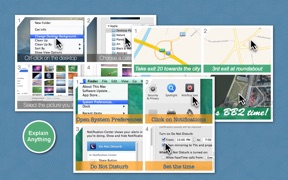


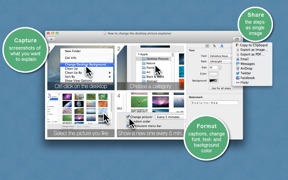

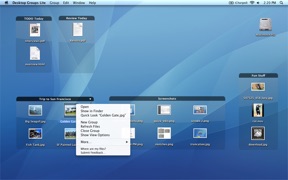


Snapshot
Who is Kitestack Software?
Equipping macOS users with local-first productivity tools focused on data ownership and one-time purchase models.
Target audience


Portfolio
Free 8Last updated

Flashcard Hero
v3.7.3
1.1y ago
Publisher DNA
What defines Kitestack Software?
Publisher DNA
Primary focus
macOS productivity and utility tools
Scale
studio
Target audience
Knowledge workers, students, and power users who prioritize data privacy and local file management over cloud-based SaaS solutions.
Origin
Founded by Rico Gundermann in Luebeck, Germany, after his tenure as a Software Engineer at HP in the San Francisco Bay Area.
Portfolio momentum
Released 2 updates across 11 apps in the last 6 months with 5 titles currently maintained.
Company profile
medium confidence- Headquarters
- Luebeck, Germany
- Employees
- 1-10
Portfolio
What does Kitestack Software ship?
Apps


Distributed across 2 markets, strongest in Americas.
Based on 4 of 11 apps with localized market data, more coverage rolling in as scans complete · last scanned .
Americas (1)
- United States4 / 4
Europe (1)
- Germany2 / 4
Core markets (4/4 apps)
Rivals
Who does Kitestack Software compete with?
The rivals identified
Nemeses(1)

Leitner Box Flashcards competes directly with Flashcard Hero by targeting the same spaced-repetition study market while removing the upfront cost barrier and manual content creation burden.
Contenders(9)


Both apps target students requiring spaced repetition for exam revision, creating direct competition for users seeking efficient study tools.


Flashcards Maker competes by offering a free, low-friction entry point for general learners, directly challenging the paid model of Flashcard Hero for users who prioritize cost over advanced study tools.


Both apps target students requiring efficient study tools, with Flashcard Maker competing through AI-driven content generation while Flashcard Hero relies on manual, high-fidelity card creation.


Both applications target students and professionals seeking spaced repetition for academic subjects, but they diverge on the content creation burden: Flashcard Hero requires manual input while Memvero provides pre-built decks.


Flashcard Max competes for the same student demographic by offering automated content creation tools that address the manual entry burden identified in Flashcard Hero. The overlap in rich media support and flashcard utility makes it a direct alternative for users seeking to digitize lecture materials.


Both applications target students digitizing study materials, but they compete through opposing entry strategies: Flashcard Hero requires a one-time purchase for power-user features, while Flashcard Maker - PashaBen offers immediate, ad-supported access without account registration.


Both apps target students and language learners, with the rival's AI-generation directly competing against the manual creation flow required by Flashcard Hero.


Both apps target students preparing for standardized exams like the GRE and SAT, competing for the same study-utility market share. They overlap in their core function of providing virtual flashcards for complex subject matter.


Both apps target students and professionals needing study tools, competing directly on the one-time purchase value proposition while offering distinct entry methods through manual rich media versus AI scanning.
Same space(14)


NeuraKnow serves as a focused SRS tool that competes with Flashcard Hero's memorization utility by emphasizing a simplified, concept-based review system.


Study Helper provides a static, legacy-style flashcard tool that serves as a simplified, albeit outdated, alternative to the structured study environment of Flashcard Hero.


Answer Sheet functions as a niche practice tool for multiple-choice exams, serving as a supplementary utility for students already using Flashcard Hero for memorization.


Ask Maeve competes for the same student audience by using AI to automate the conversion of study materials into flashcards and quizzes.


Repetition - Spaced Plan provides a free-access SRS utility that competes with Flashcard Hero's paid model for budget-conscious students.


Chegg Study competes for the same student demographic by offering a proprietary solution library that addresses academic needs beyond simple memorization.


SmartCards+ provides a specialized SRS-based utility that mirrors the core memorization function of Flashcard Hero while supporting external deck imports.


Itari targets the same self-learner demographic as Flashcard Hero by focusing on an FSRS-based algorithm to optimize review schedules.


Flash Cards Flashcards Maker serves as a low-friction, text-heavy alternative for students who prioritize manual control over the complex features found in Flashcard Hero.


Kahoot! serves as a high-frequency, live-engagement alternative to Flashcard Hero's solo study focus, capturing the classroom-based audience through interactive quiz hosting.


Quizlet acts as a direct competitor to Flashcard Hero by providing a massive, community-driven content library that scales beyond manual card creation.


Citizenship Test Preparation offers a vertical-specific study tool that competes for the time of users who might otherwise use Flashcard Hero for standardized test prep.


Space competes for the same study-utility audience by offering an AI-native creation workflow that simplifies the manual card-building process required in Flashcard Hero.


Vaia targets the same university demographic as Flashcard Hero but shifts the value proposition toward automated AI-driven study material generation.
Frequently asked questions
How many apps does Kitestack Software publish?
What kind of apps does Kitestack Software make?
What is Kitestack Software's top app?
In how many countries are Kitestack Software's apps available?
What fed this analysis
- Apps analyzed:
- 11
- With full intel:
- 0
- With overview:
- 11
- Website scraped:
- yes
- Social presence:
- no