


Kahoot ASA
For educators, students, and corporate professionals seeking interactive presentation and assessment tools.
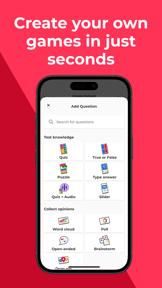
 Kahoot! Play & Create Quizzes






Snapshot
Who is Kahoot ASA?
Facilitating interactive learning and engagement through gamified quizzes. Designed for educators, students, and professionals to foster collaborative participation.
Target audience


Portfolio
Free 7Last updated

Kahoot! Play & Create Quizzes
v6.6.3.1
5mo ago
Publisher DNA
What defines Kahoot ASA?
Publisher DNA
Primary focus
Interactive learning and quiz-based engagement platforms
Scale
indie
Target audience
Educators, students, and corporate professionals seeking interactive presentation and assessment tools.
Signature Patterns
- •Gamified quiz-based mechanics for real-time interaction
- •Freemium pricing model targeting both individual and institutional users
- •Cross-platform accessibility for classroom and remote environments
- •Focus on user-generated content and social sharing features
Portfolio momentum
Released 12 updates in the last 6 months for their single active application, indicating a high-frequency development cycle.
Portfolio
What does Kahoot ASA ship?
Apps
7 apps analysed

Nostalgic value for long-term users who played the original version during their early school years
- Educational math content provides a strong foundation for children learning basic addition and multiplication skills
- Subscription-based monetization and paywalls frustrate users who previously purchased the game as a one-time product


Phonics-based learning games—teach kids sight words & reading skills

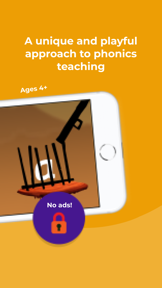


Simple and intuitive sandbox mechanics provide a fun environment for children to explore numbers
- Educational math content keeps young children engaged with number recognition and basic arithmetic concepts
- Pay-to-play transitions frustrate long-term users who remember when more content was available for free
Distributed across 20 markets, strongest in Europe.
Based on 4 of 7 apps with localized market data, more coverage rolling in as scans complete · last scanned .
Americas (4)
- Brazil4 / 4
- United States4 / 4
- Mexico3 / 4
- Canada1 / 4
Europe (9)
- France4 / 4
- Germany4 / 4
- Italy4 / 4
- Netherlands4 / 4
- Portugal4 / 4
›+4 more europe markets
- Spain4 / 4
- Sweden4 / 4
- Turkey1 / 4
- United Kingdom1 / 4
Asia-Pacific (7)
- Japan4 / 4
- South Korea2 / 4
- Australia1 / 4
- India1 / 4
- Indonesia1 / 4
›+2 more asia-pacific markets
- Singapore1 / 4
- Vietnam1 / 4
Core markets (4/4 apps)
User Sentiment
How do users feel about their apps?
1
Positive apps
2
Neutral / mixed
1
Negative apps
48/100
Avg sentiment score

Unlock the app dragging this portfolio down.
Access the full report for freeRivals
Who does Kahoot ASA compete with?
The rivals identified
Nemeses(2)


Users report: Both applications target children aged 3-8 with phonics-based literacy curricula, creating direct competition for parents seeking early reading tools.


Both apps compete for the same math education audience by embedding skill-building exercises into game-based environments.
Contenders(12)


Provides an adaptive learning environment that competes with Poio by covering both math and reading for the same age group.


Users report: Both apps compete for the same family math learning segment, targeting children through gamified educational content and subscription-based access.


Both apps target early literacy through gamified phonics training, competing for the same parent demographic seeking structured after-school learning support.


Both apps target early elementary math education through gamified mechanics, competing for the same 4-8 year old demographic.


Users report: Both apps target primary school children for supplemental math practice, creating direct competition for daily study time in the educational category.


Users report: Both apps target primary school children for math fluency, competing for time within the elementary math learning category.


Both apps compete for time spent on arithmetic practice, targeting the math learning segment through distinct mechanical approaches: narrative-driven resource management versus traditional flashcard drills.


Both apps target the elementary math education market, competing for the same K-5 demographic through gamified arithmetic practice.


Users report: Both apps target elementary-aged children for supplemental math practice, competing for the same parent demographic seeking to improve arithmetic skills through gamified interfaces.


Both apps target early childhood math education, specifically addition and subtraction, creating direct competition for parents seeking foundational arithmetic tools.


Both apps target early literacy through phonics-based curricula, competing for the same preschool and kindergarten demographic.


Users report: Both apps target parents seeking structured math education for children and utilize subscription-based monetization models to gate content.
Same space(33)

ABCya Games provides a teacher-vetted content library for the same age range, though it relies on a weekly rotation of free games to drive subscriptions.


Khan Academy Kids serves the same early childhood demographic with a free, standards-aligned curriculum that challenges the subscription-based model of DragonBox.


Think!Think! competes for the same child-focused educational screen time by offering a massive library of mini-games and puzzles.


Functions as a direct competitor in the subscription-based early learning space, offering a broader curriculum than Poio's phonics focus.


Serves as a conversational AI alternative for early literacy practice, competing for the same screen time as Poio's phonics games.


Addition focuses on mental arithmetic speed, providing a high-intensity drill alternative to the DragonBox narrative.


Offers a structured, Montessori-aligned curriculum that competes with Poio for parents seeking ad-free educational content.


Math: Basic Operations uses daily challenges and timed games to build math fact fluency, contrasting with the long-form adventure of DragonBox.


Math - Addition & Subtraction uses a handwritten number recognition algorithm to teach arithmetic, providing a tactile alternative to the DragonBox interface.


Provides a digital library that competes for the same early-reader audience by offering a vast collection of read-to-me content.


Nicola Maths offers a tiered difficulty system for math training, providing a more traditional drill-based experience than the DragonBox adventure.


Pichoop targets the same early-childhood demographic with a narrative-driven adventure format similar to the source app.


Maths learning add & subtract provides a focused practice environment for addition, including column-based carrying, which complements the DragonBox approach to base-ten systems.


IXL provides a broad K-12 curriculum that competes for the same student time as the focused DragonBox math adventure.


Provides a broad, multi-subject curriculum that competes with Poio for the attention of children aged 2-8.


Math Brain Booster Games targets the same mental arithmetic proficiency goal but focuses on timed cognitive drills rather than the narrative-driven adventure of DragonBox.


Nibble targets the same habit-building educational space as the source app, though it focuses on adult general knowledge rather than chess fundamentals.


Provides a free, faith-based alternative for early childhood engagement that competes with Poio for daily active habits.


Toon Math uses an endless runner mechanic to teach math, contrasting with the resource-management adventure style of DragonBox.


Users report: Math Games for Kids targets the same preschool to 2nd-grade math foundation but offers a broader range of topics like telling time and equivalence.


PowerMath offers a broader K-12 study aid that includes AI-driven solvers, which differs from the guided learning path of DragonBox.


Mental Math Cards targets the same arithmetic skill-building but appeals to a more privacy-conscious audience through an ad-free, open-source architecture.


Long Addition and Subtraction provides a distraction-free, column-based practice environment that serves as a direct, non-gamified alternative to DragonBox.


Addition pour les enfants focuses specifically on early addition and subtraction training, serving as a simpler alternative for younger children.


Focuses on vocabulary acquisition for multiple languages, serving as a supplemental tool for learners beyond Poio's phonics focus.


Jeux mathématiques aligns with common core standards for elementary math, providing a structured alternative to the DragonBox narrative.


Targets a similar reading-acquisition goal but focuses on Japanese language learning rather than native literacy.


Offers a reading-focused approach to Japanese language learning that parallels Poio's literacy-first philosophy.

known for Learning Basic Addition Math Question With Answers
Learning Basic Addition uses flashcard-style learning for early math, providing a static alternative to the interactive DragonBox world.


Targets the same early-learning demographic as Poio but focuses on math mastery through short, daily sessions.


Provides a thematic, game-based learning environment for preschoolers that competes with Poio's adventure-themed literacy content.


Targets the same age demographic as Poio but focuses on math logic rather than literacy, competing for limited daily screen time.


Math Games for Kids:Arithmetic offers a gamified arithmetic drill tool that provides progress tracking for parents, competing for the same supplemental learning time.
New entrants(1)


The Long Division Calculator acts as a visual tutor for arithmetic, showing steps on a grid-paper canvas, which serves as a utility tool alongside the DragonBox learning app.
The Analyst's Read
The bottom line on Kahoot ASA
Bottom line
Kahoot! maintains a dominant position in the educational engagement space through a high-velocity product cycle and strong institutional integration. Their ability to scale as a professional tool remains the key indicator for long-term growth beyond the classroom.
Frequently asked questions
How many apps does Kahoot ASA publish?
What kind of apps does Kahoot ASA make?
What is Kahoot ASA's top app?
In how many countries are Kahoot ASA's apps available?
What fed this analysis
- Apps analyzed:
- 1
- With full intel:
- 0
- With overview:
- 1
- Website scraped:
- yes
- Social presence:
- yes
