


Luli Languages
 Japanese!! Learn Kana & Kanji








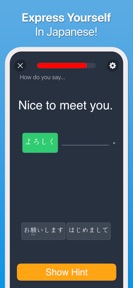

Snapshot


Publisher DNA
What defines Luli Languages?
AI intelligence is not yet available for Luli Languages. The portfolio data below is up to date.
Portfolio
What does Luli Languages ship?
Apps
8 apps analysed
Analysis in progress


Analysis in progress

Analysis in progress

Analysis in progress
Distributed across 9 markets, strongest in Europe.
Based on 1 of 8 apps with localized market data, more coverage rolling in as scans complete · last scanned .
Americas (3)
- Brazil1 / 1
- Mexico1 / 1
- United States1 / 1
Europe (5)
- France1 / 1
- Germany1 / 1
- Italy1 / 1
- Portugal1 / 1
- Spain1 / 1
Asia-Pacific (1)
- South Korea1 / 1
Core markets (1/1 apps)
Rivals
Who does Luli Languages compete with?
The rivals identified
Nemeses(1)

Both apps target the same JLPT N5-N1 test-taking demographic, creating direct competition for study time and subscription revenue.
Contenders(10)


Both apps target Japanese language learners with spaced repetition systems, creating direct competition for users seeking JLPT preparation and kanji mastery.


Both apps target the JLPT preparation market, competing for students seeking vocabulary and kanji mastery.


Both apps target JLPT test preparation from N5 to N1 levels, creating direct competition for the same Japanese language student demographic.


Both apps target the JLPT N5-N1 learner segment, creating direct competition for users seeking structured test preparation and vocabulary acquisition tools.


Both applications target Japanese language learners seeking efficient Kanji acquisition, competing directly for users focused on vocabulary retention and JLPT preparation.


Both applications target Japanese language learners with structured study tools, creating direct competition for users seeking JLPT preparation and kanji mastery.


Both apps target Japanese language learners with free-to-start models, competing for the same daily study time by offering distinct approaches to vocabulary and reading comprehension.


Both apps target Japanese language learners focusing on character acquisition and writing practice, with overlapping functionality in stroke-based learning and structured study paths.


Both apps target Japanese language students preparing for JLPT exams, creating direct competition for users seeking character literacy and vocabulary acquisition.


Both apps target Japanese language learners and JLPT test preparation, creating direct competition for users seeking structured kanji study tools.
Same space(3)


Bunpo offers a broader language scope than the source app, targeting users who need a single platform for multiple languages beyond Japanese.


cabuu targets students with curriculum-aligned content, providing a structured alternative for those who need to sync study tools with school textbooks.


SuperChinese serves a similar pedagogical function for a different target language, using artificial intelligence to assist learners.
