
OpenPhone Technologies
For startups and scaling enterprises requiring centralized customer communication and team collaboration.
 Quo (formerly OpenPhone)




Snapshot
Who is OpenPhone Technologies?
Empowering collaborative teams to centralize customer conversations and automate workflows through an integrated AI-driven communication hub.
Target audience


Portfolio
Free 1Last updated

Quo (formerly OpenPhone)
v4.0.16
7mo ago
Publisher DNA
What defines OpenPhone Technologies?
Publisher DNA
Primary focus
Business communication and CRM tools
Scale
indie
Target audience
Startups and scaling enterprises requiring centralized customer communication and team collaboration.
Origin
Founded in 2017 as OpenPhone, a business phone system designed for modern teams.
Portfolio momentum
Released 12 updates for their flagship app in the last 6 months, with the most recent major release occurring 10 days ago.
Company profile
medium confidence- Founded
- 2017
Portfolio
What does OpenPhone Technologies ship?
Apps
1 app analysed
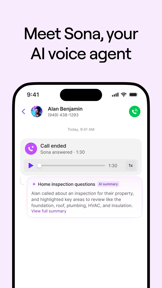
SONA AI agent enables 24/7 automated communication for service-based businesses.
- Separating work and personal communication on one device provides significant utility for small business owners
- Reliability issues including missed calls and app crashes prevent users from maintaining essential business operations
Single-market publisher, every app ships only to United States.
Based on 1 of 1 app with localized market data · last scanned .
Americas (1)
- United States1 / 1
Core markets (1/1 apps)
User Sentiment
How do users feel about their apps?
0
Positive apps
0
Neutral / mixed
1
Negative apps
20/100
Avg sentiment score
Rivals
Who does OpenPhone Technologies compete with?
The rivals identified
Nemeses(1)

Both platforms target small business owners needing a dedicated professional line on a single device, competing directly on the core utility of separating work and personal communications.
Contenders(5)


Both platforms target professional teams requiring CRM-integrated business communication, creating direct competition for users who need mobile access to contact history and activity logs.


Both platforms target small business owners requiring a dedicated business number to separate professional and personal communications. They compete directly on the utility of a unified inbox for managing client interactions.


Both platforms target small business owners requiring a dedicated professional phone line on a single device. They compete directly on the core utility of separating work and personal communications.


Both apps target small business owners and freelancers who require a dedicated business phone line on existing mobile hardware. They compete directly on the core utility of separating professional and personal communications.


Both platforms provide mobile-first business phone systems that target professional teams, with significant overlap in their core value propositions of replacing traditional desk-phone hardware.
Same space(18)


Aloware Talk extends a contact center platform to mobile, competing with Quo's focus on professional, CRM-integrated business communication.


OnPhone provides a similar virtual number service for professionals to separate business and personal lines without requiring additional hardware.


Cloze Relationship Management complements Quo's CRM features by using AI to aggregate communications and prompt engagement for professional networks.


SmartLine provides a second phone number for business owners, though its current forced migration mirrors the instability issues seen in Quo.


Grasshopper serves as a direct alternative for small business owners seeking to turn personal smartphones into professional communication hubs.


Second line provides a virtual number for privacy, competing with Quo's basic utility for separating personal and business lines.


iPlum targets the same professional audience as Quo but adds a layer of regulatory compliance that Quo currently lacks.


eVoice provides virtual phone systems for entrepreneurs, serving as a simpler alternative to Quo's CRM-heavy interface.


NextivaONE bundles voice and SMS for SMBs, competing with Quo's CRM-integrated approach through its own AI-powered business tools.


Loop Email targets the same collaborative business audience as Quo by centralizing shared inboxes and internal team communication.


Phound attempts to bundle communication tools like calls, chat, and video into one app, directly challenging Quo's unified platform model.


Podium targets local businesses by centralizing customer communication, review management, and payments into a single inbox.


Ring4 provides a virtual secondary line for privacy-conscious users, competing with Quo's focus on professional separation.


RingCentral targets the same professional audience as Quo by consolidating phone, SMS, and fax services into a single unified communication interface.


Slack competes for the same professional team collaboration market as Quo by centralizing fragmented workflows into a single interface.


Textr Team offers a cloud-based business phone system that mirrors Quo's goal of managing communications from a single interface.


WhatsApp Business serves as a primary communication channel for SMBs, competing for the same professional attention as Quo by embedding itself into the Meta advertising ecosystem.


Fanytel provides virtual numbers for privacy and international reach, serving users who need secondary lines without the overhead of Quo's CRM features.
New entrants(2)


Radar Relationship CRM focuses on relationship-driven sales, providing a specialized alternative to Quo's generalist CRM features.


Ody provides an AI-native business phone experience that competes with Quo's Sona AI agent and unified inbox features.
Frequently asked questions
How many apps does OpenPhone Technologies publish?
What kind of apps does OpenPhone Technologies make?
What is OpenPhone Technologies's top app?
In how many countries are OpenPhone Technologies's apps available?
What fed this analysis
- Apps analyzed:
- 1
- With full intel:
- 0
- With overview:
- 1
- Website scraped:
- yes
- Social presence:
- yes