


Robert Ehrhardt
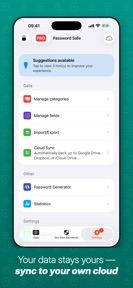
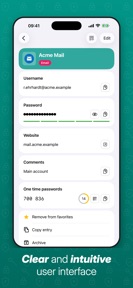
 Password Safe Manager & Vault





Snapshot


Publisher DNA
What defines Robert Ehrhardt?
AI intelligence is not yet available for Robert Ehrhardt. The portfolio data below is up to date.
Portfolio
What does Robert Ehrhardt ship?
Apps
6 apps analysed

Track expenses, income, bills & loans. Save, plan debt — offline & private.


Analysis in progress

Apple Watch integration drives daily retention via rapid logging
- The income and expense tracking interface provides a simple and effective experience for daily financial management
- Recurring transaction limits and payment processing errors prevent users from upgrading to the full feature set

Analysis in progress
Offline-first design removes dependency on third-party connectivity
- Offline-first architecture ensures sensitive password data remains secure on the device without cloud exposure
- Manual backup and restore processes create significant friction when migrating data between different mobile devices

Analysis in progress
Distributed across 12 markets, strongest in Europe.
Based on 2 of 6 apps with localized market data, more coverage rolling in as scans complete · last scanned .
Americas (3)
- Brazil2 / 2
- Mexico2 / 2
- United States2 / 2
Europe (7)
- France2 / 2
- Germany2 / 2
- Italy2 / 2
- Netherlands2 / 2
- Portugal2 / 2
›+2 more europe markets
- Spain2 / 2
- Sweden2 / 2
Asia-Pacific (2)
- Japan2 / 2
- South Korea2 / 2
Core markets (2/2 apps)
User Sentiment
How do users feel about their apps?
2
Positive apps
0
Neutral / mixed
0
Negative apps
75/100
Avg sentiment score
Rivals
Who does Robert Ehrhardt compete with?
The rivals identified
Nemeses(1)

Both apps target users managing personal finances and recurring expenses, though CashOwl focuses on manual privacy-first tracking while Rocket Money emphasizes automated account aggregation and concierge services.
Contenders(8)


Both apps target users who prioritize manual entry and privacy over automated bank syncing, creating direct competition for the privacy-conscious budgeting segment.


Both applications target users seeking manual financial tracking tools, competing directly for individuals who prioritize simple expense logging and savings management over automated bank integration.


Both applications target personal finance management, but Finanzguru competes by automating transaction tracking through bank aggregation while CashOwl focuses on manual, private, and offline data management.


Both applications target personal finance management, but they diverge on data entry: CashOwl relies on manual, offline tracking, while Emma utilizes automated Open Banking aggregation.


Both apps target users managing cash, but they serve distinct financial stages: CashOwl focuses on long-term budget planning and expense tracking, while Money Counter specializes in immediate physical currency tallying.


Both apps target privacy-conscious users seeking local-only expense tracking, creating direct competition for users who prioritize data sovereignty over cloud-based synchronization.


Both apps compete for the same personal finance audience by offering free expense tracking and budget management tools. They overlap directly in the core utility of logging daily transactions and monitoring spending habits.


Both apps target personal finance management, but they diverge on data entry: CashOwl relies on manual input for privacy, while Snoop Finance automates tracking via bank account connections.
Same space(5)


It occupies the same personal budget planner category as CashOwl, focusing on rapid transaction entry to minimize time spent on financial monitoring.


This app serves as a specialized portal for existing credit customers, contrasting with CashOwl's focus on general-purpose personal expense tracking.


This app competes for the same user base seeking manual expense tracking without bank integration, but operates at a significantly larger scale with over 300,000 ratings.


While it includes budgeting tools, it serves a different financial need by providing short-term liquidity through cash advances.


Like CashOwl, this app targets users who prioritize privacy and manual control by explicitly avoiding bank account integration.
