Roman Kuryanov
For a broad demographic ranging from casual gamers seeking relaxation to business professionals requiring mobile productivity and contact management tools.
 Oh My Pool! Everlasting summer




















Snapshot
Who is Roman Kuryanov?
Developing a versatile portfolio of casual games and utility tools designed to simplify professional tasks and provide accessible entertainment.
Target audience


Portfolio
Free 3Last updated

Oh My Pool! Everlasting summer
v1.8
1.5y ago
Publisher DNA
What defines Roman Kuryanov?
Publisher DNA
Primary focus
Multi-category mobile utility and casual games
Scale
studio
Target audience
A broad demographic ranging from casual gamers seeking relaxation to business professionals requiring mobile productivity and contact management tools.
Origin
Roman Kuryanov, also known as Roman Matovsky, is a digital product creator who builds solutions for both global brands and independent startups.
Signature Patterns
- •Broad category diversification spanning Games, Business, Lifestyle, and Health & Fitness.
- •Hybrid monetization strategy utilizing both free-to-play and upfront paid models.
- •High-frequency update cadence maintained across the entire active portfolio.
- •Visual emphasis on clean, minimalist, or cartoonish aesthetics across different app types.
Portfolio momentum
The publisher is in an exceptionally active development phase, having deployed 18 releases across its 12 active apps within the last six months.
Company profile
low confidence- Employees
- 1-10
Portfolio
What does Roman Kuryanov ship?
Apps
12 apps analysed


Low-cost, one-time purchase model lowers the barrier to entry for individual practitioners and athletes
- Niche psychomotor methodology provides a specialized utility for targeted clinical and athletic segments


Single-market publisher, every app ships only to United States.
Based on 3 of 12 apps with localized market data, more coverage rolling in as scans complete · last scanned .
Americas (1)
- United States3 / 3
Core markets (3/3 apps)
User Sentiment
How do users feel about their apps?
1
Positive apps
0
Neutral / mixed
0
Negative apps
65/100
Avg sentiment score

Rivals
Who does Roman Kuryanov compete with?
The rivals identified
Nemeses(3)

Eatr competes for the same weight-conscious audience by offering AI-driven automation, while Roman relies on a manual-entry model and a one-time purchase price point.


Both applications target business professionals aiming to reduce manual data entry, competing for time spent on professional documentation and contact management.


Both apps target users measuring rapid motor input, but Finger-tapping test focuses on clinical psychomotor protocols while CPS Test targets general click-speed metrics.
Contenders(24)


Both applications target business professionals by digitizing physical business cards, creating direct competition for contact management workflows.


Both applications target business professionals needing to digitize physical contact information, creating direct competition for contact management workflows.


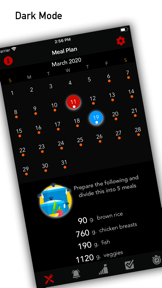
Both applications target users requiring nutritional tracking and meal planning, creating a direct overlap in the dietary management segment despite Roman focusing on weight loss and the rival focusing on diabetes.


Both applications target business professionals managing contact information via card scanning. They compete directly on the utility of digitizing physical business cards for professional networking.


Both applications target business professionals by automating the digitization of contact information, competing directly for users seeking to manage professional networks.


Both apps target users interested in quantifying finger-tapping speed for motor performance tracking, creating direct competition for the same psychomotor-focused user base.


FitChef competes for the same weight loss audience by offering automated grocery list generation, which directly addresses the manual entry friction present in Roman.


Both apps utilize finger-tapping as the primary input mechanism, though they serve distinct user intents: clinical psychomotor evaluation versus casual reflex gaming.


Both apps target the athletic performance and motor coordination assessment market, creating direct competition for practitioners monitoring athlete brain health and psychomotor function.


Both applications target users measuring fine motor skills and hand-eye coordination, creating direct competition for individuals seeking performance tracking tools.


MealLog competes for the same weight-loss audience by offering AI-driven calorie analysis, which directly challenges the manual-entry model used by Roman.


Both applications target business professionals seeking to manage contact information, creating direct competition for networking utility.


Both applications target users seeking to improve hand-eye coordination and motor skills, competing for the same psychomotor training audience through distinct methodologies.


Both apps measure finger-tapping speed, but they serve distinct segments: one targets clinical psychomotor evaluation while the other focuses on casual social competition.


Both applications target contact management, but Quntact focuses on professional business card digitization while Rolodex targets casual social networking and memory retention.


Both applications target business professionals by automating contact digitization through OCR, directly competing for users seeking to reduce manual data entry.


Both applications target business professionals needing to digitize physical contact information, creating direct competition for users seeking efficient contact management.


Both apps target weight loss through meal planning, but the rival's free model and automated shopping lists directly challenge Roman's manual-entry, paid-upfront approach.


Both applications target business professionals by digitizing physical business cards to automate contact list management.


Both apps measure finger tapping speed, but they target distinct user groups: clinical psychomotor assessment versus competitive gaming.


Both apps target the same weight-loss audience, with Roman's one-time $0.39 purchase competing directly against the rival's free-to-use model.


Both applications target business professionals by automating the digitization of physical business cards to reduce manual contact entry.


Both apps target healthcare professionals for point-of-care assessment, creating a direct overlap in clinical utility for cognitive and psychomotor screening.


Both applications target athletes and coaches for psychomotor performance assessment, creating direct competition for users seeking specialized reaction tracking tools.
Same space(72)


Targets the same professional audience by offering high-precision OCR for archiving paper documents into digital files.


This app appeals to the same animal-themed aesthetic but shifts the focus to early childhood education and independent play.


Serves as a legacy lead-capture tool for trade shows, prioritizing local storage over cloud-based synchronization.


Provides a similar calorie-tracking utility but emphasizes speed through AI scanning.


This app shares the goal of stress relief through minimalist, repetitive tasks that coexist with the user need for quiet breaks.


Focuses on the same batch-cooking efficiency as Roman but provides a more structured routine.


Provides a digital-first networking alternative that replaces physical business cards with QR codes and virtual profiles.


Expands the scope to autonomic nervous system monitoring, offering a broader health-tracking utility than the source app's psychomotor focus.


Shifts the focus from finger-tapping to clinical pupillary analysis, serving a similar professional medical audience with a different diagnostic mechanism.


Offers a basic, color-based reaction measurement tool that serves as a low-complexity alternative to the source app's methodology.


Bridges the gap between meal planning and grocery procurement, serving the same budget-conscious audience as Roman.


Provides a comprehensive cognitive health system that tracks long-term performance trends, contrasting with the standalone utility of the source app.


Provides a professional networking tool for designing and sharing digital cards during in-person or virtual events.


Crunch Fitness manages gym facility access and class bookings, serving as a utility that Mishep users might use alongside their social coordination.


This app captures the same casual gaming window with a high-frequency content loop that prioritizes quick, trend-based play.


Utilizes the Psychomotor Vigilance Test methodology, directly overlapping with the clinical focus of the source app while adding longitudinal tracking.


Targets a condition-specific wellness niche that requires the same nutritional planning as Roman.


Targets the plant-based wellness segment with a curated approach that contrasts with Roman's generic tools.


Serves as a digital cookbook for the same weight-loss audience as Roman.


This app competes for the same ad-free, low-stress user segment by offering a curated suite of classic logic and matching games.


Provides a high-convenience alternative for users who want to bypass the meal preparation required by Roman.


Focuses on high-speed reflex mini-games, providing a more entertainment-oriented alternative to the source app's clinical psychomotor focus.


Offers eight different measurement methods, providing a more granular diagnostic toolset than the source app's specific psychomotor protocols.


Liftoff gamifies gym attendance through rankings, serving as a competitive alternative to Mishep's social coordination.


This app blends tile-matching with farm decoration to capture the same casual audience seeking progression-based relaxation.


Hevy provides a community-focused logging tool that overlaps with Mishep's social goal but focuses on individual progress tracking.


Hevy focuses on data-driven progress tracking and social accountability, acting as a more analytical alternative to Mishep's location-based coordination.


Offers a modern networking utility that replaces physical cards with interactive virtual profiles and NFC sharing.


Operates as a minimalist, ad-light alternative that prioritizes user experience over the complex clinical protocols of the source app.


Gym get-fit provides granular logging and analysis tools that complement Mishep's social focus by adding technical depth to the workout.


Appeals to privacy-conscious users by offering on-device document indexing and local storage for sensitive paperwork.


Positions itself as a comprehensive cognitive training suite, offering a wider variety of exercises than the source app's specific methodology.


Offers a competitive, duel-focused reflex experience that prioritizes social interaction over the clinical psychomotor metrics found in the source app.


Provides a niche tracking utility for social diners that contrasts with the health-focused tracking of Roman.


Focuses on addictive, game-like reflex training, providing a casual alternative to the source app's clinical psychomotor focus.


Targets the same family-oriented meal planning segment but lacks the specific weight-loss focus of Roman.


Directly competes with Roman by automating the calorie tracking process through AI.


Targets the same meal-planning fatigue as Roman but uses a daily content loop to drive engagement.


Provides an open-source, ad-free utility that appeals to users who prioritize privacy over the ad-supported models of other reflex testers.


Fitness Coach provides home-based, equipment-free workouts that serve as a low-friction alternative to Mishep's gym-centric social coordination.


Arrow uses gamification to drive social fitness, acting as a direct competitor to Mishep's social-first approach.


Life Fitness Connect integrates directly with gym hardware to track metrics, serving as a technical utility for users who prioritize data over social coordination.


This app targets the same casual puzzle demographic with a focus on animal-themed match-three mechanics.


Provides specialized recipe content for users who prefer specific cooking methods for weight loss.


Competes for the same busy, health-conscious demographic by offering structured meal planning and grocery fulfillment.


Acts as an all-in-one networking platform that combines digital business cards with link-in-bio pages.


Provides a comprehensive scanning utility for users who need to convert physical documents into digital files.


This app targets the same desire for offline, ad-free relaxation through a minimalist block-packing mechanic.


Provides a simplified, thirty-second test that serves as a quick, low-friction alternative to the source app's methodology.


Focuses on a suite of five distinct mini-games to improve cognitive reflexes, serving as a more varied alternative to the source app.


Functions as a document management utility for users needing to digitize and sign various paper-based professional documents.


Competes for the same professional user base by providing high-quality image processing for document digitization.


Serves the same home-cook audience but focuses on social aggregation rather than weight-loss specific calorie tracking.


Targets the high-frequency tapping niche with a focus on competitive endurance rather than clinical psychomotor assessment.


Offers a broader recipe discovery utility that complements the weight-loss focus of Roman by automating meal planning.


Offers a portable solution for professionals to sign and digitize physical documents on the go.


Expands the scope from simple tapping to broader coordination exercises, appealing to a wider demographic including elderly users.


Serves as a broader document management tool for users who need to digitize receipts and IDs alongside business cards.


Offers a similar recipe organization utility but focuses on multi-source importing rather than manual calorie entry.


5Min provides short, home-based workouts that serve as a quick alternative for users who lack time for Mishep's gym-based coordination.


Addresses the broader cognitive health market by offering adaptive training programs that compete for the same daily active user time.


Targets students and professionals needing a portable tool for digitizing and signing paper documents.


Technogym offers AI-driven coaching that complements Mishep's social discovery by providing structured, equipment-linked training paths.

known for Biz Cards Scannable - Business Card Scanner Free & Receipt Organizer + OCR Scanning
Functions as a legacy free utility for digitizing business cards and receipts without recurring subscription fees.


Targets the same cognitive-tracking audience but shifts the focus toward gamified training rather than clinical psychomotor evaluation.


Uses Formula 1-inspired branding to gamify reaction testing, providing a more engaging experience than the clinical source app.


This app offers a similar low-stress premise but lacks the specific farming or puzzle depth of the source app.


Serves as a general-purpose mobile scanner for converting receipts and contracts into high-quality PDFs.


Serves as a casual reflex-testing alternative for users who prefer game-like modes over clinical psychomotor protocols.


Offers a similar nutrition tracking utility but relies on automated photo recognition rather than manual entry.


Provides a more feature-rich alternative for users needing nutritional tracking alongside meal planning.


Gymwork offers professional-athlete routines that provide a structured alternative to Mishep's focus on finding training partners.
New entrants(5)


Provides a comprehensive reflex workout with six distinct modes, offering a more varied experience than the source app's specialized methodology.


This app provides a similar low-pressure, word-based puzzle experience that appeals to the same audience seeking quiet, meditative play.


This app directly overlaps with the farming simulation theme while emphasizing offline play and animal care.


Focuses on short, high-intensity reflex and memory sessions, providing a more streamlined experience than the clinical source app.


Targets the same grocery-conscious audience as Roman but focuses on pantry-aware planning.
The Analyst's Read
The bottom line on Roman Kuryanov
Bottom line
Kuryanov is a versatile indie creator who has successfully scaled a major casual gaming hit while maintaining a broad utility portfolio. The current high release velocity suggests a disciplined effort to find a second high-growth vertical outside of the arcade category.
Frequently asked questions
How many apps does Roman Kuryanov publish?
What kind of apps does Roman Kuryanov make?
What is Roman Kuryanov's top app?
In how many countries are Roman Kuryanov's apps available?
What fed this analysis
- Apps analyzed:
- 12
- With full intel:
- 0
- With overview:
- 12
- Website scraped:
- yes
- Social presence:
- no