Rosetta Stone
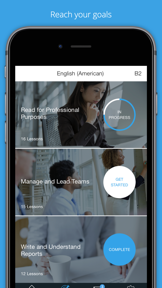
For individual language learners seeking conversational confidence and corporate employees enrolled in employer-sponsored training programs.
 Rosetta Stone Classic (2024)









Snapshot
Who is Rosetta Stone?
Providing immersive language acquisition tools for individual learners and corporate teams seeking conversational fluency.
Target audience


Portfolio
Free 4Last updated

Rosetta Stone Classic (2024)
v9.1.1
5mo ago
Publisher DNA
What defines Rosetta Stone?
Publisher DNA
Primary focus
Language learning and education
Scale
indie
Target audience
Individual language learners seeking conversational confidence and corporate employees enrolled in employer-sponsored training programs.
Signature Patterns
- •Heavy reliance on an immersion-based learning methodology rather than vocabulary lists
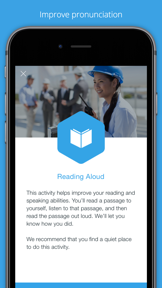
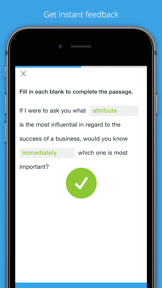
- •Integration of proprietary speech recognition technology for pronunciation feedback
- •Dual monetization strategy utilizing both freemium consumer models and enterprise subscriptions
- •Consistent focus on cross-device synchronization and offline access for professional use cases
Portfolio momentum
The publisher maintained an active development cycle with 11 releases across its portfolio in the last 6 months, including a major update within the last week.
Portfolio
What does Rosetta Stone ship?
Apps
4 apps analysed

Learn & Speak Languages! English, Spanish, French, German, Chinese & Japanese.


Multi-language access under one subscription drives lifetime value
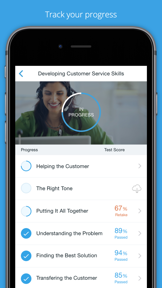
- Visual immersion through image-based learning helps users grasp vocabulary without relying on native language translation
- Voice recognition fails to register speech accurately, forcing users to repeat lessons until they eventually fail


Language learning: speak Spanish, Dutch, English, Polish, Japanese and more


Analysis in progress
Distributed across 19 markets, strongest in Europe.
Based on 1 of 4 apps with localized market data, more coverage rolling in as scans complete · last scanned .
Americas (4)
- Brazil1 / 1
- Canada1 / 1
- Mexico1 / 1
- United States1 / 1
Europe (8)
- France1 / 1
- Germany1 / 1
- Italy1 / 1
- Netherlands1 / 1
- Portugal1 / 1
›+3 more europe markets
- Spain1 / 1
- Turkey1 / 1
- United Kingdom1 / 1
Asia-Pacific (7)
- Australia1 / 1
- India1 / 1
- Indonesia1 / 1
- Japan1 / 1
- Singapore1 / 1
›+2 more asia-pacific markets
- South Korea1 / 1
- Vietnam1 / 1
Core markets (1/1 apps)
User Sentiment
How do users feel about their apps?
0
Positive apps
1
Neutral / mixed
0
Negative apps
45/100
Avg sentiment score
Rivals
Who does Rosetta Stone compete with?
The rivals identified
Nemeses(1)


Both apps compete for the same language-learning audience, but Duolingo targets casual users through gamification while Rosetta Stone targets professional learners through immersion.
Contenders(10)


Both apps target language learners, but Learn Fast & Speak Fluently competes via a zero-cost model, whereas Rosetta Stone Classic (2024) targets professional learners through a subscription-based immersion method.


Babbel competes for the same professional and adult learner segment by offering structured, expert-led language courses that prioritize conversational proficiency over pure immersion.


Both apps target language learners, but BeeSpeaker competes by replacing static immersion with AI-driven conversational feedback, directly challenging the pedagogical model of Rosetta Stone Classic (2024).


Busuu competes by offering a community-based feedback loop for language exercises, directly challenging the solitary, image-based immersion model of Rosetta Stone Classic (2024). Both apps target the same language learning segment with subscription-based access.


Learna competes for the same language learner audience by offering AI-driven conversational practice that directly addresses the limitations of static immersion methods.


HelloTalk competes by offering direct access to native speakers for language exchange, whereas Rosetta Stone Classic (2024) relies on a closed, image-based immersion system. Both target users seeking to improve speaking skills, but HelloTalk uses a social network model while Rosetta Stone uses structured pedagogical software.


Ling competes for the same mobile-based language learner demographic by offering a broader catalog of over 70 languages, including Asian dialects, that fall outside the current Rosetta Stone Classic (2024) curriculum.


Memrise targets the same language-learning audience by offering specialized courses for professional and personal goals, directly challenging the immersion-based pedagogical model of Rosetta Stone Classic (2024).


Both apps target language learners seeking fluency, with Rosetta Stone focusing on structured immersion and Pingo AI on conversational AI, creating a direct conflict for users prioritizing speech-based practice.


Tandem competes by offering live human interaction for fluency, whereas Rosetta Stone focuses on structured, solo immersion. Both target the same language-learning audience but offer opposing pedagogical paths.
Same space(19)


Provides a research-based curriculum for young children that serves as a supplemental tool for home and classroom.


Combines language modules with gamified cognitive training to drive daily habit formation for casual learners.


Focuses on improving conversation skills through interactive AI-guided dialogue rather than rote memorization.


Provides an AI-powered coach that adapts to user proficiency levels for daily conversational practice.


Offers 24/7 AI-powered conversational practice to help learners overcome speaking anxiety.


Uses AI to generate personalized lessons for Asian language learners, focusing on reading and listening.


Syncs digital vocabulary training with school textbooks to remove manual data-entry friction for secondary students.


Uses AI avatars to provide conversational practice for adult learners preparing for exams or professional communication.


Uses real-world news stories to help learners improve reading and listening skills through immersion.


Focuses on AI-powered conversational practice to build speaking confidence without traditional grammar memorization.


Uses a 10-minute daily practice model to help learners achieve results without long, formal courses.


Provides an interactive AI coach for English learners to practice real-world conversations without formal lessons.


Offers AI-driven conversational practice that serves as a low-cost alternative to human tutoring for professional learners.


Provides a human-led marketplace for 1-on-1 language tutoring, targeting learners who require personalized instruction for career goals.


Supports 80+ languages, allowing learners to study through their native language instead of English.


Prioritizes active speaking from the first lesson, targeting users who want to bridge the gap to conversational fluency.


Targets learners seeking conversational fluency through AI-driven roleplay modes that simulate real-world interactions.


Focuses on English speaking practice through AI-driven natural conversation and daily feedback.


Offers 24/7 AI-powered speaking practice to help learners overcome the fear of speaking in real-world situations.
New entrants(2)


Replaces passive lessons with AI-driven conversation practice to help learners build fluency in 80+ languages.


Provides a personal AI coach that creates adaptive learning paths for speaking and pronunciation.
The Analyst's Read
The bottom line on Rosetta Stone
Bottom line
Rosetta Stone is a specialized education publisher successfully bridging the gap between high-volume consumer language apps and structured enterprise training. Their high weighted rating signals strong product-market fit for their immersion methodology across both B2C and B2B segments.
Frequently asked questions
How many apps does Rosetta Stone publish?
What kind of apps does Rosetta Stone make?
What is Rosetta Stone's top app?
In how many countries are Rosetta Stone's apps available?
What fed this analysis
- Apps analyzed:
- 4
- With full intel:
- 0
- With overview:
- 4
- Website scraped:
- yes
- Social presence:
- yes