RustyBrick
For observant Jewish individuals, including students and travelers, requiring precise religious tools for prayer and ritual compliance.
 Tehilim תהלים Tehillim Psalms
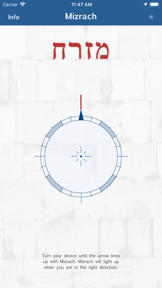




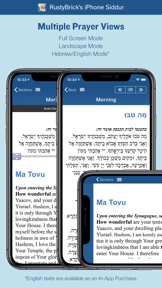


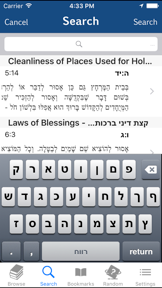

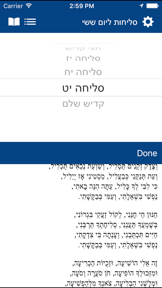


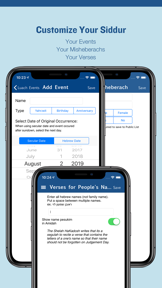
Snapshot
Who is RustyBrick?
Providing digital utilities and religious reference tools for the observant Jewish community to facilitate daily prayer and ritual observance.
Target audience


Portfolio
Free 7Last updated

Tehilim תהלים Tehillim Psalms
v1.0.7
1.2y ago
Publisher DNA
What defines RustyBrick?
Publisher DNA
Primary focus
Digital utilities for the observant Jewish community
Scale
indie
Target audience
Observant Jewish individuals, including students and travelers, requiring precise religious tools for prayer and ritual compliance.
Portfolio momentum
Released 1 update in the last 6 months with 2 active apps out of 5 total — currently in a maintenance phase for its core titles.
Portfolio
What does RustyBrick ship?
Apps
17 apps analysed

Analysis in progress

Dual-gender interface modes provide personalized engagement
- Interactive bedtime prayer routines help parents establish consistent nightly habits with their young children
- Fast-paced chanting and unclear pronunciation in the audio recordings make it difficult for children to learn

Analysis in progress


Analysis in progress
Single-market publisher, every app ships only to United States.
Based on 11 of 17 apps with localized market data, more coverage rolling in as scans complete · last scanned .
Americas (1)
- United States11 / 11
Core markets (11/11 apps)
User Sentiment
How do users feel about their apps?
5
Positive apps
1
Neutral / mixed
0
Negative apps
76/100
Avg sentiment score
Unlock the app dragging this portfolio down.
Access the full report for freeRivals
Who does RustyBrick compete with?
The rivals identified
Nemeses(4)


Jewish+ competes by bundling prayer direction with a full suite of daily Jewish life tools, whereas Mizrach Compass is a single-purpose tool.


Captures the same religious audience through a video-first educational model rather than a utility-first model.


MyZmanim is the direct market leader in the Zmanim (Jewish timekeeping) utility niche, maintaining a high-frequency update cycle and a specialized focus on precise halachic calculations.


Both apps target users seeking digital access to the Book of Psalms, competing for the same audience interested in daily recitation and study.
Contenders(19)


Both apps target the observant Jewish community with digital prayer books and location-based religious utilities, creating direct competition for daily use.


Adjacent utility that captures the same audience through deep integration of Jewish texts and study tools.


YidKit competes by offering a free, full-featured prayer and Zmanim utility that overlaps with the core functionality of Siddur Zmanim Luach Minyanim. Its zero-cost entry point and additional restaurant database challenge the paid-only model of the source app.


Both apps target the observant Jewish community with digital prayer texts, creating direct competition for daily usage time. Siddur + Tehilim Anywhere offers a free entry point, while Siddur Zmanim Luach Minyanim commands a $9.99 price point for its specialized utility.


Both apps target users needing directional guidance for prayer, competing for the same niche utility segment despite serving different religious traditions.


Both applications target the same user base seeking prayer direction toward the Western Wall using device sensors. They compete directly for visibility in the prayer direction compass category.


Simple Siddur competes by offering a free, no-cost alternative to the $9.99 paid model of Siddur Zmanim Luach Minyanim, targeting the same audience of observant Jewish individuals seeking daily prayer tools.


Both apps target observant Jewish users with overlapping religious utility features like Zmanim and prayer texts. CalJ competes as a free, ad-free alternative that captures users prioritizing simplicity over the premium, feature-rich experience of the target app.


A direct competitor in the Zmanim utility space with a strong user rating and a focused feature set.


Both apps target observant Jewish users with overlapping core utilities like Zmanim and prayer texts, forcing a choice between a one-time premium purchase and an ad-supported freemium model.


Both applications target the same religious demographic by providing directional orientation for prayer toward Jerusalem using mobile device sensors.


Both apps target users requiring directional guidance for prayer using device sensors, competing for the same niche utility audience.


Both apps target the observant Jewish community by providing location-based Zmanim and calendar tools, creating direct competition for daily utility usage.


Both apps target users seeking directional prayer tools using GPS and digital compasses, creating direct competition for the same user base.


Both apps target users seeking digital tools for Jewish prayer and text recitation, creating direct competition for daily spiritual practice time.


Both applications provide directional guidance for religious prayer using device GPS and magnetometer sensors. They compete for the same user base seeking digital tools for orientation toward specific sacred sites.


Both apps compete for daily engagement within the observant Jewish community, targeting users who require religious utility tools for their daily practice.


Both apps serve the observant Jewish community as digital prayer books, with Siddur Torah Ohr competing directly for the daily-use habit through its free, context-aware prayer display.


Both apps target users requiring directional prayer guidance toward the Western Wall using device sensors. They compete directly for the same niche user base seeking orientation tools.
Same space(27)


Provides a similar prayer-orientation utility for Muslim users, competing for the same mobile-navigation screen time.


My Daily Tehilim personalizes the daily Psalms experience by linking recitation to family milestones and the Hebrew calendar.


This app serves a specific linguistic niche by providing the Psalms in Greek for Orthodox users.


This app focuses on the Chassidic tradition of reciting Psalms based on age, serving as a specialized daily recitation tool.


Addresses the same prayer-orientation requirement with a focus on simple, automated location detection.


This app aims to improve the quality of prayer through educational content, serving as a pedagogical tool for liturgy.

known for Qibla Finder 100% اتجاه القبلة
Serves the same prayer-orientation intent for a different religious demographic using offline-capable GPS navigation.


Offers a hybrid navigation tool that combines general way-finding with religious prayer orientation.


This app targets users interested in the musical tradition of Psalms, providing a specialized psalter for singing.


Tehilim David provides a comprehensive study and reading tool for Psalms, including advanced linguistic features.


Targets the same prayer-orientation need with a focus on global accessibility for Muslim users.


This app is a basic digital repository for the Psalms, serving as a simple reading tool.


Tehilim plus focuses on social prayer chains and daily recitation for Spanish-speaking users.


This app facilitates collaborative Psalms recitation for specific intentions, focusing on the social aspect of prayer.


Jewish Prayers offers a general collection of prayers for daily use, acting as a supplementary liturgical reference.


This app provides a broad collection of prayers for various occasions, serving as a general-purpose liturgical resource.


Targets the UK Muslim community with a centralized, ad-free database of congregational prayer times, functioning as a specialized utility.


Tehilim provides a localized experience for Spanish-speaking users, integrating Psalms with prayer times and location-based tools.


This app has a niche focus on the specific ten Psalms revealed by Rav Nachman, serving as a specialized spiritual tool.


Provides a specialized Jewish calendar utility that overlaps with the source app's scheduling features but lacks active maintenance.


Ultimate Zmanim targets the time-keeping aspect of Jewish practice, serving as a utility for users who need precise prayer timing.


This app provides a broader research tool for Jewish texts, complementing the specific focus on Psalms with an AI chatbot and dictionary.


Provides a dedicated prayer-orientation tool that functions without internet connectivity.


Acts as a general-purpose navigation tool that provides orientation for outdoor activities like hiking or camping.


Functions as a general-purpose orientation tool that overlaps with the compass-based navigation features of the source app.


Targets the same observant Jewish audience by combining prayer utility with productivity-focused app-locking features.


iPray acts as a direct alternative for daily Psalms recitation, bundling additional prayers to replace physical booklets.
New entrants(4)


An emerging utility threat that has shown recent activity and serves a complementary need for the same target demographic.


Focuses on the educational aspect of the Jewish prayer experience, serving as a study companion for the same user base.


Addresses the community coordination aspect of the source app by focusing specifically on real-time minyan gathering.


Directly serves the same Jerusalem-oriented prayer demographic while prioritizing privacy over ad-supported models.
Frequently asked questions
How many apps does RustyBrick publish?
What kind of apps does RustyBrick make?
What is RustyBrick's top app?
In how many countries are RustyBrick's apps available?
What fed this analysis
- Apps analyzed:
- 5
- With full intel:
- 1
- With overview:
- 5
- Website scraped:
- yes
- Social presence:
- yes