


Simon Schubert
For technical professionals, Linux users, and casual gamers interested in trivia and cognitive exercises.
 Linux Command Library

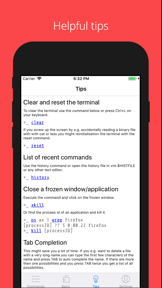


Snapshot
Who is Simon Schubert?
Providing specialized reference tools and cognitive training for technical users and casual learners. Bridging the gap between utility-focused productivity and accessible brain-training games.
Target audience


Portfolio
Free 4Last updated

Linux Command Library
v4.0.2
7mo ago
Publisher DNA
What defines Simon Schubert?
Publisher DNA
Primary focus
Technical reference tools and casual trivia/strategy games
Scale
indie
Target audience
Technical professionals, Linux users, and casual gamers interested in trivia and cognitive exercises.
Signature Patterns
- •Strong preference for offline-first functionality in utility and education apps.
- •Monetization model relies heavily on free-to-access tiers, with limited paid exceptions.
- •Development focus on high-utility, text-heavy interfaces for technical and educational content.
- •Frequent update cycles across the entire portfolio.
Portfolio momentum
With 38 releases in the last 6 months across 5 apps, the publisher demonstrates an aggressive update cadence, particularly for their core utility and gaming titles.
Company profile
medium confidence- Headquarters
- Ireland
Portfolio
What does Simon Schubert ship?
Apps
6 apps analysed


Analysis in progress


Europe-centric footprint across 7 markets.
Based on 1 of 6 apps with localized market data, more coverage rolling in as scans complete · last scanned .
Americas (2)
- Mexico1 / 1
- United States1 / 1
Europe (5)
- France1 / 1
- Germany1 / 1
- Italy1 / 1
- Netherlands1 / 1
- Spain1 / 1
Core markets (1/1 apps)
Rivals
Who does Simon Schubert compete with?
The rivals identified
Nemeses(2)

Both apps target the geography trivia segment with free-to-play models, directly competing for users seeking educational map-based challenges.


Both applications target Linux users with offline command-line documentation, creating direct competition for the same user base seeking terminal reference tools.
Contenders(17)


Both apps compete for the geography trivia audience using free-to-play models, targeting users interested in educational or competitive quiz experiences.


Both apps target Linux users and developers, competing for screen time by providing Linux-related knowledge through free, accessible mobile interfaces.


Both apps target the Linux user base, but Linux Command Library functions as a reference database while Learn Linux Command & Prompt operates as an educational curriculum.


Both apps target the geography trivia category, competing for users interested in map-based knowledge challenges. They differ primarily in their monetization model and multiplayer capacity.


Both applications target Linux users and developers with command-line documentation, competing for the same user base seeking quick terminal reference material.


Geognosis competes for the same geography-focused trivia audience by offering specialized map-based interaction modes that overlap with the geography category in 2 Player Quiz.


Both apps target geography enthusiasts with free-to-play trivia models, creating direct competition for users seeking educational map-based challenges.


Both apps target casual trivia players interested in geography, creating direct competition for time spent in the geography-focused trivia category.


Both apps target system administrators and developers with offline command documentation, creating direct competition for the same user base.


Both apps target Linux users seeking command-line documentation, creating direct competition for mobile reference utility.


Both applications target geography trivia enthusiasts and offer competitive multiplayer modes, creating direct overlap for users seeking regional or global knowledge challenges.


Both applications target Linux users seeking command-line documentation, with Linux Command Library providing full manual pages while tldr-pages focuses on concise, crowd-sourced summaries.


Both apps target the geography trivia segment with free-to-play models, competing for users seeking educational knowledge challenges.


known for CMD Line - MS DOS, CMD, Shell ,SSH, WINDOWS, TERMINAL, CONSOLE, SERVER AUDITOR
It serves as a reference guide for Windows command line syntax, acting as a functional alternative for users outside the Linux environment.


Both apps target Linux users seeking command-line documentation, competing directly for search-based reference utility on mobile platforms.


Both apps target users interacting with command-line interfaces on iOS, though they serve different primary needs: reference documentation versus interactive network utilities.


Both apps target Linux system administrators and developers, competing for utility within the command-line workflow.
Same space(19)


This app provides a broader, grade-level specific alternative to Braincup's general arithmetic challenges for students and adults.


AdaptedMind targets the math-learning subset of Braincup's users with a curriculum specifically tailored for K-12 students.


This tool provides a structured curriculum for certification preparation, contrasting with the reference-only focus of the source app.


Focus serves the same productivity-oriented users as Braincup, providing a timer-based structure for cognitive tasks.


Brilliant addresses the math-focused segment of Braincup's audience by providing an interactive, AI-guided curriculum for STEM learners.


DoodleMath provides a research-based alternative to Braincup's arithmetic challenges, specifically for elementary-aged learners.


This app targets the same beginner audience by shifting from static documentation to gamified, interactive lessons.


This app uses a quiz format to test command memorization, offering a different engagement method for terminal users.


It provides an arcade-style interface for command input, turning documentation lookup into a speed-based game.


It provides a hands-on learning environment for Linux fundamentals, emphasizing active practice over passive reading.


Lumosity overlaps with Braincup's puzzle-based cognitive training but offers a more extensive library of 40+ adaptive games.


NeuroNation competes for Braincup's cognitive training audience by offering a clinical, study-backed alternative to casual puzzle sessions.


This app targets the same geography enthusiasts as 2 Player Quiz but focuses on visual recognition and travel-themed trivia.


Smartick competes for Braincup's math-focused users by offering a structured, 15-minute daily training method for children.


This app aggregates community-contributed snippets, serving as a dynamic repository for advanced users rather than a static manual.


Peak serves the same cognitive training market as Braincup, using a broader library of 45+ games to maintain user interest.


Elevate targets the same mental sharpening demographic as Braincup but utilizes a subscription-gated habit loop to drive retention.


This app serves the same geography-focused trivia audience but shifts the utility from competitive play to structured educational mastery.


It applies spaced-repetition algorithms to command line practice, providing a technical edge for retention that static manuals lack.
The Analyst's Read
The bottom line on Simon Schubert
Bottom line
The publisher is a high-velocity indie studio that successfully leverages technical utility apps to anchor their portfolio. Their ability to maintain high user satisfaction in the education/productivity space contrasts with lower engagement in their casual gaming titles, indicating a need for more consistent quality control across categories.
Frequently asked questions
How many apps does Simon Schubert publish?
Where is Simon Schubert based?
What kind of apps does Simon Schubert make?
What is Simon Schubert's top app?
In how many countries are Simon Schubert's apps available?
What fed this analysis
- Apps analyzed:
- 5
- With full intel:
- 0
- With overview:
- 5
- Website scraped:
- yes
- Social presence:
- no