


The Mind Company
For adults and students seeking self-improvement, productivity, and stress management through structured, daily digital routines.
 Elevate - Brain Training Games


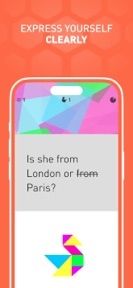


Snapshot
Who is The Mind Company?
Improving cognitive performance and mental well-being through personalized, science-backed digital exercises. Helping users sharpen their minds and manage stress in daily, bite-sized sessions.
Target audience


Portfolio
Free 5Last updated

Elevate - Brain Training Games
v5.257.0
17d ago
Publisher DNA
What defines The Mind Company?
Publisher DNA
Primary focus
Brain training and mental fitness applications
Scale
indie
Target audience
Adults and students seeking self-improvement, productivity, and stress management through structured, daily digital routines.
Signature Patterns
- •Subscription-based monetization model with free trial entry points
- •Focus on personalized, adaptive user experiences rather than static content
- •Science-backed, goal-oriented branding for cognitive and mental health improvement
- •High-frequency update cadence across the entire portfolio
Portfolio momentum
Released 13 updates across 2 apps in the last 6 months, with both titles receiving updates within the last 20 days, indicating a high-frequency development cycle.
Portfolio
What does The Mind Company ship?
Apps
5 apps analysed

Get support for whatever life brings. Meditate and improve your mental health.


Human-narrated audio differentiation sustains high user sentiment vs robotic rivals
- Personalized meditation plans help users build consistent daily habits for stress management and mental clarity
- Users report aggressive and repetitive subscription prompts that interrupt the experience for those using the free tier

Get support for whatever life brings. Meditate and improve your mental health.


10-day skill plans drive long-term habit formation and reduce churn
- Structured meditation plans provide a clear learning path that helps beginners build consistent daily habits
- Audio playback stops unexpectedly during meditation sessions, disrupting the relaxation experience for many users

Train your cognitive skills with fun math, word, grammar, vocab & memory puzzles


Adaptive difficulty levels provide a personalized challenge that keeps users engaged during daily sessions
- Daily brain training exercises effectively sharpen mental acuity and expand vocabulary for long-term users
- Users report: Aggressive monetization and misleading free-to-play advertising frustrate users who expect a fully free experience
Train your cognitive skills with fun math, word, grammar, vocab & memory puzzles

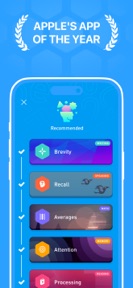

Editors' Choice badge sustains organic install velocity
- Engaging daily brain training exercises help users maintain focus and vocabulary skills over time
- Aggressive paywall tactics and subscription-only access frustrate users who expected a free experience

Distributed across 15 markets, strongest in Americas.
Based on 5 of 5 apps with localized market data · last scanned .
Americas (4)
- United States5 / 5
- Brazil3 / 5
- Mexico3 / 5
- Canada2 / 5
Europe (5)
- France3 / 5
- Portugal3 / 5
- Spain3 / 5
- Turkey2 / 5
- United Kingdom2 / 5
Asia-Pacific (6)
- South Korea3 / 5
- Australia2 / 5
- India2 / 5
- Indonesia2 / 5
- Singapore2 / 5
›+1 more asia-pacific market
- Vietnam2 / 5
Core markets (5/5 apps)
User Sentiment
How do users feel about their apps?
2
Positive apps
1
Neutral / mixed
1
Negative apps
61/100
Avg sentiment score
Unlock the app dragging this portfolio down.
Access the full report for freeRivals
Who does The Mind Company compete with?
The rivals identified
Nemeses(2)

Both apps target the same cognitive training audience and utilize adaptive game mechanics, but Lumosity's recent focus on Zen Mode and research-backed credibility directly challenges Elevate's personalized curriculum.


Both apps target the same meditation and sleep market with identical annual pricing of $69.99, forcing users to choose between Balance's personalized coaching loop and Headspace's clinical mental health platform.
Contenders(20)


Both apps compete for the same audience seeking personalized mental wellness and sleep improvement, creating direct overlap in daily habit formation and user acquisition.


Both apps target users seeking stress reduction and sleep improvement through subscription-based meditation and mindfulness content.


Both apps target users seeking cognitive improvement through personalized training, creating direct competition for daily active users within the brain training category.


Both apps compete for the same audience seeking stress relief and sleep support through audio-based content within the Health and Fitness category.


Both apps compete for the cognitive training market by offering daily mental exercises to adults, creating a direct overlap in the brain training category.


Both apps target the same cognitive training audience and compete for daily habit formation, with Impulse using high-volume organic discovery to challenge the market position of Elevate.


Both applications target the cognitive training market for adults, competing for daily engagement through brain games and memory exercises.


Both apps compete for the same mindfulness-seeking audience by offering structured meditation paths, though they diverge on personalized coaching versus content-led approaches.


Both apps compete for the same mental wellness and sleep-focused user base, targeting daily habit formation through meditation and audio content.


Both apps compete for the same audience of users seeking daily cognitive improvement through short-form exercises, creating direct overlap in the brain training category.


Both applications target the same cognitive training audience with daily short-form exercises, creating direct competition for user time and retention.


Both apps target the same audience seeking cognitive improvement through daily, science-based mental exercises and structured training programs.


Both apps compete for the same mental wellness and sleep-aid audience by offering personalized meditation content through subscription-based models.


Both apps target users seeking stress regulation and mental health support, with Open competing for the same mindfulness-focused audience through a broader curriculum of breathwork and movement.


Both applications target individuals seeking daily mental exercises to improve cognitive performance, creating direct competition for user time within the brain training category.


Both apps compete for the same daily mental health and stress reduction habit, forcing users to choose between guided meditation plans and sensory-focused breathing exercises.


Both apps compete for the same user base seeking anxiety and stress management tools, forcing a choice between structured coaching and immediate sensory regulation.


Both apps target the same cognitive training audience with daily short-form exercises, creating direct competition for user time and subscription revenue.


Both apps target the same cognitive training demographic and utilize adaptive algorithms to build daily habits, creating direct competition for user time and subscription spend.


UpLife competes for the same mental health and self-help audience by offering daily 15-minute guided journeys and mood tracking, directly overlapping with the goal-oriented habit formation focus of Balance.
Same space(33)


AdaptedMind Math captures the younger segment of the cognitive-training market, focusing on K-12 math development.


Worldle serves the same daily puzzle audience by focusing on spatial reasoning and silhouette recognition.


Brain-Trainer offers a similar suite of cognitive mini-games to Elevate but targets a broader age range with a completely free model.


This app serves the same sleep-tracking audience as Balance but leverages Apple Watch sensors for automated data collection.


BoldVoice serves users seeking cognitive-linguistic improvement through specialized accent training rather than general brain games.


Brilliant serves a similar audience of lifelong learners but shifts the focus from general cognitive sharpening to specific STEM mastery.


cabuu provides a curriculum-specific vocabulary trainer that removes the manual data-entry friction found in general-purpose apps.


DoodleMath serves the elementary math practice market, providing a research-based alternative to Elevate's general cognitive exercises.


DuoCards complements Elevate by providing a specialized tool for vocabulary retention through AI-driven flashcards.


This app provides an alternative to Balance's guided sessions by using generative AI to create adaptive soundscapes.


This app addresses the same sleep-improvement goal as Balance but utilizes diagnostic snore detection to differentiate its utility.


This app uses gamification to drive the same habit-building goals as Balance, targeting users with ADHD.


This app competes for the same health-conscious user base by aggregating biometric data that Balance lacks.


This app serves the same sleep-aid market as Balance using a noise-mixer function for personalized soundscapes.


This app provides a similar ambient sound experience to Balance's wind-down tools for users in noisy environments.


MapTap.gg occupies the same daily puzzle niche but focuses on geography through historical storytelling and 3D globe interactions.


Nibble competes for the same daily microlearning habit but utilizes an aggressive monetization funnel that creates significant friction for new users.


NeuroNation competes for the same adult cognitive-health audience by using clinical partnerships to validate its training efficacy.


This app complements the sleep and stress goals of Balance users by monitoring biometric stress markers via wearable data.


FastMath serves the same cognitive training audience as Elevate but focuses on a narrow, distraction-free arithmetic niche.


This app provides a large library of ambient sounds for sleep induction, competing with Balance's wind-down tools.


phase6 targets the academic vocabulary-training niche, providing a structured alternative to Elevate's general-purpose exercises.


This app provides a data-driven sleep tracking alternative to Balance's coaching-focused model.


This app targets the same relaxation-seeking audience as Balance but adds visual stimuli to the meditation experience.


This app targets the same anxiety-relief audience as Balance but focuses on immediate, in-the-moment panic support.


This app targets the same sleep-focused user segment as Balance but uses non-wearable sound tracking to provide data-driven insights.


This app offers a content-heavy alternative to Balance's coaching model for users seeking simple noise-based sleep aids.


Smartick focuses on math mastery for children, offering a structured alternative to Elevate's broader cognitive training.


This app offers a specialized alternative to Balance's meditation by focusing on EFT tapping for stress relief.


This app provides a linear meditation path similar to Balance but centers its curriculum on Zen practice.


This app serves the same sleep-aid audience as Balance but focuses exclusively on customizable audio environments.


This app targets the same mindfulness audience as Balance but uses a theory-heavy curriculum to drive engagement.

known for Meditopia: Sleep, Meditation
This app offers a broader range of mindfulness content than Balance, covering diverse human experiences.
New entrants(1)


This app focuses on sleep tracking for privacy-conscious users, serving as a technical alternative to Balance's coaching.
The Analyst's Read
The bottom line on The Mind Company
Bottom line
The Mind Company is a high-performing boutique studio that successfully leverages platform-level recognition to drive user acquisition. Their disciplined focus on two distinct pillars of mental fitness demonstrates a clear, sustainable product-market fit.
Frequently asked questions
How many apps does The Mind Company publish?
What kind of apps does The Mind Company make?
What is The Mind Company's top app?
In how many countries are The Mind Company's apps available?
What fed this analysis
- Apps analyzed:
- 2
- With full intel:
- 2
- With overview:
- 2
- Website scraped:
- yes
- Social presence:
- yes
