


Tuxedo Lab
 Bill Organizer Reminder: NEKO





Snapshot


Publisher DNA
What defines Tuxedo Lab?
AI intelligence is not yet available for Tuxedo Lab. The portfolio data below is up to date.
Portfolio
What does Tuxedo Lab ship?
Apps
3 apps analysed
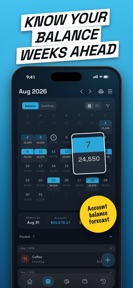
Projected balance calendar provides long-term financial visibility
- Manual transaction entry restores financial awareness by removing the friction-less nature of automated bank syncing
- Recent UI changes following the latest update are perceived as less intuitive and visually unappealing

Track your bills due date with reminders, pay on time and stay on budget


Analysis in progress

PDF report generation provides a tangible, high-value output for medical appointments.
- Local-first data storage ensures privacy-conscious users retain full control over sensitive health records.
Distributed across 18 markets, strongest in Europe.
Based on 2 of 3 apps with localized market data, more coverage rolling in as scans complete · last scanned .
Americas (4)
- Brazil2 / 2
- Mexico2 / 2
- United States2 / 2
- Canada1 / 2
Europe (7)
- France2 / 2
- Portugal2 / 2
- Spain2 / 2
- Germany1 / 2
- Italy1 / 2
›+2 more europe markets
- Turkey1 / 2
- United Kingdom1 / 2
Asia-Pacific (7)
- Australia2 / 2
- India1 / 2
- Indonesia1 / 2
- Japan1 / 2
- Singapore1 / 2
›+2 more asia-pacific markets
- South Korea1 / 2
- Vietnam1 / 2
Core markets (2/2 apps)
User Sentiment
How do users feel about their apps?
1
Positive apps
0
Neutral / mixed
0
Negative apps
85/100
Avg sentiment score
Rivals
Who does Tuxedo Lab compete with?
The rivals identified
Nemeses(2)

Both apps target individuals managing recurring bills and income, but they diverge on the mechanism of data entry: NEKO mandates manual input for privacy, while Bill Tracker Pro relies on automated bank synchronization via Plaid.


Both apps target users managing recurring bills and expenses, with Bills Organizer & Reminder competing directly for the same audience through its focus on payment reminders and bill tracking.
Contenders(18)


Both apps target users managing recurring bills and payments, but they diverge on the mechanism of data persistence and platform availability.


Both apps target privacy-conscious users seeking personal finance management, but they diverge on the mechanism of data entry and synchronization.


Both apps target privacy-conscious users who avoid bank synchronization, competing for the same manual-entry financial tracking demographic.


Both apps target users who prefer manual, calendar-based financial forecasting over automated bank-linked tools, creating direct competition for privacy-conscious budgeters.


Both apps target users managing recurring expenses and bill due dates, competing for the same audience of individuals seeking to avoid late fees and overdrafts.


Both apps target personal finance management by tracking income and expenses, competing for users seeking to organize their financial records.


Both apps compete for the same personal finance audience by offering budgeting and expense tracking tools.


Both applications target the personal finance market by offering manual expense tracking and budgeting tools for users who avoid bank integration.


Both apps target personal finance management by providing daily spending limits and expense tracking, competing for users seeking manual budget control.


Both apps target users seeking manual financial tracking and bill management, with overlapping functionality in income and expense logging.


Both apps target personal finance management by calculating safe-to-spend limits, directly competing for users seeking automated financial forecasting.


Both applications target users managing recurring financial obligations, with BillOut providing shared bill tracking that overlaps with the core bill management functionality of NEKO.


Both apps target users managing recurring expenses and bill payments, creating direct competition for the same personal finance management audience.


Both apps compete for the same personal finance audience by offering expense tracking and bill management tools on the iOS platform.


Both apps target users managing recurring bills and income via calendar-based interfaces, competing for the same personal finance management audience.


Both apps target the personal finance management space by focusing on overdraft avoidance and bill tracking, though they diverge on the mechanism of data ingestion: manual entry versus automated bank synchronization.


Both apps target users managing recurring bill payments and personal budgets, competing for the same manual-entry financial tracking audience.


Both apps target users managing recurring financial obligations, with NEKO focusing on comprehensive budgeting and My Payment Reminder specializing in loan-specific tracking.
Same space(29)


Buddy targets the shared-finance segment that NEKO ignores, using a visual interface to manage household budgets between partners.


Wallet bridges the gap between manual and automated tracking, offering a more consolidated dashboard than NEKO.


CalendarBudget targets NEKO's audience by using a calendar-based visualization to show future balances and upcoming bills.


Money+ targets NEKO's privacy-focused users with an offline-first accounting tool that avoids all network dependencies.


Money manager & expenses offers a high-volume alternative for users who prefer manual transaction logging over NEKO's automated forecasting.


Spendee serves users who want automated, bank-linked financial tracking, contrasting with NEKO's manual-only, privacy-first approach.


Fudget serves NEKO's manual-entry users by focusing on a simplified, real-time interface for tracking recurring budgets.


Goodbudget uses a virtual-envelope methodology to force spending discipline, contrasting with NEKO's more flexible tracking.


Emma competes for NEKO's users by providing automated account aggregation, though it relies on aggressive paywalls that trigger churn.


Fleur competes for NEKO's privacy-focused, manual-entry users by emphasizing a minimalist, aesthetic design to build daily tracking habits.


MonAi targets NEKO's users by replacing manual typing with voice-based expense entry to reduce tracking friction.


This app targets the same manual-entry finance audience as NEKO but emphasizes broad, all-in-one asset management rather than focused bill forecasting.


Budget App serves the same manual-entry demographic as NEKO but expands into shared ledger functionality for households.


Florine serves the same manual-entry budget planning audience as NEKO, focusing on visual clarity for monthly planning.


MoneyNote provides a direct alternative to NEKO's manual-entry model, specifically targeting users who require tax-ready financial reporting.


Spending Tracker competes for NEKO's manual-entry users, utilizing iOS Shortcuts to speed up the logging process.


MoneyCoach targets NEKO's audience by offering goal-oriented financial tracking and net worth monitoring for families.


Debt Payoff Planner captures the debt-focused segment of NEKO's audience, using visual milestones to drive engagement.


Debt Tracker targets the debt-management niche of NEKO's audience with a simplified, non-budgeting approach to balance reduction.


PocketGuard automates the 'safe-to-spend' calculation that NEKO performs, appealing to users who want less manual effort.


Quicken provides a professional-grade dashboard for users who need to integrate business and personal finances beyond NEKO's scope.


Money Manager targets power users who need professional-grade accounting, providing a more complex alternative to NEKO's simple forecasting.


Monefy provides a rapid-entry alternative for users who find NEKO's calendar-based interface too slow for daily logging.


Rocket Money offers high-utility concierge services like bill negotiation that extend beyond NEKO's core tracking capabilities.


EveryDollar uses the Ramsey brand to attract users focused on debt reduction, providing a structured alternative to NEKO.


Mobills competes for NEKO's users by offering a comprehensive budget planner that includes bill reminders and expense tracking.


Tricount complements NEKO by handling the group-specific bill splitting that NEKO's individual-focused calendar does not cover.


Weekly competes for NEKO's audience by using a similar Safe-to-Spend balance, but focuses on a weekly rather than monthly cadence.


YNAB targets the same budget-conscious demographic as NEKO but uses a zero-based methodology to force proactive financial management.
New entrants(1)


Billo directly competes with NEKO's bill-tracking core, emphasizing a calm, manual-entry experience for managing recurring due dates.
