
Uxcel
 Uxcel: Learn AI Skills






Publisher DNA
What defines Uxcel?
AI intelligence is not yet available for Uxcel. The portfolio data below is up to date.
Portfolio
What does Uxcel ship?
Apps
1 app analysed
Industry-recognized certificates provide tangible career-advancement value
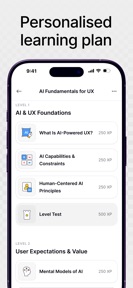
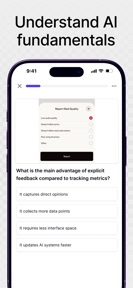
- Gamified learning mechanics like streaks and leaderboards keep users engaged with daily UX design practice
- Aggressive paywalls restrict access to the majority of learning content for non-paying users
Single-market publisher, every app ships only to United States.
Based on 1 of 1 app with localized market data · last scanned .
Americas (1)
- United States1 / 1
Core markets (1/1 apps)
User Sentiment
How do users feel about their apps?
1
Positive apps
0
Neutral / mixed
0
Negative apps
75/100
Avg sentiment score
Rivals
Who does Uxcel compete with?
The rivals identified
Nemeses(1)

Both platforms target professionals seeking career advancement through skill-based training, forcing a choice between Uxcel's bite-sized daily habit format and Coursera's long-form university-backed credentials.
Contenders(2)


Both apps target professionals seeking AI skill acquisition through guided learning paths, creating direct competition for time-constrained users.


Both platforms target professionals seeking AI and technical skill development, forcing a choice between Uxcel's bite-sized, interactive format and Udemy's extensive, expert-led video library.
Same space(20)


ArtWorkout competes for the same creative professional time as Uxcel, using technical feedback to guide artistic skill development.


Uxy uses a quiz-based format to train design intuition, serving the same junior designer audience as Uxcel.


Artie uses AI-driven feedback for skill mastery, mirroring the interactive, self-paced learning model found in Uxcel.


Babbel targets the same professional-oriented learner segment as Uxcel but focuses on expert-led language fluency.


Brilliant targets the same STEM-focused professional audience as Uxcel, emphasizing logical intuition over rote memorization.


CraftUp focuses on product management skills, serving the same career-advancement segment as Uxcel's Product Engineer track.


DataCamp serves the same data science and AI professional audience as Uxcel, focusing on career-oriented skill acquisition.


Learna uses AI-driven conversation practice to build skills, paralleling Uxcel's focus on interactive, career-relevant training.


Duolingo competes for the same daily habit formation time as Uxcel, using gamified loops to maintain user engagement.


Gauth competes for the same student and professional study time as Uxcel, focusing on step-by-step STEM problem resolution.


Tixu provides bite-sized AI training, directly mirroring Uxcel's format for busy professionals seeking skill growth.


YayTalk offers AI-persona conversation practice, appealing to the same users who utilize Uxcel for interactive skill building.


Learn AI offers a certification-focused curriculum, serving the same professional development needs as Uxcel's AI tracks.


Kodree provides career-path training for AI and design, directly overlapping with Uxcel's professional development curriculum.


Mimo overlaps with Uxcel's audience of aspiring developers by offering project-based coding education with AI assistance.


Noesion targets professional productivity through AI, competing for the same time-constrained user base as Uxcel.


Praktika shares the AI-tutor model with Uxcel, competing for users who prefer conversational immersion over static lessons.


ProApp focuses on design fundamentals and UI/UX training, competing for the same design-centric user base as Uxcel.


Learn AI by Sololearn targets the same generative AI skill-building audience as Uxcel through practical application.


BoldVoice provides professional communication training, serving a similar career-advancement goal as Uxcel's AI skill tracks.
New entrants(2)


3 Minute AI centralizes AI tools into a learning habit, competing for the same daily engagement as Uxcel.


EWA provides hands-on AI project training, directly competing with Uxcel's focus on practical, career-applicable skills.
