
VeloBank S.A.
 VeloBank




Publisher DNA
What defines VeloBank S.A.?
AI intelligence is not yet available for VeloBank S.A.. The portfolio data below is up to date.
Portfolio
What does VeloBank S.A. ship?
Apps
1 app analysed
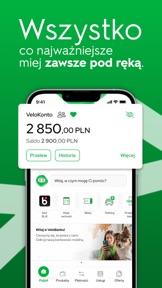
24/7 currency exchange [Differentiator]
- Customizable dashboard shortcuts [UI/UX]
- Technical stability and performance regressions on Android
Single-market publisher, every app ships only to United States.
Based on 1 of 1 app with localized market data · last scanned .
Americas (1)
- United States1 / 1
Core markets (1/1 apps)
User Sentiment
How do users feel about their apps?
0
Positive apps
1
Neutral / mixed
0
Negative apps
50/100
Avg sentiment score
Rivals
Who does VeloBank S.A. compete with?
The rivals identified
Nemeses(1)

Both apps target retail banking customers with mobile-first interfaces, creating a direct overlap in the user need for daily transactional management and account monitoring.
Contenders(9)


Both apps target retail banking customers with mobile-first account management, creating direct competition for daily financial utility and transaction volume.


Both apps compete for retail banking customers by offering mobile-first account management, though they operate in different geographic markets.


Both apps compete for the same retail banking user base by providing mobile-first account management and transaction workflows, despite operating in distinct geographic markets.


Both apps compete for retail banking customers by offering mobile-first transaction management and account opening workflows. They target the same digital-first user segment seeking to manage balances and payments via smartphone.


Both apps target retail banking customers with mobile-first transaction workflows, competing for the same digital-native user base seeking self-service account management.


Nationwide competes for the same retail banking user base by offering integrated savings management tools that directly address the retention gaps identified in VeloBank's standard loyalty rewards.


Both apps serve retail banking customers with digital-first account management, creating direct competition for users who prioritize mobile-based financial workflows.


TSB Mobile Banking competes for the same digital-first retail banking audience by offering automated savings tools and card management features that directly address the retention gaps identified in the VeloBank feature set.


Both apps target retail banking customers with mobile-first account management and transaction tools. They compete on the utility of self-service features like mobile check deposits and automated account tracking.
Same space(18)


myWisely uses payroll-linked deposits to secure a captive user base, a mechanism VeloBank could explore for corporate partnerships.


Pocztowy operates in the same Polish market as VeloBank, using postal integration as a unique distribution channel.


Hello bank! targets self-employed professionals with invoicing tools, a segment VeloBank could capture to increase utility.


Deblock combines current accounts with self-custody crypto wallets, showing a path for VeloBank to integrate digital assets.


Fifth Third serves as a US-based retail banking reference for check deposit and person-to-person payment integration.


Monese targets multi-currency needs while providing specific support for users with limited financial history.


Monzo offers automated salary management tools that highlight a feature gap in VeloBank's current retail offering.


N26 illustrates the complexity of managing multi-tier subscription models in a mobile-first banking environment.


Mobilbank represents a standard mobile banking extension for existing customers, similar to VeloBank's core retail banking utility.


Aqua provides a credit-building lifeline for users with impaired histories, contrasting with VeloBank's retail focus.


Nickel provides a physical retail distribution network in France that contrasts with VeloBank's digital-only approach.


Renault Bank demonstrates a simple, one-app approach to banking and transaction authorization.


V12 Retail Finance targets the management of retail finance agreements, a specific utility VeloBank could add for its retail customers.


Vanquis focuses on the credit-building segment, highlighting the risks of removing web-based account management.


Varo demonstrates the retention potential of credit-building tools, which VeloBank currently lacks in its retail suite.


Virgin Money focuses on credit card servicing and rewards, highlighting the importance of stability in VeloBank's servicing channels.


Zable focuses on credit-building for underserved users, a segment VeloBank could target with more advanced tools.


Zopa integrates lending and savings, providing a model for VeloBank to expand beyond basic retail accounts.
