




TIDAL Music is a high-fidelity audio streaming app for audiophiles and music enthusiasts on iOS and Android.
The App DNA
What makes this app unique?
Users choose TIDAL to access lossless audio and support artists through a more ethical payment model, replacing standard compressed streaming services.
For Audiophiles and music enthusiasts seeking high-fidelity sound quality and professional DJ integration tools.
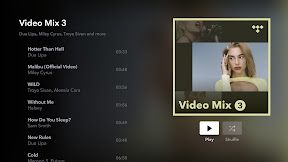
What does it look like?
Key features
Streaming of music files up to 24-bit, 192 kHz and Dolby Atmos formats; premium-tier gate ($10.99/month) justifies higher price point vs standard compressed streaming.
Direct streaming of lossless audio to supported hardware devices; partnership-driven feature increases hardware lock-in and reduces churn.
Download tracks, albums, and playlists for playback without internet connectivity; critical retention feature for mobile users.
How much does it cost?
Subscription-only model anchored at $10.99/month for individual access, with specific add-ons for professional DJ functionality.
Velocity
Active developmentperformanceopaquenew contentShow more...
The app maintains an active development pace, shipping 10 distinct versions over the observed window with an average cadence of approximately 0.8 releases per week. While the latest releases are characterized by generic bug fix descriptions, the platform remains active with significant feature additions like HiRes FLAC support and bitrate indicators. The development trend is stable, focusing on performance and technical refinements. The reliance on opaque release notes suggests that many improvements may be delivered via server-side updates or feature flags.
Who built it?

User Sentiment
What do users think recently?
The recent review mood reads frustrated. Users appreciate high-fidelity audio quality remains the primary reason users choose this platform over competitors and artist-focused payment model provides an ethical incentive for users to maintain their subscriptions, but report recent visual and functional interface changes disrupt navigation and make core features harder to access.
How are ratings & reviews evolving?
What users say, by theme
- High-fidelity audio quality remains the primary reason users choose this platform over competitors
- Artist-focused payment model provides an ethical incentive for users to maintain their subscriptions
- Recent visual and functional interface changes disrupt navigation and make core features harder to access
91 of 99 recent reviews analyzed · high confidence · Frustrated overall
Read the full review analysisUnlock 2 more frustration themes and 2 user requests, each backed by review evidence.
Access the full report for freeCompetition
Competitive landscape for TIDAL Music: HiFi Sound
How's the Music market?
TIDAL holds a premium niche, with chart positions like #10 Grossing in the US Music & Audio category, though its free-tier visibility remains low compared to mass-market streaming rivals. The platform's reliance on high-fidelity audio as a primary differentiator creates a defensible, albeit smaller, market segment than mass-market competitors.
Read the market outlookThe rivals identified

By SoundCloud Global Limited & Co KG
Both platforms target music enthusiasts, but SoundCloud captures the discovery-first market through an open-upload model, while TIDAL focuses on lossless audio for audiophiles.
- SoundCloud hosts an open-upload model for niche tracks; TIDAL restricts content to curated studio-quality recordings.
- SoundCloud integrates fan-powered royalties and community engagement tools; TIDAL focuses on artist-first payment models.
- SoundCloud provides an ad-supported free tier; TIDAL requires a paid subscription for all listening.
 Audiomack - Play Music OfflineContender
 Deezer: Music Player, PodcastContender
 Qobuz: Music & EditorialContender
 Youtify - Music & PlaylistsContender
 Offline Music Player ‣‣Contender
 Music : Offline PlayerContender
 WiiM HomeContender
Unlock the head-to-head verdict: where this rival wins, and where it loses.
Access the full report for freeThe Analyst's Read
Key takeaways for TIDAL Music: HiFi Sound
Where is it heading?
The market for high-fidelity streaming is consolidating, and TIDAL's current focus on aesthetic UI changes over technical stability is a strategic misstep. Unless the platform prioritizes core playback reliability and search quality, it risks losing its audiophile base to more stable, hardware-integrated rivals.
- Persistent playback instability and UI regressions in the latest update erode the daily active habit, which compounds the rating drag already visible on Android.
- The influx of non-authentic AI content hinders search utility, driving long-term users to consider switching to competitors.
The SWOT
- Editors' Choice badge across five markets sustains organic install velocity
- TIDAL Connect hardware integration creates a defensible lock-in for audiophile setups
- Artist-first payment model drives ethical loyalty among core subscribers
- Localized radio integration could capture passive listeners currently defaulting to Cienradios
- Native smartwatch support would unlock standalone listening for active mobile users
Next best moves
Stabilize core playback and navigation because technical instability is the #1 churn risk → improve retention
+ 1 more prioritized moveThe counter-intuitive read
TIDAL's focus on high-fidelity audio is a vulnerability, not just a strength…
Read the full takeFeature gaps
Sleep timer (available in Radio Mexico FM and Japan Radio FM but missing here) +1
Since the last report: TIDAL expanded its monetization via a new DJ Extension add-on while simultaneously facing increased user frustration over AI-generated content flooding search results. These changes, coupled with ongoing technical instability, have deepened the negative sentiment trend.
Bottom line
Stabilizing core playback and navigation is the only way to defend the audiophile niche against more stable, mass-market rivals. Addressing the AI-content quality issue will restore the search utility that currently drives user frustration.
Unlock 3 critical frictions, 3 market threats, 1 more prioritized move and the analyst’s take.
Access the full report for freeFAQ
Is TIDAL worth paying for if I only listen to music casually?
How does TIDAL compare to Cienradios?
Does TIDAL have intrusive ads?
What is a good alternative to TIDAL for high-quality audio?
Sources
- [1] Play Store listing, source
Report last updated