


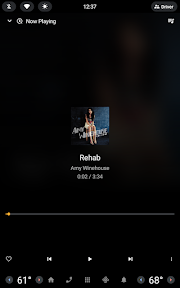
Qobuz is a music streaming and download service for audiophiles, offering high-resolution audio and editorial content on iOS and Android.
The App DNA
What makes this app unique?
Users hire Qobuz for authentic, studio-quality sound and expert-curated music discovery that prioritizes album-centric listening over algorithmic feeds.
For Audiophiles and music enthusiasts seeking high-resolution audio quality and deep editorial context.
What does it look like?
Key features
Lossless FLAC and Hi-Res 24-Bit audio
500,000+ expert articles and reviews
Direct Hi-Fi hardware integration
How much does it cost?
Subscription-only model focused on high-fidelity audio, anchored by exclusive editorial content.
Velocity
Active developmentUX improvementsplatform expansionperformanceShow more...
The app maintains an active development cadence, shipping 5 releases over the past 3 months, averaging approximately 0.4 releases per week. Development is focused on UX improvements, platform-specific optimizations for iPad and CarPlay, and core player enhancements. The release history shows a consistent pattern of feature-rich updates rather than purely maintenance-based patches. The current trajectory is stable, with regular feature delivery across both iOS and Android platforms.
Who built it?


User Sentiment
What do users think recently?
The recent review mood reads mixed. Users appreciate high-fidelity audio quality provides a superior listening experience compared to mainstream streaming competitors, but report frequent playback interruptions and app crashes disrupt the listening experience across mobile platforms.
How are ratings & reviews evolving?
What users say, by theme
- High-fidelity audio quality provides a superior listening experience compared to mainstream streaming competitors
- Frequent playback interruptions and app crashes disrupt the listening experience across mobile platforms
119 of 198 recent reviews analyzed · high confidence · Mixed overall
Read the full review analysisUnlock 1 user request, each backed by review evidence.
Access the full report for freeCompetition
Competitive landscape for Qobuz: Music & Editorial
How's the Music market?
Qobuz maintains a stable presence in the Music & Audio category, typically ranking between #10 and #20 in grossing across major European markets. The consistent gap between free-tier visibility and grossing rank signals that the premium pricing model remains a barrier for casual listeners.
Read the market outlookThe rivals identified

By Google
YouTube Music competes for the same music streaming audience by offering a massive catalog and video-audio switching, forcing Qobuz to defend its audiophile niche against a platform with higher reach and freemium accessibility.
- YouTube Music provides ad-supported free playback; Qobuz requires a paid subscription for all streaming.
- YouTube Music integrates official music videos; Qobuz focuses exclusively on lossless audio files.
- YouTube Music utilizes Google-powered search for vague queries; Qobuz relies on human-curated editorial content.
 Amazon Music: Songs & PodcastsContender
 TIDAL Music: HiFi SoundContender
 Deezer: Music Player, PodcastContender
 Audiomack - Play Music OfflineContender
 Youtify - Music & PlaylistsContender
 Lyra - Music, Radio & PodcastsContender
 Apple Music ClassicalContender
 IDAGIO Stream Classical MusicContender

Unlock the head-to-head verdict: where this rival wins, and where it loses.
Access the full report for freeThe Analyst's Read
Key takeaways for Qobuz: Music & Editorial
Where is it heading?
The high-fidelity streaming market is consolidating as mainstream players like Apple Music integrate lossless audio into their OS-level experience. Qobuz remains advantaged by its editorial authority, but the current technical instability creates a vulnerability that will accelerate churn if not addressed by Q3.
- Playback instability in the latest release causes music to stop mid-track, which directly increases churn among mobile users.
- Recent feature additions like fast library scrolling show active development, suggesting the team is not in maintenance mode.
The SWOT
- Lossless Hi-Res library functions as a technical barrier to entry for mainstream competitors
- Ethical artist compensation model drives brand loyalty among music enthusiasts
- Direct Hi-Fi hardware integration increases switching costs for prosumer users
- Lyrics integration would close a parity gap with mainstream streaming services
- Artist-blocking features would improve recommendation control for power users
Next best moves
Rebuild playback engine stability because playback interruptions are the #1 churn driver → increase retention
+ 1 more prioritized moveThe counter-intuitive read
The lack of algorithmic discovery is actually a retention asset…
Read the full takeFeature gaps
Lyrics display (available in TIDAL and Apple Music) +1
Since the last report: Qobuz is prioritizing hardware integration and UX updates, but rising technical instability and increased competitive pressure from Apple Music and TIDAL are creating churn risks.
Bottom line
Qobuz maintains a strong moat through its Hi-Res audio quality and editorial authority, but technical instability in the latest release actively drives churn, so the team must prioritize playback reliability over new feature expansion to protect the subscriber base.
Unlock 3 critical frictions, 2 market threats, 1 more prioritized move and the analyst’s take.
Access the full report for freeFAQ
Is Qobuz worth it for casual listeners?
Does Qobuz have lyrics?
How does Qobuz compare to TIDAL?
Report last updated