




Roman is a paid diet and meal-planning app for budget-conscious users on iOS.
Product velocity
Steady
Daily rank 🇺🇸
#47
▼11Food & Drink · paid
Sentiment
5.0
13 reviews
Nemesis

Fastic Weight Loss & Fasting
The App DNA
What makes this app unique?
Users hire Roman to achieve weight loss goals without the recurring costs of subscription-based health platforms.
For Individuals seeking weight loss and nutritional guidance who prioritize low-cost, budget-friendly solutions.
What does it look like?
Key features
Calculates calorie and meal requirements based on user-inputted current weight.
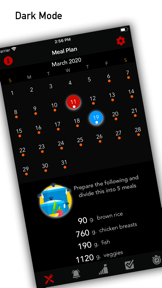
Generates detailed meal plans tailored to specific calorie goals and fat-burning objectives.
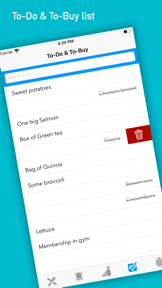
Provides guidance on meal prep and affordable food choices.
How much does it cost?
Low-cost, one-time purchase model positioned as an affordable, budget-conscious alternative to subscription-based diet apps.
Velocity
Steady developmentShow more...
5 versions in history. Development pace: steady.
Who built it?
Roman Kuryanov
12 apps tracked · Food & Drink
 Finger-tapping test
 DJ Meow: Piano for Kids
 Mama’s Farm: Calm & Cozy
 Oh My Pool! Everlasting summer
 Islamic Prayer & Qibla Compass
 Quntact: Business Card Scanner
 GoodDeed
 tottler: Parents helper
 Gamemory - Augmented Reality
 Pixel Beard
 Mishep — workout with friends
User Sentiment
What do users think recently?
How are ratings & reviews evolving?
Not enough recent reviews to extract reliable themes yet.
Read the full review analysisCompetition
Competitive landscape for Roman: budget weight loss
How's the Food & Drink market?
Roman occupies a niche budget-first position in the Food & Drink category, relying on a one-time purchase model ($0.39) to differentiate from subscription-heavy rivals. The lack of updates since early 2026 signals a maintenance-mode posture that limits its ability to compete with high-frequency rivals.
Read the market outlookThe rivals identified
By HealthVida GmbH & Co. KG.
Fastic competes directly for the weight-loss-conscious user by combining fasting protocols with nutritional tracking, capturing a massive share of the health-focused market.
- Leverages AI-powered restaurant menu scanning to provide instant nutritional insights for dining out users.
- Utilizes a proprietary 'Fastic Score' to gamify user progress and increase long-term daily retention.
- Maintains a high-frequency release cadence, shipping five major updates in the last six months alone.
 Fiber Tracker | Plant PowerContender
 Traffic Light Calorie Counter & Food GuideContender
 MyFit TrackerContender
 Smart Calorie AIContender
Unlock the head-to-head verdict: where this rival wins, and where it loses.
Access the full report for freeThe Analyst's Read
Key takeaways for Roman: budget weight loss
Where is it heading?
Users report: The weight-loss app market is consolidating around AI-automated logging and high-frequency live-ops, leaving Roman's static toolset increasingly exposed. Without a pivot to automated data entry, the app will likely see continued decline in relevance as users migrate to tools that reduce manual effort.
- Zero major updates in six months indicates a lack of active feature investment, which allows AI-driven competitors to erode the app's value proposition.
The SWOT
- One-time purchase model ($0.39) functions as a low-friction entry barrier against subscription-heavy rivals.
- Focused value proposition appeals to users intimidated by complex, AI-heavy fasting metrics.
- Integration of open-source food databases could automate logging without high development costs.
Next best moves
Integrate Open Food Facts API because it automates logging without high R&D costs → reduce manual-entry friction.
The counter-intuitive read
The $0.39 price point is a strategic trap…
Read the full takeFeature gaps
AI-powered menu scanning (available in Fastic but missing here) +1
Since the last report: The product strategy shifted from a maintenance-only posture to an active development plan focused on integrating open-source data to reduce user friction.
Bottom line
Roman defends a low-cost niche through its one-time purchase model, but the lack of feature iteration against AI-automated rivals threatens its long-term relevance, so the PM should prioritize a low-cost database integration to reduce manual-entry friction.
Unlock 2 critical frictions, 1 market threat and the analyst’s take.
Access the full report for freeSources
- [1] App Store, source
Report last updated