





Quick Diagnosis & Treatment is a medical reference application providing evidence-based clinical diagnosis and treatment summaries for professionals and students on iOS.
The App DNA
What makes this app unique?
Users hire this app for rapid, offline access to authoritative clinical content during hospital rotations where deep-dive research is impractical.
For Medical professionals, residents, and students requiring immediate, evidence-based clinical diagnosis and treatment information in hospital or office settings.
What does it look like?
Key features
Access to clinical findings, diagnosis, and treatment protocols derived from the CMDT annual guide
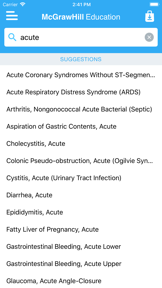
Lookup medical terms via camera viewfinder for immediate results
Includes autocomplete, keyword lookup, fuzzy filter for spelling, and wild card search
How much does it cost?
Paid model anchored at $9.99, targeting professionals who require offline access to authoritative medical content.
Velocity
Dormant developmentShow more...
5 versions in history. Development pace: zombie.
Who built it?
MobiSystems
13+ apps tracked · Medical
 MobiOffice・Word Docs・Excel・PDF
 Webster’s College Dictionary
 MobiPDF・PDF Text Editor・Reader
 Collins Latin Dictionary
 Advanced Dictionary&Thesaurus
 MobiOffice - Sheets
 Collins World Dictionary
 MobiOffice - Docs
 Dorland’s Medical Dictionary
 Webster Roget's A-Z Thesaurus
 MobiScan: OCR Scanner・Scan PDF
 Collins French Dictionary
User Sentiment
What do users think recently?
The recent review mood reads excited. Users appreciate concise bulleted formatting allows medical students to identify key clinical concepts quickly during rotations.
How are ratings & reviews evolving?
What users say, by theme
- Concise bulleted formatting allows medical students to identify key clinical concepts quickly during rotations
- Search engine functionality fails to return results for common medical terms and specific conditions
49 of 49 recent reviews analyzed · high confidence · Excited overall
Read the full review analysisUnlock 1 user request, each backed by review evidence.
Access the full report for freeCompetition
Competitive landscape for Quick Diagnosis & Treatment
How's the Medical market?
QMDT maintains a 4.71 rating across 297 total ratings, positioning it as a niche professional tool. The $9.99 price point targets individual practitioners who prioritize portability over the institutional-grade EHR integration of market leaders.
Read the market outlookThe rivals identified

By MD Aware, LLC
Both apps target the same medical professional audience for bedside clinical decision support, creating direct competition for the limited time clinicians have during patient care.
- MDCalc provides 900+ clinical calculators, whereas QMDT focuses on static evidence-based reference content.
- MDCalc offers offline-first access to tools, while QMDT relies on a search-based reference model.
- MDCalc operates on a free, ad-supported model, contrasting with the $9.99 one-time purchase of QMDT.
 DSM-5-TR® Diagnosis HandbookContender
 5 Minute Clinical Consult 5MCCContender
 QuickEMContender
 Anti-infective GuidelinesContender
 AMBOSS Medical KnowledgeContender
 Medical Terminology DictionaryContender
 CPT® QuickRefContender
 Concise Medicine HandbookContender

Unlock the head-to-head verdict: where this rival wins, and where it loses.
Access the full report for freeThe Analyst's Read
Key takeaways for Quick Diagnosis & Treatment
Where is it heading?
The medical reference market is shifting toward interactive, symptom-aware diagnostic support, leaving static alphabetical tools like QMDT exposed. Unless the app evolves beyond a simple digital index, it will continue to lose ground to platforms that offer integrated clinical decision support.
- Search engine failures for common terms erode professional trust, which compounds the churn risk against symptom-aware competitors.
- Recent interface updates show active maintenance, though the lack of diagnostic-workflow features limits long-term growth potential.
The SWOT
- Authoritative CMDT content provides immediate clinical credibility
- Camera search reduces time-to-information for on-call practitioners
- Concise formatting supports rapid review during clinical rotations
- Implement symptom-based navigation to capture diagnostic-phase users
- Add annotation and highlighting tools to increase student retention
- Develop specialty-based browsing by organ system
Next best moves
Pivot navigation to symptom-based lookup because users complain they must know the diagnosis to search → increase diagnostic utility
+ 1 more prioritized moveThe counter-intuitive read
The app's reliance on static, alphabetical reference is…
Read the full takeFeature gaps
Symptom-based navigation (available in PEPID but missing here) +2
Since the last report: The app introduced new search capabilities and diagnostic-focused features, but faces increased scrutiny regarding search reliability and a lack of symptom-based navigation.
Bottom line
QMDT holds a strong professional niche through authoritative content, but its legacy search and navigation architecture limits its utility as a diagnostic aid, so the PM should prioritize symptom-based lookup to prevent churn to modern, interactive rivals.
Unlock 3 critical frictions, 3 market threats, 1 more prioritized move and the analyst’s take.
Access the full report for freeReport last updated