


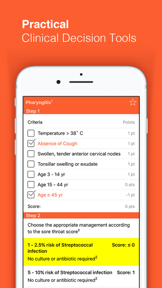
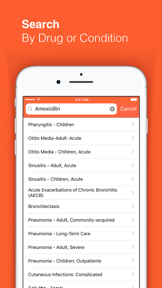
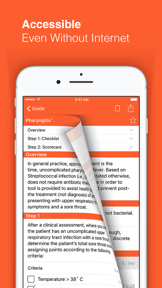
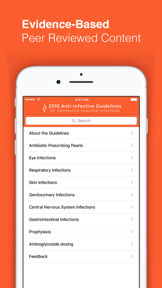
Anti-infective Guidelines is a medical reference app for family medicine and ER staff, providing offline antibiotic prescription tools on iOS.
The App DNA
What makes this app unique?
Clinicians hire this tool for immediate, offline access to evidence-based guidelines, reducing the risk of unnecessary antibiotic exposure in high-pressure environments.
For Family medicine practitioners and emergency room staff requiring evidence-based, offline-accessible antibiotic guidelines.
What does it look like?
Key features
Interactive logic flows for antibiotic prescription guidance; justifies the $17.99 price point.
Full content availability without internet; ensures reliability in hospital settings with poor connectivity.
Access to discounted physical viral info pads via the website; cross-sells physical products to increase customer lifetime value.
How much does it cost?
Paid model at $17.99 per download, with proceeds explicitly allocated to maintaining editorial independence.
Velocity
Dormant developmentopaqueShow more...
The app is currently in a zombie state, as the last recorded release occurred on May 4, 2026. Prior to this, the development history shows significant gaps, with no updates between 2019 and 2026. There is no evidence of active maintenance, feature development, or live operations. The lack of consistent release activity suggests the project is no longer being actively supported.
Who built it?
User Sentiment
What do users think recently?
How are ratings & reviews evolving?
Not enough recent reviews to extract reliable themes yet.
Read the full review analysisCompetition
Competitive landscape for Anti-infective Guidelines
How's the Medical market?
The app occupies a niche medical reference space, currently ranking in the top 100 paid medical category across multiple markets including GB and SA. The lack of updates since 2019 relative to category norms signals a high risk of churn as clinical standards evolve.
Read the market outlookThe rivals identified

By MD Aware, LLC
Both apps target healthcare professionals requiring bedside clinical decision support, with both providing offline-first functionality for hospital environments with poor connectivity.
- MDCalc provides a library of 900+ clinical calculators, while Anti-infective Guidelines focuses on a static antibiotic reference.
- MDCalc includes CME tracking for professional development, a feature not present in Anti-infective Guidelines.
- MDCalc utilizes a free, ad-supported model, whereas Anti-infective Guidelines requires a $17.99 one-time purchase.
 5 Minute Clinical Consult 5MCCContender
 EMRA Antibiotic GuideContender
 Johns Hopkins Antibiotic GuideContender
 Quick Diagnosis & TreatmentContender
 MobilEMContender
 Pneumonia GuideContender
 Concise Medicine HandbookContender
 CDC Vaccine SchedulesContender
Unlock the head-to-head verdict: where this rival wins, and where it loses.
Access the full report for freeThe Analyst's Read
Key takeaways for Anti-infective Guidelines
Where is it heading?
The medical reference market is shifting toward dynamic, cloud-connected tools that integrate with hospital administrative workflows. Anti-infective Guidelines remains in maintenance mode, which leaves it exposed to competitors that offer real-time evidence updates and biometric security.
- The 8-year update gap (last release 2019) creates a clinical trust deficit, which will accelerate user churn to modern, frequently updated medical references.
The SWOT
- Offline-first architecture ensures utility in hospital environments with poor connectivity
- Integrate digital CME tracking to align with the PAACT program and drive recurring professional engagement
Next best moves
Pivot to subscription model because static paid content lacks update funding → enable regular evidence-based refreshes
The counter-intuitive read
The app's lack of updates is not just a technical failure…
Read the full takeFeature gaps
Biometric authentication (available in Zurich Mobil but missing here) +1
Since the last report: The analysis shifted from a general critique of development inactivity to a specific recommendation for a subscription-based business model to address the clinical trust deficit.
Bottom line
Anti-infective Guidelines provides a specialized, offline-first clinical utility, but the 2500+ day update gap compromises its value as a medical reference, so the developer must pivot to a subscription model that funds regular evidence-based content refreshes.
Unlock 1 critical friction, 1 market threat and the analyst’s take.
Access the full report for freeSources
- [1] App Store, source
Report last updated