


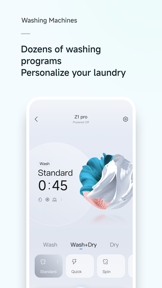


Roborock is a utility application for controlling smart robotic vacuum cleaners and washer-dryers, enabling remote mapping, scheduling, and maintenance on iOS and Android.
The App DNA
What makes this app unique?
It removes the friction of manual floor care by automating cleaning paths and schedules, allowing users to manage home maintenance from any location.
For Smart home owners and pet owners seeking automated, high-precision floor care and maintenance solutions.
What does it look like?
Key features
Saves up to four distinct floor plans with automatic floor recognition for multi-story homes.
Uses AI to identify and navigate around common household objects like cables and pet waste.
Automates mop washing and drying based on historical operation records.
How much does it cost?
The app functions as a free utility to support hardware sales, with no direct subscription or IAP revenue model.
Velocity
Steady developmentperformanceUX improvementsplatform expansionShow more...
The app maintains a steady development cadence, averaging approximately 0.38 releases per week over the analyzed period. Development is primarily focused on stability and minor feature expansions, such as the recent addition of new mower model support. While the release notes are largely opaque, the consistent delivery of updates suggests a stable maintenance and support cycle. The development trend remains stable with no signs of aggressive feature iteration or live-ops integration.
Who built it?
User Sentiment
What do users think recently?
Fresh user feedback skews frustrated. Users appreciate high-performance cleaning power effectively removes pet hair and debris from hardwood floors and carpets and intuitive app interface allows users to schedule cleanings and monitor robot progress from remote locations, but report frequent connectivity drops and wi-fi pairing failures prevent users from controlling the device via the app.
How are ratings & reviews evolving?
Weekly average review rating
What users say, by theme
- High-performance cleaning power effectively removes pet hair and debris from hardwood floors and carpets
- Intuitive app interface allows users to schedule cleanings and monitor robot progress from remote locations
- Frequent connectivity drops and Wi-Fi pairing failures prevent users from controlling the device via the app
120 of 1904 recent reviews analyzed · high confidence · Frustrated overall
Read the full review analysisUnlock 2 more frustration themes and 1 user request, each backed by review evidence.
Access the full report for freeCompetition
Competitive landscape for Roborock
How's the Lifestyle market?
Roborock maintains a strong presence in the Lifestyle category, ranking #14 in Germany and #88 in the US. The high volume of recent negative reviews regarding connectivity suggests that the current technical state is failing to match the expectations of a premium hardware user base.
Read the market outlookThe rivals identified

By TP-Link Systems Inc.
Both apps compete for the same smart home user base by providing centralized control interfaces for automated hardware, forcing users to choose between Roborock's floor-care focus and Tapo's broader security-centric utility.
- Tapo offers a hybrid monetization model with optional cloud storage, whereas Roborock remains entirely free.
- Tapo provides local storage options for video, while Roborock lacks cloud-based video storage capabilities.
- Tapo integrates security cameras and smart lighting into one interface, unlike Roborock's specialized floor-care focus.
 LG ThinQContender
 SmartThingsContender
 Xiaomi HomeContender
 FRITZ!App Smart HomeContender
 MerossContender
 Aqara HomeContender
 SwitchBotContender
 ORVIBO HomeContender

Unlock the head-to-head verdict: where this rival wins, and where it loses.
Access the full report for freeThe Analyst's Read
Key takeaways for Roborock
Where is it heading?
The smart home utility market is consolidating around stability and ecosystem integration, leaving Roborock exposed. If the current technical regressions are not addressed, the brand risks losing its premium positioning to rivals like EZVIZ that offer more reliable, cloud-integrated experiences [2, 4].
- Connectivity failures in the latest release erode user trust, which compounds the rating drag already visible on Android.
- Frequent map-persistence bugs force users to re-scan homes, leading to high churn among long-term owners.
The SWOT
- Multi-level mapping creates high switching costs for multi-story homeowners
- ReactiveAI obstacle avoidance justifies premium hardware price points
- Cloud-based map backup would resolve the #1 user frustration
- Manual map editing tools would reduce the need for full re-scans
Next best moves
Rebuild Wi-Fi pairing logic because connectivity drops are the top complaint → restore daily active usage
+ 1 more prioritized moveThe counter-intuitive read
Roborock's reliance on a free utility model is a vulnerability…
Read the full takeFeature gaps
Cloud-based video storage (available in EZVIZ but missing here) +1
Since the last report: Technical regressions in the latest update have escalated connectivity and map-persistence issues into critical functional blockers, driving a decline in user sentiment and threatening the brand's premium market position.
Bottom line
Restoring map-persistence and Wi-Fi stability is the only path to protecting the brand's premium status, as the current technical regressions are actively undermining the hardware's value proposition.
Unlock 2 critical frictions, 2 market threats, 1 more prioritized move and the analyst’s take.
Access the full report for freeFAQ
Is Roborock worth it for pet owners?
How does Roborock compare to EZVIZ?
Does Roborock have offline mode?
What is a free alternative to Roborock?
Sources
Report last updated