



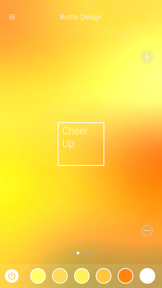
Lux Manager is a mobile lighting control app for Samsung hardware, available on iOS and Android.
The App DNA
What makes this app unique?
Users hire this app to manage the aesthetic and functional settings of their Samsung lighting devices, serving as a remote interface for hardware that lacks physical controls.
For Owners of Samsung lighting devices and the Samsung Bottle Design Speaker who require a mobile interface for hardware control.
What does it look like?
Key features
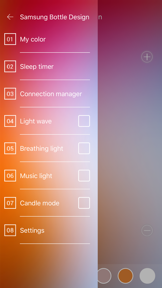
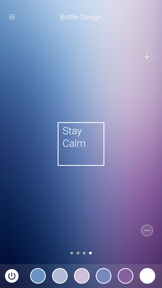
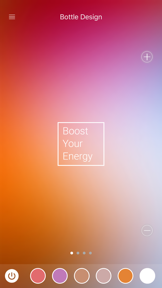
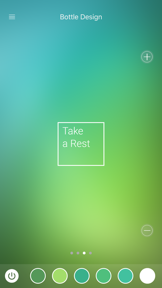
Select from 16 million color options for connected Samsung lighting devices
Synchronizes lighting pulses with audio playback
Automates the shutdown of both lighting and music playback after a user-defined duration
How much does it cost?
The app functions as a free utility to support Samsung hardware sales, with no direct monetization via subscriptions or ads.
Velocity
Dormant developmentopaqueShow more...
Lux Manager shows no signs of active development, with the most recent release dating back to August 2020. Given that the last update occurred nearly six years ago, the app falls into the zombie category. There is no evidence of ongoing maintenance, feature updates, or live operations. The development cycle has effectively ceased.
Who built it?
Samsung Electronics Co.
13+ apps tracked · Lifestyle
 Samsung Smart Switch Mobile
 PENUP – Drawing-sharing SNS
 Samsung Find: Location Sharing
 Samsung TV
 Samsung Shop
 Samsung Notes
 Samsung Accessory Service
 Samsung Wallet (Samsung Pay)
 SmartThings
 Samsung Galaxy Watch (Gear S)
 Samsung Health
 Samsung Galaxy Buds
User Sentiment
What do users think recently?
Fresh user feedback skews mixed. Users appreciate bluetooth speaker light control features provide a satisfying and useful mood-setting experience for users, but report connectivity failures between the mobile application and hardware prevent basic device discovery and pairing.
How are ratings & reviews evolving?
What users say, by theme
- Bluetooth speaker light control features provide a satisfying and useful mood-setting experience for users
- Connectivity failures between the mobile application and hardware prevent basic device discovery and pairing
52 of 52 recent reviews analyzed · high confidence · Mixed overall
Read the full review analysisUnlock 1 user request, each backed by review evidence.
Access the full report for freeCompetition
Competitive landscape for Lux Manager
How's the Lifestyle market?
The app maintains a 3.73 rating on Android across 1,402 reviews, reflecting its role as a legacy utility for specific Samsung hardware. The lack of updates since 2020 on Android signals a maintenance-mode posture that leaves users vulnerable to modern IoT platform competition.
Read the market outlookThe rivals identified

By Volcano Technology Limited
This is the dominant cross-brand IoT aggregator that directly competes with Samsung's ecosystem-locked approach by supporting thousands of third-party devices.
- Aggregates thousands of third-party device brands rather than restricting users to a single manufacturer's hardware ecosystem.
- Maintains a high-velocity release cadence of 24 updates in six months to ensure rapid compatibility with new hardware.
- Provides a universal automation engine that functions across disparate device types, unlike this app's proprietary lighting-focused control.


Unlock the head-to-head verdict: where this rival wins, and where it loses.
Access the full report for freeThe Analyst's Read
Key takeaways for Lux Manager
Where is it heading?
The smart home market is consolidating around universal platforms that offer cross-brand interoperability, leaving single-manufacturer utilities like Lux Manager increasingly isolated. Without a pivot toward broader ecosystem integration, the app will continue to lose relevance as users replace legacy Samsung hardware with modern, vendor-agnostic alternatives.
- Connectivity failures during device discovery prevent basic usage, which compounds the negative sentiment already visible in the Android review set.
- The lack of feature updates since 2020 indicates the app is in maintenance mode, limiting its ability to compete with modern IoT aggregators.
The SWOT
- Proprietary control interface increases hardware switching costs
- Music Light Mode creates a sensory retention loop
- Battery level monitoring improves hardware oversight
- Integration with SmartThings reduces ecosystem isolation
Next best moves
Audit device discovery handshake because connectivity failure is the top complaint → reduce churn
The counter-intuitive read
The app's lack of updates is not just…
Read the full takeFeature gaps
Universal device support (available in SmartLife but absent here) +1
Since the last report: The app has transitioned from a standard utility to a stagnant, legacy product in maintenance mode, with sentiment increasingly dominated by hardware connectivity failures.
Bottom line
Lux Manager provides essential control for Samsung hardware but suffers from critical connectivity failures, so the PM should prioritize a discovery handshake audit to prevent users from migrating to universal IoT platforms.
Unlock 3 critical frictions, 2 market threats and the analyst’s take.
Access the full report for freeReport last updated