


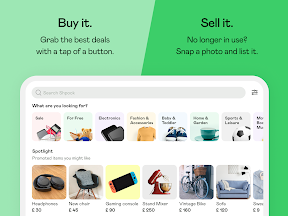


Shpock is a local secondhand marketplace for fashion, tech, and home goods on iOS and Android.
The App DNA
What makes this app unique?
Users hire Shpock for local, no-shipping peer-to-peer trade, but the mandatory subscription gate now forces them to seek free alternatives.
For Individuals looking to buy or sell secondhand goods locally, ranging from vintage fashion enthusiasts to tech bargain hunters.
What does it look like?
Key features
Tool to convert static item listings into short-form video clips for social media sharing.
Tiered monthly access to advanced selling tools and unlimited listings.
Geolocation-based filtering to find items for sale within a specific radius.
How much does it cost?
Freemium model anchored by mandatory monthly subscriptions for listing items, generating revenue through recurring fees and ad-inventory.
Velocity
Active developmentsocial featuresUX improvementsShow more...
Shpock is currently in an active development phase, shipping approximately 0.6 releases per week over the analyzed period. The development team is focused on social features, specifically tools designed to increase the visibility of listings on external social media platforms. The release notes are descriptive and feature-oriented, indicating a clear roadmap rather than opaque maintenance. The cadence is stable, with consistent feature parity maintained across both Android and iOS platforms.
Who built it?
User Sentiment
What do users think recently?
Recent user voice shows an upset sentiment. Users appreciate historical user experience provided a reliable and free local marketplace for buying and selling items, but report mandatory subscription fees to list items have alienated the user base and reduced platform activity.
How are ratings & reviews evolving?
Weekly average review rating
What users say, by theme
- Historical user experience provided a reliable and free local marketplace for buying and selling items
- Mandatory subscription fees to list items have alienated the user base and reduced platform activity
116 of 421 recent reviews analyzed · high confidence · Upset overall
Read the full review analysisUnlock 2 more frustration themes and 1 user request, each backed by review evidence.
Access the full report for freeCompetition
Competitive landscape for Shpock: Buy & Sell Marketplace
How's the Shopping market?
Shpock holds a #7 Grossing rank in the Shopping category across 20+ European markets, but its US Grossing rank has fallen to #116. The disparity between its strong European footprint and weak US performance signals a struggle to maintain liquidity against incumbents like Facebook Marketplace.
Read the market outlookThe rivals identified

By AppKoncept
Both platforms target local secondhand goods buyers and sellers, competing directly for the same local inventory liquidity and user attention.
- Marketplace operates on a free model, while Shpock gates listing access behind monthly subscription tiers.
- Shpock includes a video generator for social sharing, whereas Marketplace focuses on a no-frills, rapid listing flow.
 Vinted: Pre-loved marketplaceContender
 Whatnot: Shop, Sell, ConnectContender
 Poshmark: Shop & Sell FashionContender
 Back Market - Buy & Sell techContender
 VarageSale: Buy & SellContender
 Marketplace: Buy & Sell TradetContender
 Sellpy: Buy & sell second handContender
 Grailed – Buy & Sell FashionContender

Unlock the head-to-head verdict: where this rival wins, and where it loses.
Access the full report for freeThe Analyst's Read
Key takeaways for Shpock: Buy & Sell Marketplace
Where is it heading?
The secondhand marketplace category is consolidating around zero-fee, logistics-integrated models like Vinted. Shpock's current trajectory is declining as its subscription-gated model fails to compete with the network effects of free-to-list incumbents, so the platform faces continued erosion of its user base unless it shifts to a transaction-based model.
- Mandatory subscription fees continue to drive user churn toward zero-fee competitors, reducing the total volume of active local listings.
- Recent updates focus on social-sharing tools, but these fail to address the core retention blockers identified in user sentiment.
The SWOT
- Geolocation-based discovery engine reduces friction for local collection
- Social-sharing video generator pulls non-users into the install funnel
- Printable listing flyers for local neighborhood distribution
- Transaction-based cut instead of flat monthly fees to regain casual sellers
Next best moves
Pivot from subscription-only listings to a transaction-based fee model because subscription gates are the top uninstallation reason → increase platform liquidity.
+ 1 more prioritized moveThe counter-intuitive read
The video generator feature is a distraction…
Read the full takeFeature gaps
Integrated shipping labels (available in Vinted but missing here) +1
Since the last report: Shpock's market position is declining due to rising user complaints regarding fraud, intrusive advertising, and the ongoing impact of mandatory subscription fees.
Bottom line
Shpock retains a strong local-discovery mechanism, but the mandatory subscription model is bleeding users to zero-fee rivals, so the PM must pivot to transaction-based monetization to restore platform liquidity.
Unlock 3 critical frictions, 2 market threats, 1 more prioritized move and the analyst’s take.
Access the full report for freeFAQ
Is Shpock free to use?
How does Shpock compare to Vinted?
Is Shpock safe for buying and selling?
What are some free alternatives to Shpock?
Sources
Report last updated