
finderly GmbH & Co KG
For individuals seeking to buy or sell pre-owned goods, ranging from fashion and electronics to home and garden items, within their local community.
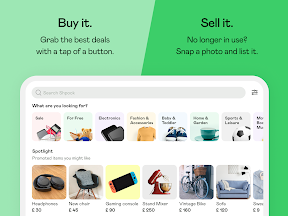
 Shpock: Buy & Sell Marketplace


Snapshot
Who is finderly GmbH & Co KG?
Facilitating local second-hand commerce through a rapid-listing marketplace. Connecting buyers and sellers to promote sustainable consumption.
Target audience


Portfolio
Free 1Last updated

Shpock: Buy & Sell Marketplace
v9.20.9
5mo ago
Publisher DNA
What defines finderly GmbH & Co KG?
Publisher DNA
Primary focus
Second-hand marketplace platform
Scale
indie
Target audience
Individuals seeking to buy or sell pre-owned goods, ranging from fashion and electronics to home and garden items, within their local community.
Signature Patterns
- •Focus on rapid, low-friction item listing (under 30 seconds)
- •In-app communication tools to facilitate local negotiation
- •Freemium monetization model
- •Broad category coverage including fashion, electronics, and home goods
Portfolio momentum
Released 9 updates in the last 6 months for their single active application, indicating a focus on iterative maintenance and feature refinement.
Portfolio
What does finderly GmbH & Co KG ship?
Apps
1 app analysed
Buying & selling nearby. From fashion to electronics. Local, easy, secondhand.


Social-sharing video generator pulls non-users into the install funnel
- Historical user experience provided a reliable and free local marketplace for buying and selling items
- Mandatory subscription fees to list items have alienated the user base and reduced platform activity
Tightly focused on 2 markets (Germany, United States).
Based on 1 of 1 app with localized market data · last scanned .
Americas (1)
- United States1 / 1
Europe (1)
- Germany1 / 1
Core markets (1/1 apps)
User Sentiment
How do users feel about their apps?
0
Positive apps
0
Neutral / mixed
1
Negative apps
15/100
Avg sentiment score
Rivals
Who does finderly GmbH & Co KG compete with?
The rivals identified
Nemeses(1)

Both platforms target local secondhand goods buyers and sellers, competing directly for the same local inventory liquidity and user attention.
Contenders(10)


Both applications target local secondhand goods transactions via geolocation-based discovery, creating direct competition for the same pool of casual sellers and buyers.


Both platforms compete for budget-conscious shoppers seeking secondhand goods, though Back Market focuses on certified electronics while Shpock targets general local listings.


Grailed competes for the same secondhand fashion sellers and buyers as Shpock, but captures market share by offering a free-to-list model that avoids the subscription friction currently alienating Shpock users.


Both platforms compete for the same local secondhand marketplace audience, forcing users to choose between Shpock's subscription-gated model and VarageSale's free-to-list, identity-verified environment.


Both platforms compete for local secondhand inventory and user attention within the classifieds market. They share a target audience of individuals buying and selling household items and fashion.


Both platforms compete for secondhand marketplace users, but Poshmark targets fashion-conscious sellers with commission-based monetization while Shpock forces subscription fees on local sellers.


Both platforms compete for the same secondhand inventory pool, targeting declutterers and environmentally conscious consumers who prioritize convenience in the resale market.


Both platforms compete for the same secondhand fashion and goods audience, but Vinted's zero-fee seller model directly undermines Shpock's subscription-based listing model.


Wallapop competes directly with Shpock by targeting the same secondhand marketplace audience for local buying and selling. Both platforms rely on geolocation-based discovery to facilitate transactions between nearby users.


Both platforms compete for the same secondhand goods and collector audience, though they diverge on monetization models and interaction styles.
Same space(20)


Users report: Carousell employs a chat-first, hyper-local model that mirrors Shpock's intent but struggles with similar scam moderation issues.


Karrot enforces strict hyper-local proximity, replacing informal community boards with verified identity to build trust.


Depop uses a social-first discovery model for fashion that competes for Shpock's vintage-enthusiast audience.


DitchIt offers a zero-fee local marketplace, directly addressing the user demand for free-to-list alternatives to Shpock.


FleaMarketBay provides a local community trading platform for diverse goods, competing for the same local-discovery audience as Shpock.


Gumtree operates as a high-volume, free-to-use classifieds platform that relies on local connectivity, similar to Shpock's original value proposition.


HopUp targets airsoft enthusiasts with specialized purchase protection, contrasting with Shpock's generalist, local-discovery approach.


Snag aggregates free local listings into a real-time map, targeting the bargain-hunting segment that Shpock serves.


Listia facilitates a circular economy through point-based trading, avoiding the cash-based transaction friction found on Shpock.


Mercari provides a nationwide secondhand marketplace with integrated shipping and seller protection, addressing gaps in Shpock's local-only model.


Cazoo consolidates fragmented dealer inventory into a single search experience, providing a specialized vertical alternative to Shpock's generalist model.


Buy Sell Now provides a broad local classifieds platform for diverse goods, mirroring Shpock's generalist scope without the subscription barrier.


OfferUp competes directly for local liquidity with a massive user base and rapid listing speed, despite shared monetization friction.


Recove bridges fashion inspiration from Pinterest to secondhand listings, offering a visual discovery layer missing from Shpock.


SellRaze automates multi-marketplace inventory management, serving professional resellers who find Shpock's manual listing process inefficient.


Shop centralizes post-purchase tracking and checkout for Shopify merchants, contrasting with Shpock's local-first focus.


JK Marketplace facilitates B2C and peer-to-peer local commerce across diverse categories, serving as a generalist alternative to Shpock.


Thrift assists resellers with AI-powered scanning and valuation, providing data-driven support that Shpock lacks for professional sellers.


5miles integrates local services and auction-based shopping, offering a distinct discovery channel compared to Shpock's standard listings.


ThredUp manages the entire resale process via a Clean Out service, removing the manual listing burden present on Shpock.
New entrants(2)


JDMarket monitors multiple marketplaces for listing alerts, providing a tool for power users to track inventory across platforms including Shpock's rivals.


TruGazi mandates video-verified listings and deposits, targeting high-value transactions where Shpock's unverified model fails.
The Analyst's Read
The bottom line on finderly GmbH & Co KG
Bottom line
Finderly maintains a stable position as a specialized local marketplace player. Their long-term viability depends on their ability to defend their local network effect against larger, more diversified e-commerce incumbents.
Frequently asked questions
How many apps does finderly GmbH & Co KG publish?
What kind of apps does finderly GmbH & Co KG make?
What is finderly GmbH & Co KG's top app?
In how many countries are finderly GmbH & Co KG's apps available?
What fed this analysis
- Apps analyzed:
- 1
- With full intel:
- 0
- With overview:
- 1
- Website scraped:
- yes
- Social presence:
- yes
