


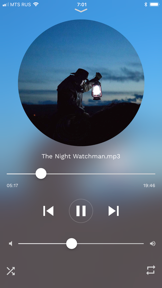


Sleep Restore is a health and fitness app providing EMDR-based bilateral stimulation audio sessions for stress-related insomnia on iOS and Android.
The App DNA
What makes this app unique?
Users hire Sleep Restore to de-activate the mental distress inhibiting sleep through clinical-grade sensory stimulation, seeking a psychological intervention rather than generic white noise.
For Individuals suffering from stress-related insomnia, including those with PTSD or chronic medical conditions, seeking evidence-based psychological tools.
What does it look like?
Key features
Audio sessions utilizing EMDR-based sensory stimulation to synchronize cortical activity. Revenue Link: Core value proposition; 10 of 16 sessions gated behind premium tier.
In-app evaluation tool providing personalized session recommendations. Revenue Link: Retention lever tailoring content to specific insomnia triggers.
How much does it cost?
Freemium model anchored at $9.99, gating the majority of content behind a paywall to monetize clinical-grade audio sessions.
Velocity
Maintenance developmentperformanceUX improvementsShow more...
Sleep Restore currently operates at a maintenance cadence, with the latest release occurring 176 days ago. Development is characterized by long periods of silence, particularly on the iOS platform where no updates have been released in over 1,300 days. Recent activity on Android is limited to minor bug fixes and layout adjustments, indicating no new feature development. The app has effectively transitioned into a state of minimal support.
Who built it?
trauma and pain management services pty
4 apps tracked · Health & Fitness
 Calm and Confident
 Anxiety Release based on EMDR
 Overcoming pain based on EMDR
User Sentiment
What do users think recently?
Recent user voice shows an excited sentiment. Users appreciate auditory bilateral stimulation tracks provide effective relief for users managing anxiety and sleep disturbances and the questionnaire-based recommendation engine helps users identify the most effective audio content for their needs, but report frequent application crashes during playback prevent users from completing their intended sleep or relaxation sessions.
How are ratings & reviews evolving?
What users say, by theme
- Auditory bilateral stimulation tracks provide effective relief for users managing anxiety and sleep disturbances
- The questionnaire-based recommendation engine helps users identify the most effective audio content for their needs
- Frequent application crashes during playback prevent users from completing their intended sleep or relaxation sessions
58 of 58 recent reviews analyzed · high confidence · Excited overall
Read the full review analysisUnlock 2 more frustration themes and 2 user requests, each backed by review evidence.
Access the full report for freeCompetition
Competitive landscape for Sleep Restore
How's the Health & Fitness market?
Sleep Restore sits at #74 Grossing in the Health & Fitness category (IE), signaling that its clinical positioning captures high-intent users. However, the lack of offline functionality and technical instability creates monetization friction relative to the app's discovery advantage.
Read the market outlookThe rivals identified

By Ipnos Software Inc.
Dominates the sleep-aid market with a massive user base and long-standing focus on sound-based sleep induction, directly overlapping with this app's goal of stress-related sleep restoration.
- Offers a vast library of customizable soundscapes and white noise, whereas target relies on bilateral stimulation.
- Integrates advanced sleep tracking analytics to correlate sound usage with sleep quality improvements over time.
- Maintains a high-frequency update cadence to ensure compatibility with the latest iOS and Android health frameworks.


Unlock the head-to-head verdict: where this rival wins, and where it loses.
Access the full report for freeThe Analyst's Read
Key takeaways for Sleep Restore
Where is it heading?
The sleep-aid market is consolidating around stable, feature-rich apps that offer offline access and deep health integration. Sleep Restore remains exposed due to its maintenance-mode cadence and reliance on server-side streaming, which will continue to compress its user base until technical stability is addressed.
- Persistent playback crashes in the latest version erode the daily active habit, which compounds the rating drag already visible on Android.
- Mandatory online connectivity requirements for audio playback frustrate users, leading to churn as they seek offline-capable alternatives.
The SWOT
- Clinical-grade BLS positioning creates a defensible barrier for users seeking psychological intervention.
- Developing offline playback support would directly address the top user request and reduce overnight connectivity frustration.
Next best moves
Rebuild audio playback engine because crashes are the top complaint → reduce churn
+ 1 more prioritized moveThe counter-intuitive read
The app's clinical-grade BLS positioning is a liability…
Read the full takeFeature gaps
Advanced sleep tracking analytics (available in BetterSleep but missing here) +1
Since the last report: The analysis has sharpened its focus on the negative impact of technical instability and restrictive monetization on user retention, while maintaining the core clinical positioning.
Bottom line
Sleep Restore captures high-intent users through clinical-grade BLS, but the lack of offline playback and persistent playback crashes drive significant churn, so the PM must prioritize stability and offline support over new content to stabilize the user base.
Unlock 2 critical frictions, 1 market threat, 1 more prioritized move and the analyst’s take.
Access the full report for freeSources
Report last updated