Cambridge University Press & Assessment (App)
For english language learners, students preparing for international proficiency exams, and educators requiring structured curriculum support.
 Cambridge English Dictionary


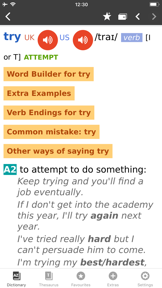
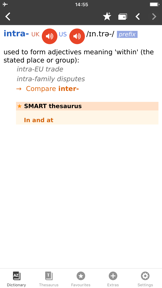


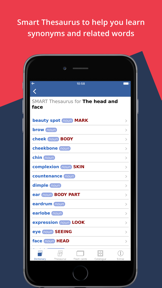


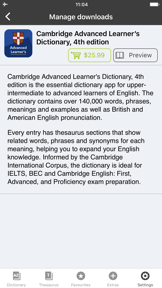


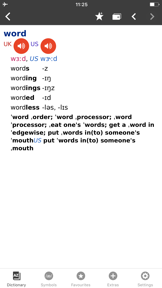


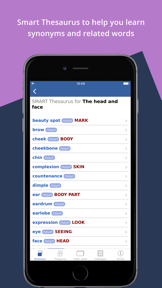

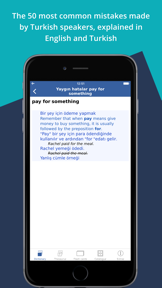


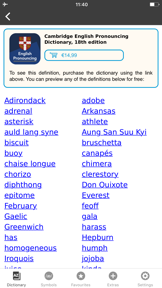


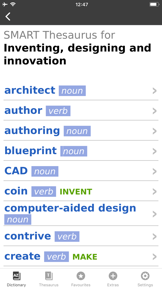


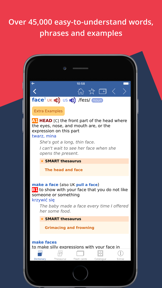



Snapshot
Who is Cambridge University Press & Assessment (App)?
Providing authoritative English language learning and reference tools for students and educators worldwide. Bridging academic research with digital classroom and self-study resources.
Target audience


Portfolio
Free 11Last updated

Cambridge English Dictionary
v5.6.52
4.1y ago
Publisher DNA
What defines Cambridge University Press & Assessment (App)?
Publisher DNA
Primary focus
English language learning and academic reference tools
Scale
indie
Target audience
English language learners, students preparing for international proficiency exams, and educators requiring structured curriculum support.
Signature Patterns
- •Heavy reliance on freemium and free-to-access models for educational content
- •Strong emphasis on offline functionality for textbooks and dictionaries
- •Content-first design prioritizing academic accuracy over gamified engagement
- •Bilingual and cross-dialect support for global language learners
Portfolio momentum
Released 5 updates across 13 apps in the last 6 months, with a focus on maintaining core educational and reference titles.
Portfolio
What does Cambridge University Press & Assessment (App) ship?
Apps
13 apps analysed


Cambridge Active Learn offers English language learning & assessment preparation


This app shows all events hosted by Cambridge University Press & Assessment.


Single-market publisher, every app ships only to United States.
Based on 1 of 13 apps with localized market data, more coverage rolling in as scans complete · last scanned .
Americas (1)
- United States1 / 1
Core markets (1/1 apps)
Rivals
Who does Cambridge University Press & Assessment (App) compete with?
The rivals identified
Nemeses(3)

Both apps target language learners seeking reference tools, competing for device storage and user attention among students of foreign languages.


Serves as a contextual translation alternative for learners who require real-life sentence examples rather than static dictionary definitions.


Dicio serves as a primary nemesis due to its massive user base and status as a go-to reference tool for language learners, directly competing for the same dictionary-seeking audience.
Contenders(17)


Provides a bilingual dictionary for Myanmar-English learners, mirroring the source app's offline dictionary utility.


Both apps provide dictionary and thesaurus tools for language learners, but the rival captures a broader user base by offering 23 bilingual dictionary pairs compared to the monolingual focus of Cambridge English Dictionary.


Both apps target language learners and students requiring reference tools, with Dictionary. capturing a broader audience through multi-source aggregation while Cambridge focuses on exam-specific content.


Both apps target students and professionals with offline-capable reference tools, competing for the same user base seeking vocabulary expansion.


Both apps target English language learners, with Cambridge providing reference tools for exam preparation while 2Shine focuses on structured vocabulary acquisition across CEFR levels.


Provides a bilingual dictionary utility for users needing offline translation, similar to the source app's offline functionality.


Both apps target English language learners preparing for the IELTS exam, forcing users to choose between a static reference dictionary and an active test-training tool.


This app competes for the attention of language learners by offering specialized linguistic tools and community-driven content.


DeepL Translate provides a high-accuracy linguistic engine for professional users, contrasting with the dictionary's focus on student-oriented definitions.


This app targets the academic reference market, competing for users interested in historical and specialized terminology.


It occupies the same niche reference space, targeting users who require reliable, offline-capable bilingual translation tools.


Both applications target English language learners, competing directly for user time spent on vocabulary acquisition and language proficiency.


Serves as a specialized vocabulary tool for test-takers who overlap with the exam-prep audience of the source app.


Both apps target language learners and students with 140,000-entry databases, creating direct competition for users seeking vocabulary resources.


It directly challenges the target's value proposition by offering a comprehensive, corpus-based English learning dictionary.


Both apps serve as bilingual reference tools for English language learners, though they target distinct linguistic markets: Traditional Chinese speakers versus Vietnamese speakers.


Both applications provide offline English-to-English dictionary access, directly competing for the same user base seeking vocabulary lookups and language learning tools.
Same space(32)


Competes for the same student audience by offering a massive 2M+ definition library alongside editorial content.


Acts as a scholarly incumbent for the same student base, using gamification to drive retention.


Talk & Translate facilitates real-time communication for travelers, contrasting with the dictionary's focus on static word comprehension.


Serves as a specialized language tool for Japanese learners, offering similar offline dictionary and flashcard capabilities.


Translate Now uses a high-grossing subscription bundle to reach travelers, contrasting with the dictionary's single-purchase model.


Targets the same vocabulary-building audience with a gamified, offline-first approach.


Voice Translator targets travelers with voice-to-voice tools, prioritizing immediate communication over the dictionary's long-term learning goals.


AR Translator integrates augmented reality for real-time text translation, offering a visual utility distinct from the dictionary's text-based reference.


Provides a streamlined vocabulary-building experience for the same user base seeking practical, high-frequency word mastery.


ELSA Speak focuses on active pronunciation coaching, complementing the dictionary's passive reference content.


Forvo Pronunciation supplies a native-speaker audio database, acting as a specialized reference for pronunciation rather than definitions.


Google Translate acts as a ubiquitous cross-language utility for travelers, whereas the dictionary provides static, curated academic content.


Collins English Dictionary delivers an authoritative English database, providing a similar academic reference experience with a freemium upgrade path.


eTranslator bundles translation with travel utilities, targeting casual users rather than the dictionary's academic learners.


This app provides structured learning modules for English phrases, overlapping with the target's goal of improving English usage.


Offers AI-powered exam preparation for the same IELTS-focused student audience.


Focuses on the pronunciation aspect of English language learning, complementing the dictionary's audio features.


Focuses on the same language proficiency goal but emphasizes daily, bite-sized learning habits.


Nuva competes for the same English-learning demographic by offering AI-driven conversational practice.


It targets the same Turkish-English language pair, focusing on vocabulary retention through smart algorithms.


Provides exam-specific practice tests and AI scoring for the same IELTS-focused audience.


Translator: Voice, Camera & AI provides real-time translation tools for travelers, contrasting with the dictionary's focus on static word definitions.


Focuses on conversational English for learners who want to improve their speaking skills beyond dictionary definitions.


Offers a science-based path to vocabulary growth for the same student and professional audience.


Acts as a specialized dictionary and reading assistant for Japanese learners, similar to the source app's reference utility.


Camera Translator uses OCR for physical text translation, serving as a visual utility rather than the dictionary's text-based reference.


AI Translator provides multi-modal translation for daily use, serving a broader, less academic audience than the dictionary.


Translate One combines AI-driven voice and camera tools for travelers, serving a different need than the dictionary's curated word database.


This app shares the educational category, focusing on early-stage language acquisition through interactive flashcards.


Targets the same vocabulary-building audience with a human-curated approach to daily learning.


Live Translator offers a multi-modal translation suite for travelers, focusing on immediate communication rather than academic study.


ChinesePro offers real-time translation for travelers, serving a different user intent than the dictionary's academic focus.
New entrants(3)


A new entrant in the education space that aims to improve English proficiency through daily reading content.


Translate & Translator APP targets general communication needs with multi-modal tools, contrasting with the dictionary's academic focus.


This newcomer provides a specialized dictionary service, competing for users in the niche language reference market.
The Analyst's Read
The bottom line on Cambridge University Press & Assessment (App)
Bottom line
Cambridge University Press & Assessment occupies a defensible niche by digitizing high-trust academic content. Their success depends on successfully migrating their user base from static reference apps to their centralized educational platforms.
Frequently asked questions
How many apps does Cambridge University Press & Assessment (App) publish?
What kind of apps does Cambridge University Press & Assessment (App) make?
What is Cambridge University Press & Assessment (App)'s top app?
In how many countries are Cambridge University Press & Assessment (App)'s apps available?
What fed this analysis
- Apps analyzed:
- 13
- With full intel:
- 0
- With overview:
- 13
- Website scraped:
- yes
- Social presence:
- yes