


Christian Drapatz
For privacy-conscious individuals managing personal budgets and technical professionals seeking to streamline Apple development workflows.
 My Budget Book
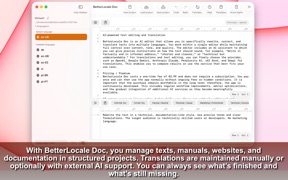


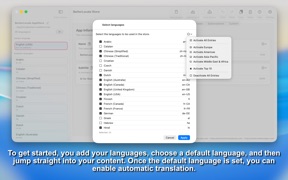


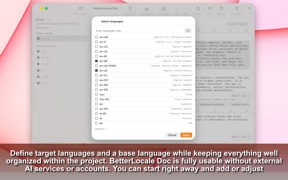

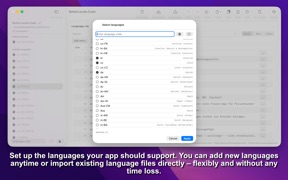


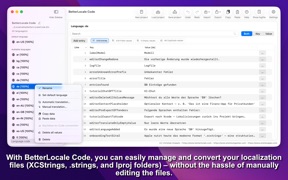


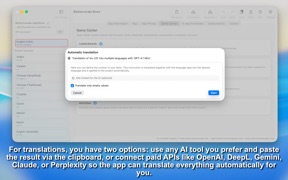


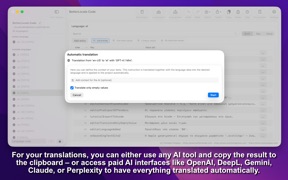


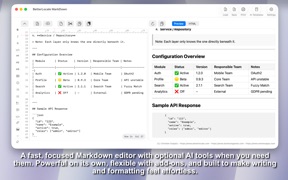






Snapshot
Who is Christian Drapatz?
Providing privacy-focused finance management and developer productivity tools for the Apple ecosystem. Enabling offline-first workflows for individuals and technical professionals.
Target audience


Portfolio
Free 5Last updated

My Budget Book
v9.11.1
5mo ago
Publisher DNA
What defines Christian Drapatz?
Publisher DNA
Primary focus
Personal finance and macOS developer productivity tools
Scale
studio
Target audience
Privacy-conscious individuals managing personal budgets and technical professionals seeking to streamline Apple development workflows.
Signature Patterns
- •Strict privacy-first, local-only data architecture across finance and utility apps.
- •Integration of 'Bring Your Own Key' (BYOK) models for AI-powered developer tools.
- •Preference for one-time purchase or limited freemium models over recurring subscriptions.
- •Strong focus on macOS-native development and workflow optimization.
- •Mixed portfolio composition including legacy finance apps and experimental gaming titles.
Portfolio momentum
Released 7 updates across 12 apps in the last 6 months, with consistent development activity across both legacy finance apps and new developer tools.
Portfolio
What does Christian Drapatz ship?
Apps
16 apps analysed

Analysis in progress

Full offline functionality
- Strict no-ads/no-P2W monetization

Local-first data storage and macOS keychain security for API keys
- Support for 6+ major AI providers (OpenAI, Claude, xAI, etc.)

BYO AI key model (cost transparency)
- Local-first privacy (no cloud uploads)

No-subscription, one-time purchase model
- Privacy-first architecture with local keychain storage
Distributed across 12 markets, strongest in Europe.
Based on 1 of 16 apps with localized market data, more coverage rolling in as scans complete · last scanned .
Americas (3)
- Brazil1 / 1
- Mexico1 / 1
- United States1 / 1
Europe (7)
- France1 / 1
- Germany1 / 1
- Italy1 / 1
- Netherlands1 / 1
- Portugal1 / 1
›+2 more europe markets
- Spain1 / 1
- Sweden1 / 1
Asia-Pacific (2)
- Japan1 / 1
- South Korea1 / 1
Core markets (1/1 apps)
User Sentiment
How do users feel about their apps?
0
Positive apps
0
Neutral / mixed
1
Negative apps
30/100
Avg sentiment score

Rivals
Who does Christian Drapatz compete with?
The rivals identified
Nemeses(6)


DeepL is the gold standard for high-accuracy AI translation, maintaining a massive release velocity (25 updates in 6 months) that dwarfs the target's manual-first approach.


Both apps target personal finance management, but Finanzguru captures users via automated bank aggregation while My Budget Book targets users seeking manual control and privacy.


A high-velocity rival with 13 releases in 6 months, targeting the same 'Pro' user segment with advanced accounting features.


The genre standard for level-based defense, maintaining high engagement through frequent seasonal updates.


Scanner Pro is the direct functional benchmark for ScanBox, targeting the same 'Business' professional demographic with a nearly identical feature set (OCR, signing, and edge detection) and a high update velocity.


A high-velocity writing suite with 6 releases in the last 6 months, representing the premium standard for Markdown-based content creation.
Contenders(24)

This app targets the Apple-centric user base with a focus on privacy and frictionless, account-free tracking.


It bridges manual tracking and bank sync, targeting users who want automation despite the risk of sync reliability issues.


This app moves away from the offline-first model by aggregating data from bank accounts, e-wallets, and crypto platforms.


The market leader in scale, leveraging the Acrobat ecosystem to capture users who prioritize document standards over app-specific features.


The most active rival in the space with 15 releases in 6 months, focusing on rapid text capture and automation.


A strong AI-centric peer with high update frequency (11 releases in 6 months) focusing on real-time utility.


Finzee targets the same personal finance management segment as My Budget Book, specifically competing for users seeking structured spending control through its zero-based budgeting and virtual envelope features.


High innovation velocity with 5 releases in the last 6 months and a deep focus on supply-line logistics.


Both applications target individuals managing personal finances through expense tracking and budget planning. They compete directly for users seeking to monitor daily spending and income habits.


A feature-rich contender that has expanded into non-traditional scanning utilities like area measurement and math solving.


A modern, high-growth rival (11 releases in 6 months) that integrates AI and visual block-based editing.


Both apps target individuals managing personal finances, but they diverge on data architecture: My Budget Book relies on manual entry and offline privacy, while Emma uses Open Banking APIs for automated account aggregation.


Both apps target users managing personal finances, with My Budget Book focusing on comprehensive transaction tracking and Savings Goal Tracker focusing on goal-specific monitoring.


Both applications target personal expense tracking and financial management, competing for users seeking to monitor transactions and plan budgets.


A direct functional rival that shares the target's minimalist philosophy and one-time purchase model.


Both apps target personal finance management, but Monarch captures the household segment through automated account aggregation while My Budget Book serves individuals prioritizing offline data control.


A dominant productivity incumbent with a broad feature set including voice and lens translation, updated 19 times in the last 6 months.


Market leader in the defense category with a massive feature set and consistent bi-monthly update cadence.


A long-standing 'Pro' utility that mirrors ScanBox's positioning as a reliable, paid-upfront tool without subscription fatigue.


Both apps target personal finance management through transaction tracking and budget planning, competing for users seeking to organize income and expenses.


Both apps target personal finance management by providing tools for expense tracking and budget maintenance, competing for the same user base seeking to control daily spending.


A high-velocity rival with 8 releases in 6 months, focusing on enterprise-grade security and export flexibility.


Both apps target privacy-conscious users requiring offline finance management, creating direct competition for individuals who prioritize local data storage over cloud-based synchronization.


Both applications target personal expense tracking and budget management, competing for users seeking privacy-conscious financial oversight.
Same space(31)


This app aligns with the privacy-first, offline-first philosophy but adds receipt scanning and ecosystem-specific integration.


It focuses on frictionless, rapid entry for daily spending, similar to the source app but with cloud sync capabilities.


Occupies the productivity space with a focus on OCR and text extraction from physical documents.


This app competes in the mindfulness-first segment by prioritizing aesthetic design over automated bank integration.


This app offers a simple, manual-entry alternative for users who prioritize basic expense tracking and calendar overviews.


Directly competes on the 'realistic sci-fi' aesthetic and high-resolution graphics.


It targets the shared household finance segment, using visual design to simplify collaborative budgeting.


It maintains an offline-first accounting experience, focusing on speed and privacy without network dependency.


This app targets a specific credit-management niche, integrating loan and insurance services alongside basic budgeting.


A methodology-first rival based on the 'Envelope Budgeting' system.


This app targets the same manual-entry budget space but utilizes an ad-supported model to reach a broader, free-tier audience.


It shares the manual-entry model but adds collaborative features for households, contrasting with the individual focus of the source app.


A legacy incumbent that remains relevant through massive distribution and a focus on collaborative document management.


A comprehensive document hub that treats Markdown as one of many supported formats.


A clean, native-feeling ledger app that prioritizes speed and Apple ecosystem integration.


It provides a similar manual-entry, privacy-focused experience without requiring account registration or bank connectivity.


The primary open-source alternative in the ecosystem, focusing on privacy and extensibility.


Specializes in recurring obligations and bill payments rather than general daily expenses.


While categorized as a game, it competes for 'phrase-based' linguistic attention in the App Store ecosystem.


An adjacent productivity tool that uses Markdown as the foundation for a calendar-driven workflow.


This app competes in the manual-entry space but uses a more aggressive monetization strategy involving ads and paywalls.


Thematic twin focusing on alien invasions and airstrikes, but utilizing a heavy F2P monetization model.


A prosumer-focused tool that emphasizes high-quality design and color-coded organization.


It focuses on the savings goal aspect of finance management rather than general expense tracking.


This app appeals to users wanting professional-grade financial accuracy through a manual, double-entry bookkeeping system.


It shifts from the source app's manual tracking to an automated, concierge-style subscription model for financial consolidation.


This app occupies the same manual-entry budget planner space, focusing on simple charts for daily financial habits.


It offers a more complex, automated alternative for users seeking advanced forecasting and multi-asset tracking.


It shifts the focus to automated insights and bill management by connecting various financial accounts.


Maintains a high update cadence (14 releases in 6 months) to stay compatible with the latest iOS hardware.


Focuses on pure, infinite strategy and technical depth rather than fixed level-based missions.
New entrants(6)


A disruptive newcomer released in 2024 with high development velocity (12 releases) and a local-first architecture.


An education-focused pivot of scanning technology that identifies a niche audience (teachers/librarians) rather than general business users.


It provides a comprehensive manual-entry tool that includes loan and installment tracking alongside standard budgeting.


This app mirrors the privacy-first, one-time purchase model but targets a specific aesthetic-conscious demographic.


Rising threat with a very recent update (April 2026) and a scale of traction closest to the target app.


A rapidly emerging threat with 17 releases in 6 months, utilizing advanced AI to solve the hardest scanning use cases.
The Analyst's Read
The bottom line on Christian Drapatz
Bottom line
The publisher is successfully transitioning from a single-product finance utility into a broader developer-tooling studio. Their commitment to local-first, privacy-centric software provides a clear competitive moat against subscription-heavy, cloud-reliant incumbents.
Frequently asked questions
How many apps does Christian Drapatz publish?
What kind of apps does Christian Drapatz make?
What is Christian Drapatz's top app?
In how many countries are Christian Drapatz's apps available?
What fed this analysis
- Apps analyzed:
- 12
- With full intel:
- 9
- With overview:
- 12
- Website scraped:
- yes
- Social presence:
- no