


Docus Mobile
 Kids Learning games: Math ABC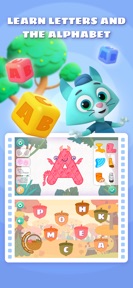










Publisher DNA
What defines Docus Mobile?
AI intelligence is not yet available for Docus Mobile. The portfolio data below is up to date.
Portfolio
What does Docus Mobile ship?
Apps
3 apps analysed

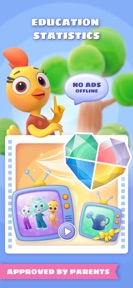
Ad-free environment creates high parent trust
- Montessori-inspired curriculum enables independent play
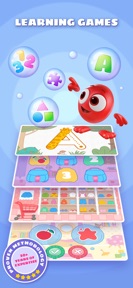
Hunch & Crunch Learning Games for kids toddlers: Math, Puzzles, Numbers, Letters

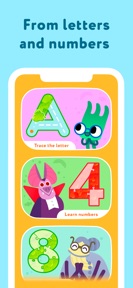

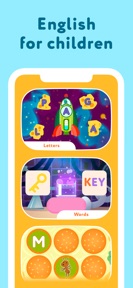
Intuitive interface design allows young children to navigate the game without needing adult supervision
- Educational mini-games and colorful character designs keep young children engaged during independent play sessions
- Performance stuttering and frame drops occur on specific mid-tier hardware during active gameplay sessions

Cheburashka. Educational games for kids – letters, numbers, alphabet, puzzles, coloring pages


Analysis in progress
Distributed across 15 markets, strongest in Europe.
Based on 3 of 3 apps with localized market data · last scanned .
Americas (4)
- United States3 / 3
- Brazil2 / 3
- Canada2 / 3
- Mexico2 / 3
Europe (6)
- France2 / 3
- Germany2 / 3
- Portugal2 / 3
- Spain2 / 3
- Turkey2 / 3
›+1 more europe market
- United Kingdom2 / 3
Asia-Pacific (5)
- Australia2 / 3
- India2 / 3
- Indonesia2 / 3
- Singapore2 / 3
- Vietnam2 / 3
Core markets (3/3 apps)
User Sentiment
How do users feel about their apps?
1
Positive apps
0
Neutral / mixed
0
Negative apps
75/100
Avg sentiment score
Rivals
Who does Docus Mobile compete with?
The rivals identified
Nemeses(2)

Both apps target the same 1 to 7 age demographic with curriculum-based math and literacy tools, competing directly for parent subscription spend.


Both apps target the early childhood education market for toddlers and preschoolers, competing directly for parental attention through educational mini-games and foundational learning activities.
Contenders(11)


Both apps compete for the same preschool demographic by offering freemium educational content, creating direct competition for screen time among children aged two to seven.


Delivers a curated collection of 15 educational games specifically designed for the developmental needs of toddlers.


Both applications target the early childhood education market by offering alphabet and letter recognition activities for children aged two to four.


Both apps target the same preschool demographic with overlapping curricula in early math and literacy, competing for the same parent and educator user base.


Both apps target the same 2-7 age demographic with interactive educational content, creating direct competition for parental subscription spend and daily active usage.


Supports English language acquisition for early learners through an extensive library of songs and interactive content.


known for Educational games kids 2-3-4-5
Both apps compete for the same preschool demographic by offering free educational content focused on early childhood cognitive development.


Both apps target the 2-8 age demographic with interactive educational content, forcing parents to choose between a subscription-gated experience and a free, curriculum-aligned library.


Both apps target the 2-7 age demographic with overlapping core features like letter tracing and number counting, competing directly for the same preschool educational time.


It scales the math learning experience by providing a curriculum-aligned platform for students.

known for 123 Toddler games for 2+ years
Users report: Both apps target the early childhood education segment for children aged two to seven, creating direct competition for parental attention and device screen time through free-to-play models.
Same space(17)


It targets the same preschool demographic with interactive puzzles that build vocabulary through named pieces.


Focuses on language development by providing native-speaker narration across six different languages for early learners.


The app focuses on the younger end of the age range by using interactive jigsaw puzzles.


Provides a comprehensive curriculum for preschool learners that spans 15 themes and over 100 interactive activities.


Provides a free, standards-aligned curriculum for the same age demographic that serves as a non-profit alternative to paid apps.


It serves the same primary school demographic by aligning math practice with academic standards through gamified puzzles.


Utilizes an adaptive learning system to tailor difficulty levels for children across various mathematical and logical subjects.


This app shares the focus on foundational tracing skills for preschoolers but specializes in handwriting.


This app targets the same age range with a story-driven approach to mental math practice.


This app targets the same age group with mental math practice but faces similar retention challenges.


It competes for the same preschool audience by providing a curated, subscription-based digital toy box.


It competes for the same age demographic by offering a broader suite of creative and STEM activities.


It targets the same age group but differentiates by prioritizing a non-overstimulating, open-ended play experience.


This app gamifies math practice by embedding curriculum-aligned exercises into a persistent fantasy role-playing game.


This app targets the same age range but focuses on parent-child co-play to facilitate literacy.


This app targets the same math-focused audience but uses digit recognition technology to provide a tactile learning experience.


Appeals to parents seeking offline, ad-free math practice for children to build foundational mathematical thinking.
