


Noor Siah
For general mobile users seeking specific functional tools, ranging from graphic design templates to religious reference materials and DIY tutorials.
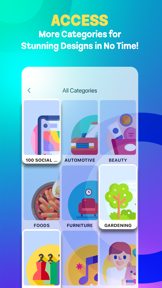
 Canvas: Template Design Maker




Snapshot
Who is Noor Siah?
Providing digital tools for creative design, education, and personal utility. Helping users access instructional content and productivity utilities on mobile.
Target audience


Portfolio
Free 6Last updated

Canvas: Template Design Maker
v2.0.4
5mo ago
Publisher DNA
What defines Noor Siah?
Publisher DNA
Primary focus
Generalist utility and educational apps
Scale
indie
Target audience
General mobile users seeking specific functional tools, ranging from graphic design templates to religious reference materials and DIY tutorials.
Origin
Karang Manggis Studio is a software development studio focused on creating accessible digital experiences for a global user base.
Signature Patterns
- •Heavy reliance on free-to-use models with minimal monetization friction
- •Broad category diversification rather than vertical specialization
- •Focus on simple, single-purpose utility and reference tools
- •Content-heavy approach for educational and reference titles
Portfolio momentum
Released 6 updates across 7 apps in the last 6 months, indicating a consistent maintenance and development cycle.
Company profile
medium confidence- Founded
- 2024
Portfolio
What does Noor Siah ship?
Apps
7 apps analysed

- Specialized high-magnification zoom features cater to niche long-distance photography needs
- Ease of use for quick social media content creation
- Limited template variety and lack of advanced editing controls


- High user satisfaction rating (4.8) validates the niche utility for book readers

Single-market publisher, every app ships only to United States.
Based on 1 of 7 apps with localized market data, more coverage rolling in as scans complete · last scanned .
Americas (1)
- United States1 / 1
Core markets (1/1 apps)
User Sentiment
How do users feel about their apps?
0
Positive apps
1
Neutral / mixed
0
Negative apps
60/100
Avg sentiment score
Rivals
Who does Noor Siah compete with?
The rivals identified
Nemeses(4)


This app is the primary market leader in the image compression space, directly competing for the same storage-conscious user base by offering high-volume batch processing.


This app directly competes for the same DIY-focused audience by offering a broad library of paper-folding projects that overlap with bookmark creation.


This app competes for the same creative design audience by offering specialized, high-engagement visual tools that capture users looking for more than just basic templates.


This app dominates the utility camera space by providing high-precision metadata overlays, directly competing with our app's focus on specialized camera functionality and image processing.
Contenders(12)

known for Steady Cam: Horizon Lock
Operates in the same utility-focused photography space, providing tools to improve image quality post-capture.


known for Night Vision True HDR - See In The Dark (NightVision Real In Low Light Mode) Green Goggles Binoculars with Camera Zoom Magnify (Video, Photo) and Private / Secret Folder Pro
Directly targets the 'binocular' and 'night vision' niche, representing a legacy competitor in the specialized zoom space.


Competes by focusing on format-specific conversion workflows rather than general compression.


Targets the educational and basic diagramming segment, overlapping with the target app's template-heavy design philosophy.


Directly competes for the template-driven design market by offering a library-focused approach to document and graphic creation.


Targets the same utility-focused audience by offering specific file format conversion and lossless optimization.


A high-end design competitor that captures users who have outgrown basic template makers and require professional-grade editing.


Competes for the same 'media management' screen time by offering high-utility image extraction from video files.


Directly overlaps with the target's core value proposition of reducing photo size while maintaining metadata control.


Competes by offering advanced metadata and AR-based visualization, appealing to users who prioritize data-rich photography.


Targets users interested in specialized, non-standard camera use cases, overlapping with our app's 'binocular' and 'secret' positioning.


Competes for the utility-focused design user who needs structured, template-based diagramming tools.
Same space(10)

Targets the technical photography niche, focusing on the precision and management of image data.


Shares the 'Photo & Video' category and targets photography enthusiasts looking for technical utility tools.


Directly overlaps in the origami niche, providing a more technically advanced approach to paper-folding education.


Competes for the same casual design user base by focusing on AI-powered, template-based logo creation.


Directly overlaps with the target app's goal of providing fast, AI-assisted design solutions for non-designers.


Shares the template-based design model but focuses on a specific niche of document and certificate creation.


Relates to our app through remote camera control and network-based video management functionality.


Targets the same DIY education market, focusing on instructional content for craft enthusiasts.


Operates in the same space by leveraging AI to automate the creation of brand-consistent visual assets.


Occupies the technical utility space for photographers, focusing on resolution and DPI calculations.
New entrants(8)


While in the same Education category, it represents a shift toward scientific data visualization rather than creative crafts.


A new developer-focused tool that utilizes real-time object detection, signaling a shift toward AI-enhanced camera apps.


Competes for the user's time within the Education category by offering utility-based hobbyist identification tools.


A new entrant focusing on granular image management, directly challenging this app's utility niche.


A new entrant using AI to solve creative content generation, representing a shift toward automated creative workflows.


A new entrant focusing on manual camera controls, challenging our app's position as a high-performance photography tool.


A new competitor targeting the e-commerce design niche with automated, template-based infographic creation.


A recent release that adds PDF integration to the standard image conversion and optimization feature set.
The Analyst's Read
The bottom line on Noor Siah
Bottom line
Karang Manggis Studio is an early-stage indie developer testing various utility and educational niches. Their success depends on their ability to refine their most popular design and reference tools into more robust, long-term products.
Frequently asked questions
How many apps does Noor Siah publish?
What kind of apps does Noor Siah make?
What is Noor Siah's top app?
In how many countries are Noor Siah's apps available?
What fed this analysis
- Apps analyzed:
- 7
- With full intel:
- 0
- With overview:
- 7
- Website scraped:
- yes
- Social presence:
- no
