


Opal
For creative professionals and ambient music enthusiasts seeking meditative, interactive audio-visual experiences.
 Bloom
Bloom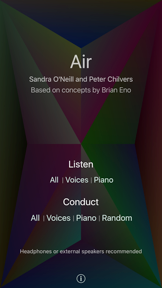








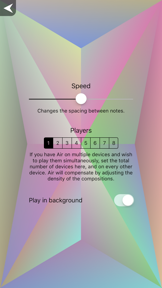


Snapshot
Who is Opal?
Providing immersive, generative audio-visual experiences through interactive instruments designed by Brian Eno and Peter Chilvers.
Target audience


Portfolio
Last updated

Bloom
v3.2
3y ago
Publisher DNA
What defines Opal?
Publisher DNA
Primary focus
Generative music and interactive ambient art
Scale
indie
Target audience
Creative professionals and ambient music enthusiasts seeking meditative, interactive audio-visual experiences.
Origin
Established to publish the collaborative generative music projects of Brian Eno and Peter Chilvers.
Portfolio momentum
Maintained active development with 4 updates across the portfolio in the last 6 months, including significant refreshes to legacy titles.
Portfolio
What does Opal ship?
Apps
6 apps analysed


Analysis in progress

Analysis in progress
Distributed across 7 markets, strongest in Europe.
Based on 1 of 6 apps with localized market data, more coverage rolling in as scans complete · last scanned .
Americas (2)
- Mexico1 / 1
- United States1 / 1
Europe (4)
- France1 / 1
- Germany1 / 1
- Italy1 / 1
- Spain1 / 1
Asia-Pacific (1)
- Japan1 / 1
Core markets (1/1 apps)
Rivals
Who does Opal compete with?
The rivals identified
Nemeses(2)

Offers deeper modular control for professional sound design compared to Bloom's accessible generative engine.


Guitarscaper applies generative processing to specific instrument samples, mirroring the ambient focus of Bloom.
Contenders(2)


Both applications target the generative ambient music market, competing for users seeking non-repeating audio sessions for focus and relaxation.


Uses professional-grade algorithms for ambient synthesis, appealing to power users who outgrow Bloom's simplicity.
Same space(25)


Uses a grid interface for ambient design, offering more expressive control than Bloom's screen interactions.


Translates touch interactions into sound via physics, appealing to users who prefer visual experimentation over Bloom's generative box.


Offers gesture-based synthesis for expressive performance, appealing to users seeking physical interaction with sound.


Offers long-form generative ambient music for focus, sharing Bloom's ambient goal but with a different temporal scale.


Provides a library of atmospheric drones and drum loops for users wanting pre-built ambient elements.


Targets Lo-Fi producers with algorithmic rhythm generation, filling a specific niche within the generative space.


Targets users seeking complex algorithmic sequencing beyond Bloom's ambient focus.


Simplifies sound design through color and text, targeting beginners who find Bloom's generative controls too abstract.


Replaces traditional LFOs with physics-driven touch, offering more expressive granular synthesis than Bloom.


Pure Strings focuses on high-quality sampled instruments rather than generative ambient soundscapes.


Uses spatial audio for ambient immersion, providing a different sensory experience than Bloom's visual-generative focus.


Launchpad targets professional producers with hardware integration, contrasting with the casual generative focus of Bloom.


SpaceWalk provides a generative harmony engine for professional producers, unlike Bloom's casual focus.


Focuses on specific handpan samples for meditation, serving a narrower niche than Bloom's generative engine.


Poly 2 provides a generative sequencing alternative for users seeking complex polyrhythmic patterns.


Focuses on simple lullaby creation, serving a niche audience compared to Bloom's broader generative art.


Stacks offers granular looping and synthesis for users wanting more experimental sound design.


Focuses on tactile audio manipulation for professional musicians, contrasting with Bloom's generative focus.


Extends generative music into MIDI sequencing, providing professional integration that Bloom lacks.


Elastic OSC provides a high-quality oscillator engine for users wanting more synthesis control than Bloom.


Targets rhythmic exploration through a circular interface, serving producers who need more structure than Bloom.


Take Creative Vocal Recorder focuses on vocal-centric song sketching rather than generative ambient soundscapes.


Provides performance-focused ambient pads for live settings, contrasting with Bloom's autonomous composition.


Focuses on extreme sound transformation for ambient design, serving a more technical user base than Bloom.


Requires dedicated hardware for music box playback, serving a different hardware-dependent market than Bloom.
New entrants(2)


Ambient Soundscape Pads offers minimal drone tools for meditation, serving a similar meditative audience.


Provides a simple, offline ambient soundscape, serving users who want a passive experience without Bloom's interactive complexity.
Frequently asked questions
How many apps does Opal publish?
What kind of apps does Opal make?
What is Opal's top app?
In how many countries are Opal's apps available?
What fed this analysis
- Apps analyzed:
- 4
- With full intel:
- 0
- With overview:
- 4
- Website scraped:
- yes
- Social presence:
- no