


Alexandernaut
For professional musicians, electronic music producers, and sound designers seeking tactile, algorithmic, and gesture-based sequencing tools.
 Fugue Machine : MIDI Sequencer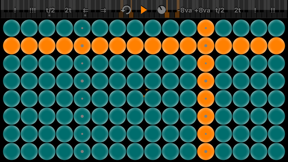

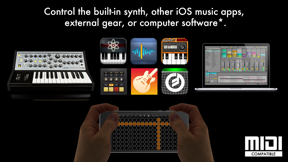


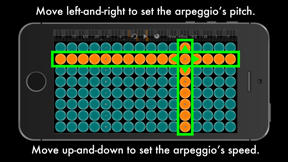


Snapshot
Who is Alexandernaut?
Empowering musicians with advanced algorithmic sequencing and gesture-based control tools. Bridging the gap between hardware MIDI gear and digital creative workflows.
Target audience


Portfolio
Last updated

Fugue Machine : MIDI Sequencer
v1.5.23
1.3y ago
Publisher DNA
What defines Alexandernaut?
Publisher DNA
Primary focus
Music production software and MIDI utility tools
Scale
indie
Target audience
Professional musicians, electronic music producers, and sound designers seeking tactile, algorithmic, and gesture-based sequencing tools.
Origin
Founded by a music software developer and electrical engineer based in San Francisco.
Signature Patterns
- •Strict focus on paid, one-time purchase monetization models
- •Deep integration with MIDI protocols and external hardware
- •Emphasis on non-linear, generative, and algorithmic composition
- •Interface design centered on matrix grids and gesture-based modulation
Portfolio momentum
The publisher has released no new titles in the last 6 months and maintains a high ratio of abandoned apps, though the flagship Fugue Machine series remains actively supported.
Company profile
medium confidence- Headquarters
- San Francisco, CA
Portfolio
What does Alexandernaut ship?
Apps
5 apps analysed


Single-market publisher, every app ships only to United States.
Based on 3 of 5 apps with localized market data, more coverage rolling in as scans complete · last scanned .
Americas (1)
- United States3 / 3
Core markets (3/3 apps)
Rivals
Who does Alexandernaut compete with?
The rivals identified
Nemeses(3)


Serves as a modular production environment that provides the deep sequencing capabilities Fugue Machine users seek for complex track composition.


Both apps target electronic music producers and sound designers with non-traditional, algorithmic sequencing tools on iPad and Mac. They compete directly for the same professional creative workflow.


Both applications target musicians requiring MIDI clock synchronization for live performance and studio workflows.
Contenders(14)


Both apps target electronic musicians needing non-linear MIDI sequencing, with Rozeta offering a modular suite of ten tools while Fugue Machine Rubato provides a unified multi-playhead environment.


Both apps target professional musicians and audio engineers, creating a shared audience overlap where users must manage complex MIDI configurations to operate Fugue Machine Rubato's nonlinear engine.


Both apps target iOS music producers seeking algorithmic MIDI sequencing, though Fugue Machine focuses on melodic composition while OCTACHRON targets drum-centric patterns.


Both apps target mobile music producers, with Fugue Machine focusing on generative MIDI sequencing and SAND on general-purpose MIDI and audio clip arrangement.


Both apps target music producers seeking generative, non-traditional sequencing workflows, competing for the same creative production time on iOS.


Both applications target professional music producers with a $19.99 price point and focus on advanced MIDI sequencing for iOS.


Both apps target music producers seeking generative MIDI sequencing, with Riffer offering a lower price point and Fugue Machine focusing on multi-playhead manipulation.


Both apps target electronic music producers, competing for the same mobile studio workflow time despite Fugue Machine focusing on generative MIDI and Pure Acid on classic hardware synthesis.


Both applications target musicians integrating hardware into Ableton Link sessions, though they serve distinct technical requirements: MIDI clock synchronization versus audio signal streaming.


Both applications target musicians requiring MIDI clock synchronization for hardware instruments, creating direct competition for live performance and studio integration workflows.


Both apps target professional electronic music producers at an identical 19.99 dollar price point, competing for the same creative time within a studio workflow.


Both apps target music producers and sound designers on iOS, competing for the same creative time and budget within the mobile music production category.


Both apps target musicians needing to synchronize hardware MIDI devices, but they utilize different input sources: Link to MIDI relies on Ableton Link software sessions, while MIDI Pulse BPM Detecter uses microphone-based audio analysis.


Both applications target electronic music producers with specialized sequencing tools, competing for the same creative workflow budget and user base.
Same space(32)


Functions as an AUv3 MIDI sequencer plugin, offering a clip-based workflow that serves as a direct alternative to the source app's sequencing.


Uses AI to transcribe audio into MIDI, providing a source material generation tool for users of sequencers like Fugue Machine.


Acts as a utility for Fugue Machine users by ensuring performance accuracy through real-time MIDI scale correction.


Shares the generative sequencing focus of Fugue Machine but uses physics-based interactions instead of Baroque composition techniques.


Transforms audio through granular synthesis, providing a specialized effect tool that complements the source app's sequencing capabilities.


Serves the same casual music hobbyist segment as Fugue Machine but focuses on gamified piano learning rather than generative sequencing.


Functions as the professional audio routing hub that hosts Fugue Machine within a larger mobile production signal chain.


Provides a centralized MIDI routing hub that supports the hardware-focused workflows of many mobile music producers.


Provides a traditional sheet music composition environment that acts as a structural alternative to the generative piano roll in Fugue Machine.


Serves as a mobile sketchpad for Ableton Live users, complementing the desktop production workflow that Link to MIDI supports.


Provides hands-free transport control for Ableton Live, offering a different interaction method for the same DAW-centric audience as Link to MIDI.


Generates atmospheric textures using synthesis algorithms, serving as a sound source for the source app's sequencing environment.


Converts MIDI files to sheet music, providing a visual utility for MIDI data that differs from the timing synchronization focus of Link to MIDI.


Focuses on interactive, performance-based MIDI sequencing, aligning with the source app's experimental approach to musical composition.


Offers a beatmaking toolkit that provides a more accessible, sample-based alternative to the generative sequencing of Fugue Machine.


Provides automated microlooping for sound design, offering a complementary effect-based workflow to the source app's sequencing.


Offers multi-layer audio looping, providing a tactile, performance-focused alternative to the source app's note-based sequencing.


Provides a broad, collaborative DAW environment that complements the specialized, nonlinear sequencing tasks of the source app.


Offers professional-grade MIDI controller customization for studio automation, serving users who need more complex control than simple clock synchronization.


Turns an iPad into a touch-based MIDI interface, offering a portable control surface for the same hardware-focused musicians who use Link to MIDI.


Offers professional tuning utilities for acoustic instruments, serving a different segment of the music production market than the source app.


Generates ambient soundscapes through layered audio, serving users who seek atmospheric textures rather than the source app's note-based sequencing.


Processes audio through glitch-oriented fragmentation, providing a creative, experimental tool that complements the source app's nonlinear playback.


Replicates hardware-style modular synthesis, appealing to the same experimental sound design audience as Fugue Machine.


Provides harmonic tools for chord exploration, offering a compositional aid that integrates with the source app's sequencing workflow.


Targets casual learners seeking gamified piano practice, contrasting with the professional, nonlinear sequencing focus of the source app.


Converts vocal input to MIDI, providing a creative input method for users who later integrate their ideas into the DAW workflows supported by Link to MIDI.


Allows hardware MIDI controllers to adjust mixer faders, providing a tactile control layer for audio hardware that complements synchronization tools.


Users report: Captures and logs MIDI messages for troubleshooting, serving as a technical utility for the same hardware-focused user base as Link to MIDI.


Serves as a simple, no-setup piano simulator that complements the sequencing tools of Fugue Machine for basic practice.


Offers collaborative sheet music creation that complements the generative sequencing of Fugue Machine for users needing traditional notation.


Enables remote control of DJ software over Wi-Fi, providing a specialized interface for performance rather than the clock-sync utility of Link to MIDI.
New entrants(1)


Generates MIDI patterns for hardware synths and DAWs, serving as a creative sequencer that complements the clock-sync utility of Link to MIDI.
The Analyst's Read
The bottom line on Alexandernaut
Bottom line
Alexandernaut is a highly specialized developer with a strong reputation for technical precision in the niche music production category. Their strategy of building high-utility, professional-grade tools for a specific subset of electronic musicians provides a stable, albeit narrow, market position.
Frequently asked questions
How many apps does Alexandernaut publish?
What kind of apps does Alexandernaut make?
What is Alexandernaut's top app?
In how many countries are Alexandernaut's apps available?
What fed this analysis
- Apps analyzed:
- 5
- With full intel:
- 0
- With overview:
- 5
- Website scraped:
- yes
- Social presence:
- yes
