


Robson Previato
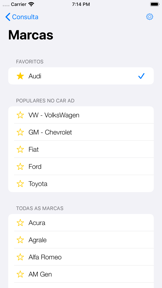
 Car Ad - Tabela FIPE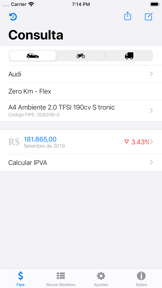







Snapshot


Publisher DNA
What defines Robson Previato?
AI intelligence is not yet available for Robson Previato. The portfolio data below is up to date.
Portfolio
What does Robson Previato ship?
Apps
4 apps analysed
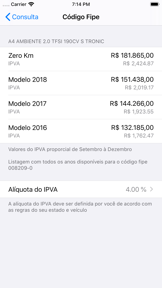
Price history tracking reduces user friction by eliminating manual data re-entry.
- FIPE table integration provides a reliable, standardized data source for vehicle valuation.

Analysis in progress


Analysis in progress
Americas-centric footprint across 3 markets.
Based on 2 of 4 apps with localized market data, more coverage rolling in as scans complete · last scanned .
Americas (2)
- United States2 / 2
- Brazil1 / 2
Europe (1)
- Portugal1 / 2
Core markets (2/2 apps)
Rivals
Who does Robson Previato compete with?
The rivals identified
Nemeses(1)

Both apps target home cooks needing a digital repository for personal recipes, creating direct competition for user attention and storage utility.
Contenders(10)


Both apps target home cooks requiring iCloud-synced recipe storage, but the rival provides a broader feature set at no cost compared to the paid model of My Recipes - Cookbook.


Both apps target home cooks needing digital recipe organization, but Saffron captures users via automated web-importing while My Recipes relies on manual entry.


Both apps target home cooks requiring a digital repository for personal recipes, competing directly on the utility of cloud-synced recipe management.


Both apps target home cooks needing recipe organization, but the rival provides automated ingestion tools while the target relies on manual entry.


Both apps target home cooks managing recipe collections, but Mr. Cook provides automated ingestion and meal planning tools while My Recipes requires manual entry.


Daily Bite competes by automating recipe ingestion from social media and web links, directly challenging the manual entry model of My Recipes - Cookbook.


Both apps target home cooks needing digital recipe organization, but Reciply automates content capture from external sources while My Recipes - Cookbook requires manual entry.


Both apps target home cooks managing recipe collections, but Souschef automates content capture from social media while My Recipes requires manual entry.


Both apps target home cooks managing digital recipe collections, but the rival provides automated ingestion and collaborative tools that the target lacks.


Yumlet competes by offering automated web-import tools and shopping list generation, directly challenging the manual entry model of My Recipes - Cookbook for the same home cook audience.
Same space(20)


Provides an automated import engine to build a library, though recent data loss reports undermine its value as a permanent repository.


Uses AI to scan handwritten cards and import social media content, offering more automation than the source app.


Focuses on community-driven content and ingredient-based search, serving as a discovery tool rather than a manual repository.


Uses AI to digitize handwritten recipes, offering a more advanced migration tool than the source app's manual entry.


Integrates with Apple hardware and software, providing a native experience for users who prefer ecosystem-specific tools.


Organizes recipes into custom collections and meal plans to solve the clutter of scattered notes.


Uses AI to parse social media content, providing a faster ingestion method than the source app's manual entry.


Enables collaborative recipe management, which provides a social layer absent in the source app.


Provides a comprehensive suite of kitchen tools that expands beyond the source app's manual entry focus.


Aggregates viral social media content to solve the daily meal planning struggle for families.


Prioritizes manual curation and tagging, appealing to power users who want control over their recipe data.


Aggregates social media content to solve fragmentation, though its subscription-first model creates friction compared to the source app.


Connects recipe management with grocery delivery services, providing an end-to-end workflow the source app lacks.


Focuses on a native viewing experience for web-based recipes, providing a more specialized tool than the source app.


Combines recipe import with family sharing, providing a multi-user workflow absent in the source app.


Offers a lifetime purchase model for collaborative recipe books, providing an alternative to the subscription-based market.


Dynamically updates grocery lists based on meal plans, providing an active management tool for health-conscious users.


Offers OCR scanning for physical recipes, providing a migration path for legacy collections that the source app lacks.


Integrates directly with hardware to provide guided cooking, contrasting with the manual entry focus of the source app.


Simplifies the transition from web discovery to kitchen execution through guided cooking, contrasting with the source app's static repository.
New entrants(2)


Collects recipes from various sources to solve the problem of scattered screenshots and links.


Acts as an AI-powered culinary command center that assists with techniques and health goals.
