Stanislav Basovnik
For serious chess players and students who require portable, offline-accessible tools for study and memorization.
 Chess Opener PRO


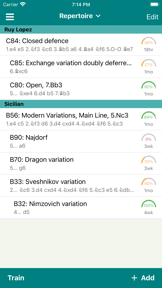
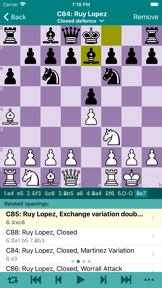


Snapshot
Who is Stanislav Basovnik?
Providing chess players with portable tools to build, analyze, and memorize opening repertoires. Focused on offline-capable training for serious students of the game.
Target audience


Portfolio
Free 1Last updated

Chess Opener PRO
v1.25.1
8mo ago
Publisher DNA
What defines Stanislav Basovnik?
Publisher DNA
Primary focus
Chess training and repertoire management tools
Scale
indie
Target audience
Serious chess players and students who require portable, offline-accessible tools for study and memorization.
Signature Patterns
- •Integration of Encyclopedia of Chess Openings (ECO) databases
- •Focus on offline-first functionality for study and training
- •Dual-tier monetization strategy using a free Lite version and a paid PRO version
- •Core feature set centered on repertoire building and move-classification
Portfolio momentum
Released 4 updates across 2 apps in the last 6 months, indicating a steady maintenance and development cycle.
Portfolio
What does Stanislav Basovnik ship?
Apps
2 apps analysed

Integrated Stockfish engine provides professional-grade evaluation
- Tournament players value the ability to review specific lines while training their opening repertoire
- Lack of clear user documentation makes the powerful features difficult for new users to navigate
User Sentiment
How do users feel about their apps?
1
Positive apps
0
Neutral / mixed
0
Negative apps
75/100
Avg sentiment score
Rivals
Who does Stanislav Basovnik compete with?
The rivals identified
Nemeses(1)

Chessify competes by offering a broad suite of professional-grade analysis tools, including cloud-based engine processing and a massive game database, which directly challenges the niche opening-repertoire focus of Chess Opener PRO.
Contenders(9)


Both apps target chess players seeking engine-based analysis and training, though they diverge on the core utility of repertoire management versus general engine play.


Both applications target competitive chess players, but they serve distinct training needs: Chess Opener PRO focuses on opening repertoire memorization, while ChessBase Mobile emphasizes tactical puzzle training and live competitive play.


Both applications target chess players focused on building and memorizing opening repertoires using Stockfish engine analysis. They compete directly for users seeking dedicated tools to improve opening moves through repetition.


Both applications target competitive chess players requiring PGN database management and study tools, creating direct competition for the same tournament-focused user base.


Both apps target chess enthusiasts using Stockfish for analysis. Checkmate - Chess Engine AI competes by offering free, on-device board recognition, which directly challenges the utility of manual repertoire building in Chess Opener PRO.


Both apps target serious chess players requiring offline tools for match tracking and opening study, creating a direct overlap in the tournament-preparation segment.


Both apps target competitive chess players focused on opening theory, creating direct competition for users seeking to build and analyze repertoires.


Both apps provide local chess engine analysis for players, but Chess Acuity offers free automated board recognition from screenshots that directly challenges the manual PGN import workflow of Chess Opener PRO.


Both apps target competitive chess players using Stockfish engine analysis, though they address distinct phases of the game: opening repertoire preparation versus endgame tablebase querying.
Same space(15)


This app targets the intermediate student demographic with interactive lessons and a coach engine.


This app competes directly for the serious student demographic by using spaced repetition for move retention.


It provides a similar opening-focused study tool that emphasizes probability-based move selection.


This app focuses specifically on the opening repertoire training niche using Lichess data.


This app targets the same offline-capable learning niche but uses a freemium model to capture casual users.


It serves as a comprehensive offline training suite that covers multiple aspects of chess improvement.


It provides a correspondence-style multiplayer platform for users who prefer asynchronous play.


This app focuses on the tactical practice component that often accompanies opening study.


This app provides a personalized training system that analyzes user games to identify weaknesses.


It competes for the same beginner audience by providing a free, AI-driven alternative to dedicated study tools.


It serves as a broader training platform that includes multiplayer features absent in dedicated opening tools.


It offers a cloud-based alternative for players who need high-depth engine analysis on the go.


It captures the casual training market with an adaptive AI that does not require cloud connectivity.


It provides a visual, multi-perspective alternative for players who want to combine study with 3D gameplay.


It offers a standard, free-to-play alternative for users who prioritize general gameplay over specialized opening study.
New entrants(2)


It offers a strictly offline, no-strings-attached experience for players who reject modern connectivity requirements.


This app bridges the gap between physical board play and digital analysis tools.
The Analyst's Read
The bottom line on Stanislav Basovnik
Bottom line
This publisher maintains a focused, utility-driven portfolio that effectively segments the chess study market through a clear freemium model. Their consistent update cadence suggests a stable, long-term commitment to this specific niche of the gaming category.
Frequently asked questions
How many apps does Stanislav Basovnik publish?
What kind of apps does Stanislav Basovnik make?
What is Stanislav Basovnik's top app?
What fed this analysis
- Apps analyzed:
- 2
- With full intel:
- 0
- With overview:
- 2
- Website scraped:
- no
- Social presence:
- no