


Tekbh
 NaviTruck GPS Truck & Caravan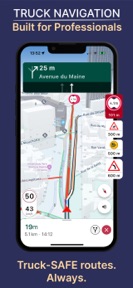


Snapshot


Publisher DNA
What defines Tekbh?
AI intelligence is not yet available for Tekbh. The portfolio data below is up to date.
Portfolio
What does Tekbh ship?
Apps
3 apps analysed

Offline 3D map functionality maintains navigation reliability in remote areas
- Truck-specific routing logic provides reliable navigation that avoids low bridges and restricted road segments
- Aggressive monetization tactics and subscription hurdles frustrate users during the initial trial and cancellation process
NaviTruck: Truck GPS with offline maps. Avoid low bridges & weight limits.


Analysis in progress

Analysis in progress
Distributed across 17 markets, strongest in Europe.
Based on 1 of 3 apps with localized market data, more coverage rolling in as scans complete · last scanned .
Americas (4)
- Brazil1 / 1
- Canada1 / 1
- Mexico1 / 1
- United States1 / 1
Europe (9)
- France1 / 1
- Germany1 / 1
- Italy1 / 1
- Netherlands1 / 1
- Portugal1 / 1
›+4 more europe markets
- Spain1 / 1
- Sweden1 / 1
- Turkey1 / 1
- United Kingdom1 / 1
Asia-Pacific (4)
- India1 / 1
- Indonesia1 / 1
- Singapore1 / 1
- Vietnam1 / 1
Core markets (1/1 apps)
User Sentiment
How do users feel about their apps?
0
Positive apps
0
Neutral / mixed
1
Negative apps
35/100
Avg sentiment score
Rivals
Who does Tekbh compete with?
The rivals identified
Nemeses(1)

Both apps target professional truck and caravan operators with dimension-aware routing and offline map capabilities, creating direct competition for the same heavy-vehicle driver segment.
Contenders(10)


Both apps target HGV and professional drivers with vehicle-dimension-based routing, competing for the same user base requiring compliant navigation.


Both apps compete for mobile navigation users, though NaviTruck targets professional drivers with vehicle-specific constraints while the rival focuses on general commuters with after-call utility.


Both apps compete for the same mobile navigation user base, though NaviTruck targets professional drivers with vehicle-specific constraints while the rival focuses on general-purpose satellite and 3D map exploration.


Both apps compete for the same driver audience by offering navigation, traffic alerts, and offline map capabilities. They overlap in the general utility of providing driving directions and route planning.


Both apps compete for the navigation market, but NaviTruck targets professional heavy-vehicle drivers while ViaMichelin targets general travelers and tourists.


Both apps provide offline navigation and route planning, targeting drivers who require reliable guidance in areas with limited connectivity.


Both apps target drivers requiring real-time transit data, with NaviTruck providing navigation and the rival offering speed and odometer tracking.


Both apps compete for the same driver audience by offering navigation services, though they diverge between specialized heavy-vehicle routing and general-purpose commuter utility.


Both apps target drivers using GPS data, but NaviTruck focuses on professional logistics and vehicle-specific routing while Speedometer provides basic velocity monitoring. They compete for the same driver attention during transit.


Both apps target professional HGV and large vehicle operators by providing routing based on vehicle dimensions and weight restrictions.
Same space(18)


Offers a general-purpose navigation and exploration tool for users who do not require the specialized truck-specific constraints of the source app.


Offers a specialized routing alternative for riders who prioritize scenic, non-highway paths over the truck-specific routing of the source app.


Provides a speed monitoring utility for drivers who need reliable metrics without cellular data dependency.


Competes in the leisure-vehicle navigation space by calculating routes based on specific vehicle dimensions to avoid road hazards.


Serves as a general-purpose navigation and exploration tool for users who do not require the truck-specific constraints of the source app.


Targets commuters who prioritize traffic flow reliability through swarm-intelligence routing rather than the truck-specific safety features of the source app.


Provides a specialized navigation alternative for motorcycle riders seeking curvy routes and scenic tours.


Offers a broad navigation solution that includes specific routing modes for both trucks and motorcycles.


Serves as a lightweight, offline-first speed monitoring utility for drivers who do not require full navigation capabilities.


Functions as a photography-focused utility for users who need to document locations with geotags rather than navigate heavy vehicles.


Functions as a specialized safety utility for drivers who need radar and speed trap alerts alongside their primary navigation tool.


Acts as a general-purpose navigation tool for users who need basic routing without the specialized truck-specific constraints of the source app.


Provides a specialized navigation interface for marine environments, serving users who require tide and weather data instead of road-based routing.


Serves as a general-purpose navigation alternative for drivers who prioritize offline map access over the truck-specific routing found in the source app.


Targets drivers who prefer a privacy-focused, ad-free navigation experience over the ad-supported models common in the sector.


Directly competes for the professional trucking audience by providing crowdsourced parking and fuel data that the source app lacks.


Serves the same professional trucking segment as the source app, focusing on vehicle-dimension-aware routing for compliance.


Provides a secondary navigation option for travelers needing offline functionality, though its ad-supported model creates friction compared to the source app.
