Vernier Software & Technology
For science educators and students in middle school, high school, and higher education settings.
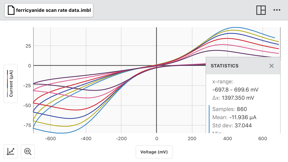
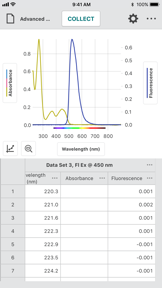
 Vernier Graphical Analysis




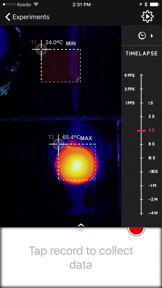
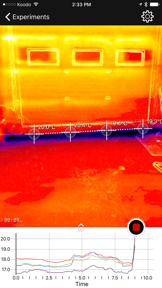


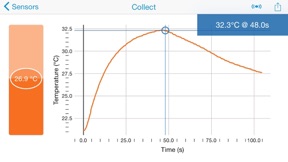


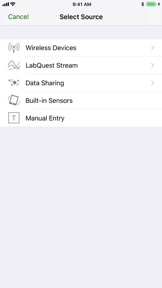





Snapshot
Who is Vernier Software & Technology?
Providing specialized software for scientific data collection and analysis in educational laboratory settings. Bridging the gap between physical sensors and digital learning environments.
Target audience


Portfolio
Free 5Last updated

Vernier Graphical Analysis
v6.2.2
1.1y ago
Publisher DNA
What defines Vernier Software & Technology?
Publisher DNA
Primary focus
Educational science laboratory software
Scale
indie
Target audience
Science educators and students in middle school, high school, and higher education settings.
Signature Patterns
- •Software designed exclusively to interface with proprietary hardware sensors
- •Focus on STEM-specific data visualization and analysis workflows
- •Freemium or free-to-use pricing model for educational accessibility
- •High reliance on institutional adoption within science classrooms
Portfolio momentum
With zero releases in the last six months and five out of eight apps categorized as abandoned, the publisher is currently in a maintenance-only phase.
Portfolio
What does Vernier Software & Technology ship?
Apps
8 apps analysed

Professional-grade interface supports teacher-led classroom workflows
- Proprietary hardware integration creates high switching costs for existing science labs

- Educational utility in physics and chemistry labs provides essential hands-on measurement support for students
- Bluetooth connectivity issues and hardware sensor failures disrupt data collection during critical laboratory experiments


Specialized instrumentation support creates high switching costs for educators already invested in Vernier laboratory suites
- Proprietary hardware integration provides unmatched data accuracy for physical chemistry experiments
Distributed across 5 markets, strongest in Americas.
Based on 2 of 8 apps with localized market data, more coverage rolling in as scans complete · last scanned .
Americas (2)
- United States2 / 2
- Mexico1 / 2
Europe (3)
- France1 / 2
- Germany1 / 2
- Spain1 / 2
Core markets (2/2 apps)
User Sentiment
How do users feel about their apps?
0
Positive apps
1
Neutral / mixed
1
Negative apps
35/100
Avg sentiment score

Unlock the app dragging this portfolio down.
Access the full report for freeRivals
Who does Vernier Software & Technology compete with?
The rivals identified
Nemeses(2)

ChemLens competes by capturing the same student demographic through AI-driven homework assistance, directly challenging Vernier's role as the primary science learning tool.


iNaturalist competes for the same educational and field-science audience by providing a massive, community-driven platform for biological data collection and species identification.
Contenders(8)


This contender targets the same chemistry student audience with advanced AI features and modern spatial computing support.


SciSpace competes by streamlining the research and analysis phase of science education, which is the logical next step after data collection.


Zooniverse competes by offering students access to real scientific research projects, overlapping with Vernier's goal of facilitating authentic scientific inquiry.


This app competes for the attention of younger science students by gamifying environmental education and real-world conservation missions.


CitSci targets the same educational data-collection market by allowing users to build custom datasheets for field research.


This app directly overlaps with Vernier's chemistry focus by providing database integration and calculation tools for chemical solutions.


GLOBE Observer is a major educational competitor that uses NASA-backed tools to engage students in environmental observation.


This app competes for the environmental science education segment by focusing on community-led litter recording and data collection.
Same space(27)


Provides foundational chemistry reference data that serves as a prerequisite for the experimental work performed in Vernier's app.


Osmosis occupies the same educational space by providing high-quality, structured learning content for science and medical students.


Targets the same chemistry student audience by providing specialized calculation tools for stoichiometry and limiting reactants.


Occupies the same educational reference space by providing deep domain-specific terminology for students in science-heavy curricula.


PhET is a direct peer, providing virtual laboratory simulations that serve as a digital alternative to Vernier's physical sensor experiments.


Shares the educational science category, focusing on high-fidelity visualization of biological systems for students.


FizziQ acts as a direct alternative by integrating sensor-based data collection and video analysis into a single mobile laboratory suite.


CoachMyVideo Pro serves the same prosumer audience as Vernier by providing professional-grade video analysis tools for motion review.


VoltLab serves the same physics education audience by providing interactive lessons that help students master electricity concepts.


Atrium competes by using clinical reasoning exercises to teach science, mirroring Vernier's focus on practical application.


Educreations Whiteboard functions as a complementary tool for students and teachers to document and share physics concepts explained via video.


Physics Toolkit complements Vernier by providing the reference formulas and constants required to analyze the data collected in the lab.


This app serves the same academic demographic by providing curriculum-specific practice and tutoring for physical science students.


Pocket Physics Lab acts as a companion notebook for tracking physics concepts and investigations, supporting the broader learning process.


Math Graphing Lite provides dynamic graphing capabilities that serve as a tool for visualizing the mathematical models behind physics.


Coach Video Analysis provides a specialized subset of motion review features that overlap with the analysis needs of physics students.


Motion Track provides advanced video stabilization and tracking that exceeds the capabilities of Vernier's basic kinematic analysis.


Playground Physics is a direct competitor that uses similar video-based point-tracking to analyze motion, forces, and energy.


Physics Lab Pro provides a simulation environment for physics experiments that serves as a digital alternative to physical lab setups.


Visual Physics serves the same physics education audience by providing a comprehensive library of animated videos for conceptual learning.


This app serves the same STEM student demographic by providing reference and calculation tools for physics.


Tracket Motion offers a more sophisticated video editing environment for tracking and stabilization than the current Vernier toolset.


SPARKvue 4 competes for the same classroom data collection market by offering wireless sensor integration and real-time visualization.


SlowMo targets the same motion analysis utility as Vernier but focuses on sports performance rather than academic physics data collection.


Graphing provides a visual tool for exploring graph theory, which is a niche mathematical component of advanced physics curricula.


Physics Lab AR serves the same STEM education audience but shifts the focus from video-based kinematic analysis to interactive 3D circuit simulation.


My Physics Calculator lite offers a specialized utility for physics calculations that complements the data analysis performed in Vernier.
New entrants(6)


Users report: A new medical-focused research tool that threatens to capture the data analysis segment of the science education market.


A new entrant in the education space that uses AI-driven scanning to facilitate scientific observation and project management.


A specialized utility app for chemistry students that automates common calculations, competing for the same 'lab assistant' utility space.


A new entrant using gamification to teach science, potentially capturing the interest of Vernier's younger student base.


Phyzix serves the same sensor-based data collection market as Vernier by turning the mobile device into a portable laboratory.


Motion Marker-Video Analysis provides professional annotation and comparison tools that overlap with the motion review needs of physics educators.
The Analyst's Read
The bottom line on Vernier Software & Technology
Bottom line
Vernier is a legacy-focused publisher whose mobile presence serves as a utility layer for their core hardware business. Their low user ratings suggest a disconnect between modern mobile UX expectations and the specialized, functional requirements of their academic user base.
Frequently asked questions
How many apps does Vernier Software & Technology publish?
What kind of apps does Vernier Software & Technology make?
What is Vernier Software & Technology's top app?
In how many countries are Vernier Software & Technology's apps available?
What fed this analysis
- Apps analyzed:
- 8
- With full intel:
- 0
- With overview:
- 8
- Website scraped:
- yes
- Social presence:
- yes