


Alejandro Castagnolo Martinez
 Brain game. Picture Match











Publisher DNA
What defines Alejandro Castagnolo Martinez?
AI intelligence is not yet available for Alejandro Castagnolo Martinez. The portfolio data below is up to date.
Portfolio
What does Alejandro Castagnolo Martinez ship?
Apps
5 apps analysed
Analysis in progress

11-language localization supports broad international reach
- Minimalist UX provides a focused, low-cognitive-load experience


Analysis in progress

Analysis in progress
Distributed across 10 markets, strongest in Europe.
Based on 3 of 5 apps with localized market data, more coverage rolling in as scans complete · last scanned .
Americas (3)
- Mexico3 / 3
- United States3 / 3
- Brazil2 / 3
Europe (5)
- Spain3 / 3
- France2 / 3
- Germany2 / 3
- Italy2 / 3
- Portugal2 / 3
Asia-Pacific (2)
- Japan2 / 3
- South Korea1 / 3
Core markets (3/3 apps)
User Sentiment
How do users feel about their apps?
1
Positive apps
0
Neutral / mixed
0
Negative apps
85/100
Avg sentiment score
Rivals
Who does Alejandro Castagnolo Martinez compete with?
The rivals identified
Nemeses(2)

This app dominates the casual puzzle category by capturing the same 'quick-session' logic-based audience that Color - Link targets, but with massive scale.


Both apps compete for the same casual puzzle audience by offering short, logic-based sessions that fit into daily routines.
Contenders(14)


This app serves the same minimalist puzzle audience but differentiates through a strict focus on data privacy.


Both apps target casual logic puzzle players with sliding block mechanics, competing for the same user base within the sliding block puzzle category.


Both apps target the same casual sliding-block puzzle audience with identical core logic mechanics and board-game play styles.


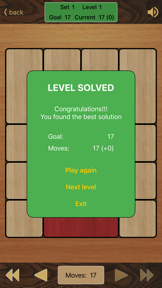
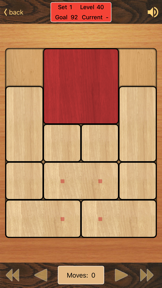
Both apps occupy the sliding block puzzle category, sharing the core mechanic of clearing paths for a red block to reach an exit. They compete for the same casual logic-puzzle audience by offering variations on board navigation.


Competes for the same 'draw-to-solve' puzzle audience by utilizing line-based mechanics to overcome physical obstacles.


Shares the casual, accessible puzzle-solving demographic, though it pivots toward goal-oriented navigation rather than pure line-linking.


Both apps target the sliding block puzzle category, competing for the same casual logic-game audience through identical core mechanics of moving a red block to an exit.


Both apps target casual gamers through sliding block mechanics, competing for the same user time-share within the puzzle category.


Targets the same logic-puzzle player base but introduces time-pressure and physics-based movement to increase difficulty.


Both apps compete for the same casual logic-puzzle audience by offering free-to-play sliding block mechanics. They share a core gameplay loop centered on navigating a target block to an exit.


Occupies the same 'brain training' casual gaming niche, appealing to users who enjoy quiet, observational puzzle play.


Both apps target casual gamers through sliding block mechanics, competing for the same logic-puzzle audience on mobile platforms.


Both apps target the sliding puzzle category with free-to-play models, competing for the same casual logic-game audience.


Both apps target the same logic-based sliding puzzle audience and share the core mechanic of navigating a primary block to a board exit.
Same space(13)


Directly competes for the casual puzzle market share with a focus on organization and spatial arrangement.


This app competes for the same casual puzzle audience but uses dynamic obstacles to increase ad-impression inventory.


This app serves as an adjacent mental exercise for users who enjoy the logic-based problem solving found in the source app.


It targets the same sliding puzzle demographic but adds personalization features that the source app lacks.


It provides a direct alternative to the source app's sliding mechanics by utilizing a 3D perspective for block movement.


It offers a traditional logic puzzle experience that functions as a secondary brain-training activity for the source app's users.


It occupies the same spatial reasoning space as the source app while utilizing a larger content library to drive session frequency.


It shares the source app's focus on sliding puzzles but adds a complex power-up system to manage difficulty.


Uses similar pair-matching logic but introduces a high-stakes monetization model that attracts a different segment of the puzzle audience.


Targets the same casual puzzle demographic with a focus on match-3 mechanics and level progression.


It targets the same logic-based puzzle segment but relies on aggressive monetization mechanics that contrast with the source app's free-to-play model.


It provides a classic logic challenge that appeals to the same brain-training audience as the source app.


A direct competitor in the casual puzzle space, offering a high volume of levels and unlimited play.
New entrants(2)


A new puzzle entrant that uses strategic ability systems to differentiate itself from standard grid-based games.


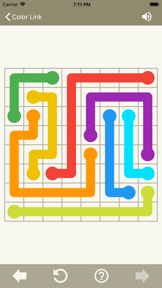
A new entrant using color-based mechanics that directly overlap with our core 'Color Link' gameplay loop.
