


Berliner Verkehrsbetriebe (BVG) - AöR
 BVG Tickets: Train, Bus & Tram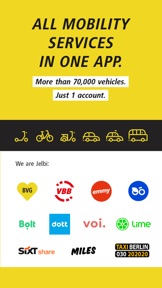




Publisher DNA
What defines Berliner Verkehrsbetriebe (BVG) - AöR?
AI intelligence is not yet available for Berliner Verkehrsbetriebe (BVG) - AöR. The portfolio data below is up to date.
Portfolio
What does Berliner Verkehrsbetriebe (BVG) - AöR ship?
Apps
3 apps analysed

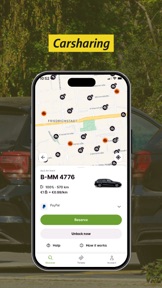
Integrated multi-modal shared mobility [Feature Set]
- Convenience of multi-modal transit planning
- Reliability of live travel information

Single-registration model reduces friction for multi-modal transit users
- Multimodal planning convenience
- Android app instability
Buy bus, train and tram tickets for Berlin public transport quickly and easily


Analysis in progress
Distributed across 12 markets, strongest in Europe.
Based on 2 of 3 apps with localized market data, more coverage rolling in as scans complete · last scanned .
Americas (3)
- Brazil2 / 2
- Mexico2 / 2
- United States2 / 2
Europe (7)
- France2 / 2
- Germany2 / 2
- Italy2 / 2
- Netherlands2 / 2
- Portugal2 / 2
›+2 more europe markets
- Spain2 / 2
- Sweden2 / 2
Asia-Pacific (2)
- Japan2 / 2
- South Korea2 / 2
Core markets (2/2 apps)
User Sentiment
How do users feel about their apps?
0
Positive apps
2
Neutral / mixed
0
Negative apps
55/100
Avg sentiment score
Unlock the app dragging this portfolio down.
Access the full report for freeRivals
Who does Berliner Verkehrsbetriebe (BVG) - AöR compete with?
The rivals identified
Nemeses(1)

As the primary national rail operator, DB Navigator competes directly for the daily commuter and long-distance traveler market in Berlin, serving as the default transit utility for millions.
Contenders(6)


DVB mobil competes by offering specialized safety and capacity features for Dresden's transit network, challenging Jelbi's utility-focused value proposition.


The KVB-App is a direct regional competitor that bundles multimodal planning with local bike and car-sharing, mirroring Jelbi's core strategy in Cologne.


MOIA competes directly with Jelbi's shared-mobility offerings by providing a premium, app-based ridepooling service that targets the same urban commuter demographic.

known for MVV-App
This app serves as the regional transit authority equivalent for Munich, competing for the same user base of urban commuters who demand integrated trip planning.


TaxiCaller competes for the same 'get me there' use case by offering on-demand private transport alternatives to public transit.


This app competes by offering similar multi-modal transit planning and integrated ticket purchasing for regional transit users.
Same space(6)


It competes for the travel-planning segment by providing a comprehensive search aggregator for transit and flight options.


While focused on air travel, it competes for the 'travel utility' share of wallet by helping users optimize their transit and travel logistics.


This app competes for the travel-planning attention of users who are looking for the most efficient or cost-effective transit options.


PRESTO serves as a regional transit payment and management utility, competing for the same 'daily commuter' user behavior as Jelbi.


Vaya competes for the travel-planning audience by focusing on personalized flight alerts and visual travel content.


This app occupies the travel category by focusing on deal aggregation, appealing to the cost-conscious traveler.
New entrants(2)


It addresses a specific travel compliance pain point, competing for the attention of international travelers who also use Jelbi for local transit.


This newcomer focuses on hyper-local transit utility, challenging the 'live status' value proposition that Jelbi provides to Berlin users.
