


Best Place Apps
 Charm Farm - Forest village





Publisher DNA
What defines Best Place Apps?
AI intelligence is not yet available for Best Place Apps. The portfolio data below is up to date.
Portfolio
What does Best Place Apps ship?
Apps
8 apps analysed

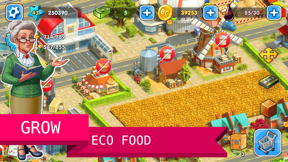
Enjoy village farming games and follow magic forest adventure with friends!


Low ad density differentiates the experience from aggressive monetization rivals
- Adorable art style and relaxing atmosphere provide a comforting escape for casual players
- Persistent connectivity errors prevent users from launching the game despite having stable internet

- The core city-building loop provides a satisfying long-term engagement experience for dedicated players
- High resource costs and slow payout rates create significant monetization friction for casual players

Analysis in progress

Analysis in progress

Analysis in progress
Distributed across 10 markets, strongest in Europe.
Based on 3 of 8 apps with localized market data, more coverage rolling in as scans complete · last scanned .
Americas (3)
- Mexico3 / 3
- United States3 / 3
- Brazil2 / 3
Europe (5)
- France3 / 3
- Germany3 / 3
- Spain3 / 3
- Portugal2 / 3
- Italy1 / 3
Asia-Pacific (2)
- Japan1 / 3
- South Korea1 / 3
Core markets (3/3 apps)
User Sentiment
How do users feel about their apps?
1
Positive apps
1
Neutral / mixed
1
Negative apps
48/100
Avg sentiment score

Unlock the app dragging this portfolio down.
Access the full report for freeRivals
Who does Best Place Apps compete with?
The rivals identified
Nemeses(1)

Both applications target casual simulation gamers through shared city-building and farming mechanics, creating direct competition for the same player demographic.
Contenders(10)


Both apps target the city-building simulation audience, competing for the same player time despite divergent monetization models of freemium versus premium.


Both apps target casual city-building enthusiasts with long-term management loops, competing for the same player time in the simulation category.


Both apps target the city-building simulation audience with free-to-play models, directly competing for the same casual mobile gaming demographic.


Both apps target casual gamers within the city-building simulation category, competing for user attention through management-focused gameplay loops.


Both titles target the city-building simulation audience through a core loop of resource production and logistics management. They compete directly for players seeking long-term management gameplay in a mobile environment.


Both titles target casual city-building gamers, but Idle Island captures the audience through passive income mechanics that contrast with the active resource management loop in Eco City.


Both apps target casual simulation enthusiasts with city-building mechanics, creating direct competition for the same player base seeking long-term management loops.


Both apps target the casual city-building simulation audience, competing for the same player time through resource management and city expansion mechanics.


Both apps target casual city-building gamers, but Designer City captures the audience by removing the time-gated resource loops that cause friction in Eco City.


Both apps target casual gamers through city-building and resource management loops, competing for the same player time in the simulation category.
Same space(1)


Forge of Empires competes for the same long-term city-building audience but utilizes a historical age-progression loop to sustain engagement.
