
Codebrew Games
For simulation enthusiasts and casual gamers who prioritize self-contained, ad-free experiences over free-to-play progression systems.
 Pocket City




Snapshot
Who is Codebrew Games?
Providing a premium, microtransaction-free city-building experience for simulation fans seeking deep gameplay without mobile friction.
Target audience


Portfolio
Last updated

Pocket City
v1.0.41
4.1y ago
Publisher DNA
What defines Codebrew Games?
Publisher DNA
Primary focus
Premium city-building simulations
Scale
indie
Target audience
Simulation enthusiasts and casual gamers who prioritize self-contained, ad-free experiences over free-to-play progression systems.
Origin
Established to bring classic, microtransaction-free city-building mechanics to mobile platforms.
Signature Patterns
- •Strict adherence to a premium 'buy-to-play' pricing model
- •Complete exclusion of microtransactions and artificial wait times
- •Focus on deep simulation mechanics paired with mobile-optimized UI
- •Consistent focus on the city-building sub-genre across all releases
Portfolio momentum
The portfolio is currently in a maintenance phase with zero new releases in the last 6 months, focusing on the long-term stability of its two core titles.
Company profile
medium confidence- Founded
- 2018
Portfolio
What does Codebrew Games ship?
Apps
2 apps analysed
Avatar exploration increases engagement depth beyond menu-based simulation
- The absence of microtransactions and advertisements allows for a pure, uninterrupted city building experience
- Technical instability including green screen errors and progress loss disrupts long-term city development for some users

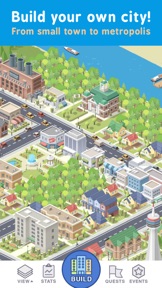
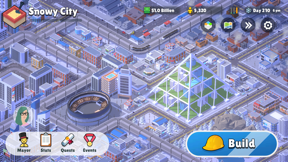
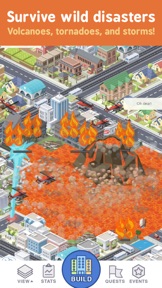
Build and explore your city as mayor! Create and simulate your own metropolis.


Distributed across 10 markets, strongest in Europe.
Based on 2 of 2 apps with localized market data · last scanned .
Americas (3)
- Brazil2 / 2
- Mexico2 / 2
- United States2 / 2
Europe (5)
- France2 / 2
- Germany2 / 2
- Italy2 / 2
- Portugal2 / 2
- Spain2 / 2
Asia-Pacific (2)
- Japan2 / 2
- South Korea2 / 2
Core markets (2/2 apps)
User Sentiment
How do users feel about their apps?
1
Positive apps
0
Neutral / mixed
0
Negative apps
85/100
Avg sentiment score
Rivals
Who does Codebrew Games compete with?
The rivals identified
Nemeses(1)


Both apps target simulation enthusiasts, but they diverge on monetization: Pocket City offers a one-time purchase model while Megapolis relies on freemium mechanics.
Contenders(10)


Both apps target the city-building simulation audience, with Super Citycon competing for the same user base through a free-to-play model that contrasts with the premium, one-time purchase structure of Pocket City.


Both apps target city-building simulation enthusiasts, with TheoTown capturing a significantly larger audience through deep infrastructure management and community-driven content.


Both apps target the city-building simulation audience, with My City - Entertainment Tycoon competing for the same user base through a free-to-play model that contrasts with the premium, one-time purchase structure of Pocket City.


It offers a complex, research-based political simulation that appeals to the strategy-focused segment of Pocket City's user base.


Both apps target the city-building simulation audience, competing for time spent in casual management loops. They overlap in core gameplay mechanics while offering distinct monetization and progression models.


Both apps compete for the same city-building simulation audience, forcing a choice between a premium, ad-free experience and a free-to-play, collection-based model.


Both apps target the city-building simulation audience by removing time-gated mechanics, creating a direct overlap for users seeking uninterrupted creative control.


Both apps compete for the city-building simulation audience, forcing a choice between the solitary, ad-free experience of Pocket City and the multiplayer, collaborative model of Pixel Plex.


Both apps target the city-building simulation audience, forcing a choice between the single-purchase model of Pocket City and the resource-heavy freemium loop of Global City.


Both apps target the city-building simulation audience, with Happy Citizens capturing a larger user base through its free-to-play model while Pocket City serves those seeking a premium experience.
Same space(18)


It expands the simulation scope to include social roleplay and business management, appealing to Pocket City players seeking more depth.


It provides a creative sandbox experience similar to Pocket City but utilizes tactile terrain sculpting mechanics.


It focuses on the heavy machinery operation aspect of construction, which is a sub-discipline of Pocket City's infrastructure management.


It serves the same management-simulation audience as Pocket City but focuses on the specific niche of theme park operations.


It shares the premium, ad-free philosophy of Pocket City but focuses on minimalist transit network simulation.


It is a direct competitor in the city-building space, though it uses a freemium model with high-fidelity graphics.


It provides a survival-themed base-building experience that challenges the management skills of Pocket City players.


It provides a specialized tycoon management experience that complements the broader city-building scope of Pocket City.


It offers a long-term historical progression loop that contrasts with the static, premium-only model of Pocket City.


It focuses on the logistical network planning aspect of city simulation, which complements Pocket City's zoning management.


It serves the same sandbox-building audience as Pocket City but focuses on voxel-based exploration and survival.


It combines city-building with match-3 puzzles, offering a hybrid loop that contrasts with Pocket City's pure simulation.


It replaces the active management of Pocket City with an idle tycoon progression model for passive income.


It offers a meditative building experience similar to Pocket City but uses a hexagonal tile-placement puzzle mechanic.


It provides a character-led city-building experience that serves the same casual simulation audience as Pocket City.


It targets a younger demographic than Pocket City with an open-ended, pretend-play dollhouse simulation.


It offers a text-based, high-stakes management simulation that focuses on the decision-making aspect of being a mayor.


It captures the casual sandbox market with a free-to-play model, contrasting with the paid, ad-free structure of Pocket City 2.
New entrants(2)


It provides a fast-paced, text-based crisis management experience that serves as an arcade-style alternative to Pocket City.


It uses real-world map data to anchor its transit simulation, providing a geographic realism that Pocket City lacks.
The Analyst's Read
The bottom line on Codebrew Games
Bottom line
Codebrew Games is a disciplined indie studio that successfully competes against F2P incumbents by offering a high-integrity, premium alternative. Their 4.50 weighted rating across the portfolio signals exceptional product-market fit among simulation purists.
Frequently asked questions
How many apps does Codebrew Games publish?
What kind of apps does Codebrew Games make?
What is Codebrew Games's top app?
In how many countries are Codebrew Games's apps available?
What fed this analysis
- Apps analyzed:
- 2
- With full intel:
- 0
- With overview:
- 2
- Website scraped:
- yes
- Social presence:
- yes