


BNR Languages
For self-directed learners seeking free, introductory-level language content with offline accessibility.
 Learn English - Beginners




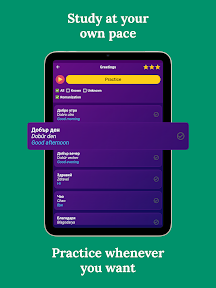


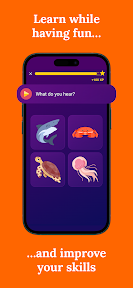












Snapshot
Who is BNR Languages?
Providing free, self-paced language learning tools for beginners across a wide range of global languages. Enabling accessible education through a simple, ad-supported mobile experience.
Target audience


Portfolio
Free 48Last updated

Learn English - Beginners
v6.0.10
5mo ago
Publisher DNA
What defines BNR Languages?
Publisher DNA
Primary focus
Language learning apps for beginners
Scale
studio
Target audience
Self-directed learners seeking free, introductory-level language content with offline accessibility.
Signature Patterns
- •Standardized, template-based UI across all language titles
- •100% free, ad-supported monetization model
- •Core feature set limited to interactive exercises, native audio, and review modes
- •Emphasis on offline-capable, self-paced learning structures
Portfolio momentum
With 87 releases in the last 6 months across 46 active apps, the publisher maintains an aggressive, high-frequency update cadence.
Portfolio
What does BNR Languages ship?
Apps
48 apps analysed

Situational categorization aligns with high-intent travel user needs
- Voice recognition engine provides immediate pronunciation feedback


100% free content model drives high-volume user acquisition
- Offline functionality
- Lack of cloud-save

100% free content model removes primary barrier to entry
- Offline-first architecture enables usage in low-connectivity environments

100% free content model removes all friction for top-of-funnel acquisition
- Offline-first architecture enables usage in low-connectivity travel scenarios
Distributed across 12 markets, strongest in Europe.
Based on 20 of 48 apps with localized market data, more coverage rolling in as scans complete · last scanned .
Americas (3)
- United States20 / 20
- Brazil19 / 20
- Mexico19 / 20
Europe (7)
- France19 / 20
- Italy19 / 20
- Portugal19 / 20
- Spain19 / 20
- Germany18 / 20
›+2 more europe markets
- Netherlands18 / 20
- Sweden18 / 20
Asia-Pacific (2)
- Japan18 / 20
- South Korea18 / 20
Core markets (20/20 apps)
User Sentiment
How do users feel about their apps?
2
Positive apps
0
Neutral / mixed
0
Negative apps
85/100
Avg sentiment score
Rivals
Who does BNR Languages compete with?
The rivals identified
Nemeses(1)

Fluentika competes directly for the same language-learning demographic by leveraging AI-driven conversational practice to solve the 'speaking barrier' that static course apps often fail to address.
Contenders(8)


This app competes by focusing on foundational vocabulary comprehension, which is a prerequisite for the travel phrases we teach.


This app competes for the same casual learner segment by gamifying the language acquisition process through level-based progression.


Talkback competes by offering real-time AI error correction, directly challenging the target's reliance on pre-recorded audio.


It competes by offering content-based learning through stories, which serves as an alternative to the target's structured course format.


It targets the same niche of self-directed language learners who prioritize specialized vocabulary and quiz-based mastery.


It competes for the attention of casual language learners by gamifying the vocabulary acquisition process through dungeon-crawler mechanics.


This app competes for the same 'structured learning' audience by utilizing gamified progress tracking to maintain long-term user retention.


This app challenges the target by combining structured learning plans with modern AI conversation features.
Same space(9)


This app shares the education category and utilizes AI to assist in language practice, similar to the target's goal of flexible learning.


Provides specialized phonetic reference tools for French learners, similar to the German counterpart.


This app serves as a comprehensive reference tool for a specific language, mirroring the target's focus on a niche linguistic market.


It operates in the language reference space, providing contextual learning that complements the target's vocabulary-focused curriculum.


While focused on Japanese, it serves as a benchmark for high-utility reference tools that language learners rely on daily.


Acts as a reference tool for language learners, competing for the same user base seeking to improve their English fluency.


It is a direct peer in the 'bilingual dictionary' category, serving users who need quick, reliable translation tools.


It occupies the same 'reference tool' utility space, providing the foundational dictionary support that learners require.


It serves the same educational ecosystem by managing the logistical and administrative side of language learning.
New entrants(4)


A new educational platform that aims to aggregate courses and track learner progress in a centralized hub.


A new entrant in the education space that focuses on the assessment and testing side of the learning lifecycle.


A new entrant focusing on speech training and pronunciation analysis, directly challenging our core value proposition.


A new competitor using AI for language training, specifically targeting professional simulation and real-world application.
The Analyst's Read
The bottom line on BNR Languages
Bottom line
BNR Languages is a high-velocity studio leveraging a template-based strategy to dominate the long-tail of beginner language learning. Their ability to maintain high user ratings across a vast, fragmented portfolio suggests a highly efficient, repeatable production pipeline.
Frequently asked questions
How many apps does BNR Languages publish?
What kind of apps does BNR Languages make?
What is BNR Languages's top app?
In how many countries are BNR Languages's apps available?
What fed this analysis
- Apps analyzed:
- 46
- With full intel:
- 0
- With overview:
- 46
- Website scraped:
- yes
- Social presence:
- no
