
Codespace Dijital
 Chatbot AI - Search Assistant




Publisher DNA
What defines Codespace Dijital?
AI intelligence is not yet available for Codespace Dijital. The portfolio data below is up to date.
Portfolio
What does Codespace Dijital ship?
Apps
1 app analysed
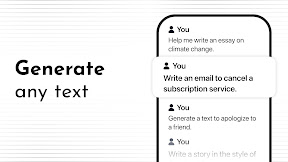
AI Chat Bot: Seek deep guidance through search, web browsing, generators & more!


AI summary generator condenses long-form research papers into concise documents
- The AI assistant provides concise and accurate information that helps users organize their professional and personal projects
- Users report the app fails to recognize existing web subscriptions, forcing them to pay again or preventing login
Distributed across 19 markets, strongest in Europe.
Based on 1 of 1 app with localized market data · last scanned .
Americas (4)
- Brazil1 / 1
- Canada1 / 1
- Mexico1 / 1
- United States1 / 1
Europe (8)
- France1 / 1
- Germany1 / 1
- Italy1 / 1
- Netherlands1 / 1
- Portugal1 / 1
›+3 more europe markets
- Spain1 / 1
- Turkey1 / 1
- United Kingdom1 / 1
Asia-Pacific (7)
- Australia1 / 1
- India1 / 1
- Indonesia1 / 1
- Japan1 / 1
- Singapore1 / 1
›+2 more asia-pacific markets
- South Korea1 / 1
- Vietnam1 / 1
Core markets (1/1 apps)
User Sentiment
How do users feel about their apps?
0
Positive apps
1
Neutral / mixed
0
Negative apps
55/100
Avg sentiment score
Rivals
Who does Codespace Dijital compete with?
The rivals identified
Nemeses(2)

Both apps compete for the same user base by offering free AI-powered text generation and task assistance within a single interface. They overlap directly in their utility-focused approach to answering questions and generating content.


Both apps target the same user base of students and professionals seeking AI assistance, with overlapping freemium models that gate advanced features behind subscriptions.
Contenders(16)


Both apps target students and professionals with overlapping text generation and summarization utilities, competing for the same user base through a freemium model.


Both apps compete for the same freemium user base seeking AI interaction, though they diverge in utility versus entertainment focus.


Both applications target the same productivity and creative task segment, offering multi-purpose AI assistants that handle writing, brainstorming, and learning tasks.


Ceify targets the same student and professional demographic as Chatbot AI by focusing on specific writing tasks like essays and business emails. Both apps compete for users seeking AI-assisted content generation for daily productivity.


Both apps target students and professionals seeking general-purpose AI assistance through a freemium chat interface. They compete directly for users looking to simplify daily productivity and creative tasks.


Both apps compete for the same productivity-focused user base in the US market, targeting students and professionals who require AI-driven research and writing support.


Both apps target users seeking AI-driven productivity and creative writing support, with overlapping core functionality in voice-based interaction and text generation.


Gendi AI competes for the same productivity-focused user base by offering a broader suite of creative tools, including image and video generation, which directly overlaps with the text-based utility of Chatbot AI - Search Assistant.


Both apps target students and professionals seeking AI-driven productivity, competing directly for the same user base through text-based research and writing assistance.


Both applications target students and professionals with AI-powered productivity tools, competing for the same user base through freemium models and search-focused interfaces.


Both applications target productivity and content creation, creating direct competition for users seeking AI-assisted email generation and research support.


Both apps compete for users seeking AI-driven productivity and content creation tools, creating a direct overlap in the general AI assistant market.


Both apps target students and professionals with multi-purpose AI assistants, competing directly for users seeking centralized document summarization and content generation.


Both apps target the same student and professional demographic with a unified AI interface, creating direct competition for users seeking productivity tools.


Both apps target users seeking AI assistants for daily tasks and information retrieval, creating direct competition for time and subscription spend.


Both apps compete for users seeking information processing and text summarization, with the rival focusing on URL-based web content extraction while the source app provides a broader suite of AI tasks.
Same space(9)


It competes for the same productivity-focused audience by offering multi-model aggregation, though its dual-layered monetization model creates a different user friction point than the subscription-sync issues observed in the primary app.


This app addresses the summarization needs of the source app's users through a dedicated, single-purpose interface.


This app targets the academic writing subset of the source app's audience with a focus on essay-specific generation.


This app provides a specialized alternative for users who prioritize document condensation over the source app's broader chatbot functionality.


It targets the same productivity and creative writing demographic by using Gemini-based architecture to provide a direct alternative for users seeking research and coding assistance.


WordSmith targets the language-learning and communication segment of the source app's audience with a focus on natural language refinement.


AI Writer competes for the same user base by centralizing research and generation, though it shifts the value proposition toward multi-model access.


Quillbot serves the same writing-focused audience as the source app but replaces a general chatbot interface with a specialized system-wide keyboard integration.


Eskritor targets the same productivity segment as the source app by offering a specialized AI keyboard for real-time text editing.
