


Ediciones Larousse
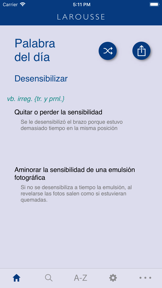
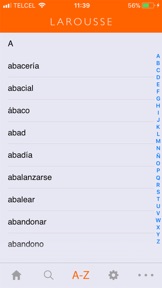
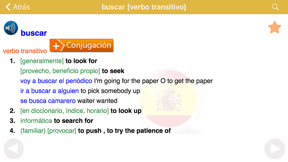
For spanish language learners, students, and professionals requiring reliable, offline access to lexicographical and biographical data.
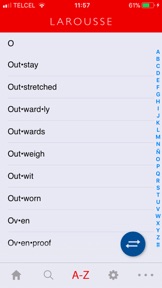
 Larousse Spanish Basic

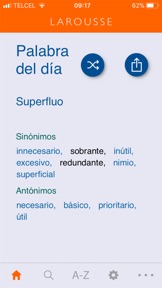
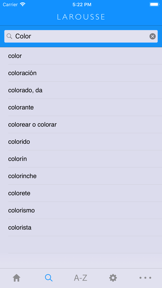
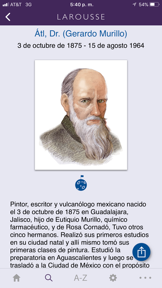





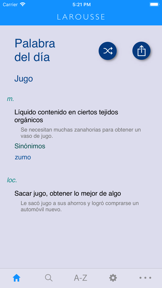

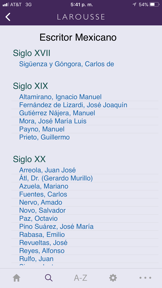






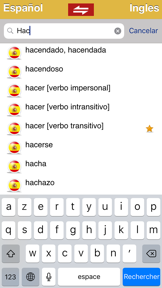
Snapshot
Who is Ediciones Larousse?
Providing authoritative Spanish-language linguistic and educational reference tools. Enabling students and professionals to access dictionary, conjugation, and biographical data offline.
Target audience


Portfolio
Free 1Last updated

Larousse Spanish Basic
v3.4
1.5y ago
Publisher DNA
What defines Ediciones Larousse?
Publisher DNA
Primary focus
Reference and educational linguistic tools
Scale
indie
Target audience
Spanish language learners, students, and professionals requiring reliable, offline access to lexicographical and biographical data.
Signature Patterns
- •Consistent paid-upfront pricing model across all reference titles
- •Integration of image-to-text recognition for word lookups
- •Core functionality designed for offline access
- •Focus on Latin American Spanish linguistic data
Portfolio momentum
Released 3 updates across the portfolio in the last 6 months, indicating a maintenance-focused development cycle.
Portfolio
What does Ediciones Larousse ship?
Apps
8 apps analysed


Tightly focused on 2 markets (Mexico, United States).
Based on 1 of 8 apps with localized market data, more coverage rolling in as scans complete · last scanned .
Americas (2)
- Mexico1 / 1
- United States1 / 1
Core markets (1/1 apps)
Rivals
Who does Ediciones Larousse compete with?
The rivals identified
Nemeses(2)


This app functions as a real-time communication tool for the same audience that utilizes Larousse for static reference.


Both apps target language learners requiring Spanish lexical support, but Reverso captures daily active usage through its spaced repetition system while Larousse relies on static dictionary lookups.
Contenders(9)


Acts as a scholarly English reference tool that captures user attention through integrated word games and quizzes.


Dictionary Linguee targets the same Spanish language learners as Larousse Spanish Advanced, offering a free, high-volume alternative with bidirectional translation capabilities.


Both apps target language learners and writers requiring reference tools, with Dictionary. competing for the same user base through its massive scale and multi-source aggregation.


Both apps target Spanish language learners, with Larousse Spanish Advanced providing a general dictionary while Spanish Verb Conjugator focuses on specific verb conjugation needs.


Both apps target language learners requiring offline reference tools, creating direct competition for users seeking portable, internet-independent vocabulary resources.


Both apps target Spanish language learners with offline dictionary functionality, creating direct competition for users seeking lexical reference tools.


Both applications target Spanish language learners, competing for the same user base seeking lexical reference tools. They overlap directly in their core utility as bilingual dictionaries.


Both apps target language learners needing translation and lexical context, creating direct competition for users seeking reliable linguistic reference tools.


Both apps function as offline bilingual reference tools for language learners, competing for users who require dictionary access without an active internet connection.
Same space(15)


Provides a comprehensive curriculum that extends beyond simple definitions into full reading and writing proficiency.


Users report: Targets the same privacy-conscious, offline-first user segment as the source app by avoiding data-harvesting practices.


Offers a study-focused approach to vocabulary, serving users who prioritize memorization speed over comprehensive dictionary access.


Targets the specific pain point of verb conjugation, allowing users to drill common tenses for conversational fluency.


Serves as a high-volume English reference alternative for users who prioritize broad vocabulary access over offline-first Spanish utility.


Complements dictionary lookups by providing a spaced repetition system for daily vocabulary acquisition.


This app provides specialized research tools for professional clergy and seminary students, serving a distinct scholarly niche compared to the general linguistic focus of the source app.


Uses a visual-first approach to vocabulary building, providing a structured alternative for learners who find standard dictionaries insufficient.


Offers a basic English reference utility that functions without internet, similar to the offline capabilities of the source app.


Provides a narrow-focus tool for learning Spanish numbers, serving as a supplementary utility for absolute beginners.


Offers a specialized dictionary and flashcard system for Chinese learners, demonstrating a long-term commitment to niche language software.


Focuses on vocabulary enrichment for travelers and beginners, providing a supplementary resource for language study.


Acts as a travel-focused phrasebook for users needing immediate, practical Spanish expressions rather than deep lexical definitions.


Focuses on exam preparation and tailored learning paths, serving users who need structured progress beyond simple dictionary lookups.


This app provides multi-modal translation features that complement the static dictionary lookup found in Larousse.
The Analyst's Read
The bottom line on Ediciones Larousse
Bottom line
Ediciones Larousse is a legacy publisher successfully transitioning its core reference assets into the mobile space. Their stable, utility-driven portfolio is well-suited for their target demographic, though they face challenges in modernizing UX to compete with free, ad-supported digital alternatives.
Frequently asked questions
How many apps does Ediciones Larousse publish?
What kind of apps does Ediciones Larousse make?
What is Ediciones Larousse's top app?
In how many countries are Ediciones Larousse's apps available?
What fed this analysis
- Apps analyzed:
- 8
- With full intel:
- 0
- With overview:
- 8
- Website scraped:
- yes
- Social presence:
- yes
