

Enfour
For language professionals, writers, and students requiring authoritative, offline-capable dictionaries and thesauruses.
 Roget's II: New Thesaurus











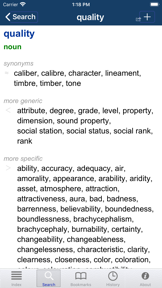
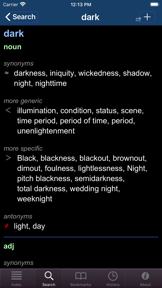


Snapshot
Who is Enfour?
Providing authoritative, offline-capable linguistic and professional reference tools for writers, students, and specialists.
Target audience


Portfolio
Free 4Last updated

Roget's II: New Thesaurus
v1.5.2
1.5y ago
Publisher DNA
What defines Enfour?
Publisher DNA
Primary focus
Digital reference and linguistic tools
Scale
studio
Target audience
Language professionals, writers, and students requiring authoritative, offline-capable dictionaries and thesauruses.
Portfolio momentum
Released 29 updates in the last 6 months with the most recent major release occurring 5 days ago, indicating an active maintenance and optimization cycle.
Portfolio
What does Enfour ship?
Apps
33 apps analysed

Analysis in progress


Analysis in progress


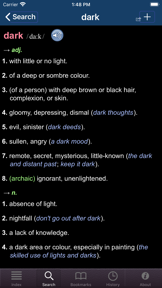
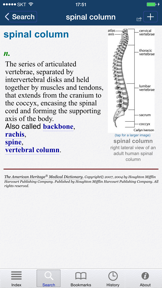
Тhe most comprehensive dictionary with 10,000 words and 4000 full-color images.


Distributed across 12 markets, strongest in Europe.
Based on 4 of 33 apps with localized market data, more coverage rolling in as scans complete · last scanned .
Americas (3)
- United States4 / 4
- Mexico2 / 4
- Brazil1 / 4
Europe (7)
- Spain2 / 4
- France1 / 4
- Germany1 / 4
- Italy1 / 4
- Netherlands1 / 4
›+2 more europe markets
- Portugal1 / 4
- Sweden1 / 4
Asia-Pacific (2)
- Japan4 / 4
- South Korea1 / 4
Core markets (4/4 apps)
Rivals
Who does Enfour compete with?
The rivals identified
Nemeses(3)


Both apps target students and writers needing reliable word definitions, creating direct competition for the same user base despite different monetization models.


Both apps target students and professionals seeking English language references, creating direct competition for users prioritizing either offline reliability or massive, ad-supported content libraries.


This app serves as a specialized translation utility for Burmese speakers, complementing the general-purpose linguistic reference focus of Companion Synonyms.
Contenders(20)

Both apps target academic and professional users requiring offline-capable, authoritative language references, creating direct competition for the same user base.


Both apps target students and professionals with offline-capable English language databases, creating direct competition for users seeking portable reference tools.


Both applications target students and professionals with linguistic reference tools, competing directly for users seeking word definitions and etymologies.


Both apps target students and language enthusiasts, competing for the same user base seeking authoritative English reference tools.


This app targets the same professional user base as Companion Synonyms but differentiates through a high-cost, unabridged content model.


Offers a high-capacity offline thesaurus for users who prioritize deep linguistic data over the visual features of American Heritage Dictionary 5.


Both apps compete for users seeking language reference tools, but the rival captures the bilingual market segment that American Heritage® Dictionary ignores by offering translation pairs.


Targets advanced learners who want a private, ad-free vocabulary ritual instead of the ad-supported American Heritage Dictionary 5.


Both apps serve language learners and writers requiring offline reference tools, though they target distinct linguistic domains of English and Chinese.


Both apps target students and language learners, competing for the same user base seeking English language reference tools.


Both apps target students and language learners with freemium reference tools, creating direct competition for users seeking English language definitions and usage resources.


Both apps target language enthusiasts and students, competing for the same user base seeking reliable English language reference tools on mobile devices.


Both apps target language learners and professionals with freemium monolingual dictionary content, creating direct competition for users seeking authoritative English reference tools.


Both apps target students and language learners seeking linguistic reference tools, with both providing etymological data as a core utility.


Both apps target users seeking English language reference tools, competing for the same audience on mobile platforms.


Both applications target language students and enthusiasts, competing for the same user base seeking vocabulary reference tools.


Both apps target users seeking language reference tools, with Look Up competing for the pronunciation and definition lookup audience through a free, multi-language model.


Both applications target the same mobile user base seeking English language reference tools, competing directly through free access to dictionary content on iOS devices.


Both applications target the same user base of language learners and professionals by providing free English reference tools, creating direct competition for daily utility.


Both applications target language enthusiasts seeking vocabulary expansion, competing for the same user base through distinct approaches to word discovery and reference.
Same space(34)


Sanskrit Etymology bridges academic research with vocabulary learning for a specific language, appealing to the same scholarly audience as American Heritage.


Provides an offline-only synonym lookup for users who need quick access without data connectivity.


Offers a lightweight reference tool with specific support for Apple Watch and iPad multitasking.


Offers a specialized synonym and antonym lookup tool for users who find the definitions in American Heritage Dictionary 5 insufficient for writing tasks.


Targets professional communication by focusing on quick, one-button synonym retrieval.


Eng-Mm offers bilingual utility for Myanmar speakers, serving a specific regional need not addressed by the monolingual American Heritage.


Specializes in game-state validation rather than general-purpose vocabulary reference.


DeepL Translate serves professional users needing multilingual communication, contrasting with the monolingual focus of American Heritage.


Targets the competitive word-game segment that requires official, verified word lists.


This app competes for the same logic-focused user base by blending traditional puzzle mechanics with prank-oriented, unconventional humor.


This app functions as a specialized educational subset for French learners, providing granular context that complements the broader scope of Companion Synonyms.


All English Dictionary aggregates multiple external sources, offering a broader search scope than the single-source database of American Heritage.


Word Radicals explores historical word origins, providing deeper etymological context than the standard definitions in American Heritage.


This keyboard-integrated tool competes for the same writing-focused audience but shifts the utility from a standalone reference app to a system-wide input extension.


This app targets the same casual brain training audience as the source but utilizes a free-to-play model with high-frequency, varied puzzle content.


Uses camera-based lookup to provide definitions for users who need real-time context for words found in physical media.


Offers a broader set of word-game tools that extend the utility of a standard thesaurus.


Integrates directly into the system keyboard to remove the friction of switching between apps.


Targets the same professional and student audience as American Heritage Dictionary 5 but focuses on daily habit formation.


Focuses on test preparation for students who use American Heritage Dictionary 5 for academic reference.


E-Talk offers a basic pronunciation library for learners, though it lacks the active development and scale of American Heritage.


Free Offline English Dictionary provides a free, offline-capable monolingual reference that mirrors the core utility of American Heritage without the paid barrier.


iBird Pro targets offline-first users who require specialized, high-capacity reference databases for field identification.


English Pronunciation IPA focuses on phonetic mastery, acting as a specialized training supplement to the audio pronunciations in American Heritage.


Say It provides interactive pronunciation feedback, shifting from the passive lookup model of American Heritage to active training.


Provides a system-wide keyboard utility that complements the source app's reference-first approach.


Provides visual mapping of word connections for users who prefer non-linear reference methods.


Provides a structured learning path for users who want to move beyond simple definitions found in American Heritage Dictionary 5.


Allows users to build a custom dictionary, serving as a personal repository for words found in American Heritage Dictionary 5.


Focuses on the test-prep market by providing deep linguistic analysis for a curated headword list.


Provides slang and cultural context that American Heritage Dictionary 5 lacks, catering to users who need to understand modern, informal language.


Focuses on daily vocabulary growth for the same user base that uses American Heritage Dictionary 5 for reference.


WordReference provides linguistic context through community-driven forums, supplementing the static definitions found in American Heritage.


Prioritizes privacy and focus through a completely offline, minimalist language toolkit.
Frequently asked questions
How many apps does Enfour publish?
What kind of apps does Enfour make?
What is Enfour's top app?
In how many countries are Enfour's apps available?
What fed this analysis
- Apps analyzed:
- 22
- With full intel:
- 0
- With overview:
- 22
- Website scraped:
- yes
- Social presence:
- no