

Enfpy
 케밋 동네친구 소개팅 - MBTI부터 스킨십 궁합까지


Snapshot


Publisher DNA
What defines Enfpy?
AI intelligence is not yet available for Enfpy. The portfolio data below is up to date.
Portfolio
What does Enfpy ship?
Apps
2 apps analysed

From MBTI to skinship compatibility, a blind date with a neighborhood friend that fits you perfectly, a blind date app where women are more active, from love, friends, meetings, and dates


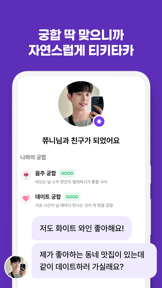
Anonymous community forum creates a social loop that keeps users active
- Profile display of hobbies and interests allows users to initiate conversations with ease
- Mandatory payment requirements to open chat rooms after matching frustrate users expecting free interaction

From MBTI to skinship compatibility, a blind date with a neighborhood friend that fits you perfectly, a blind date app where women are more active, from love, friends, meetings, and dates


Analysis in progress
Tightly focused on 2 markets (Japan, United States).
Based on 1 of 2 apps with localized market data, more coverage rolling in as scans complete · last scanned .
Americas (1)
- United States1 / 1
Asia-Pacific (1)
- Japan1 / 1
Core markets (1/1 apps)
User Sentiment
How do users feel about their apps?
0
Positive apps
0
Neutral / mixed
1
Negative apps
35/100
Avg sentiment score
Rivals
Who does Enfpy compete with?
The rivals identified
Nemeses(1)

Both applications target local dating and relationship-seeking users, competing for the same neighborhood-based social discovery audience.
Contenders(10)


Both applications target the neighborhood-based social and dating market, competing for users seeking local connections through specific matching criteria.


Both applications target users seeking dating connections through personality-based matching, specifically utilizing MBTI compatibility as a primary filter for potential partners.


Both apps target the dating market by filtering matches through specific personality or value-based criteria. Pairs competes directly for users seeking serious relationships by prioritizing value alignment over proximity.


Both apps compete for the neighborhood-based dating market by using specific filters to connect users who share interests or personality traits. They target the same demographic of users seeking local, real-life connections.


Both apps target the dating market by filtering matches based on specific user-defined criteria: Chemit uses MBTI and intimacy compatibility, while Fruitz uses relationship intent represented by fruit icons.


Both apps target local dating, but Chemit uses MBTI compatibility to filter matches while happn relies on real-world proximity tracking to surface potential partners.


Both apps compete for the same dating market segment by offering algorithmic matchmaking services to users seeking romantic connections.


Both apps compete for the same local dating audience by offering distinct matching mechanisms to facilitate neighborhood connections.


Both applications target the compatibility-based dating market by utilizing personality metrics to facilitate user matching.


Both apps compete for the casual dating audience, but they diverge on matching mechanisms: Chemit prioritizes local neighborhood connections via MBTI compatibility, while PURE focuses on global, ephemeral interactions through personal ads.
Same space(13)


Anonymous Chat Rooms competes by offering an anonymous social layer similar to the source app's community feature, but with a global, random-chat focus.


Badoo serves as a massive-scale competitor that offers a similar local-dating experience but with a broader, less niche-specific brand identity.


Bumble competes for the same serious-dating audience but uses a structural messaging barrier to differentiate its user experience.


Evermatch competes by offering a more focused, preference-based discovery system for users who find the source app's MBTI-only approach too limited.


Tantan competes in the Asian market by using an interest-based community feature that mirrors the source app's focus on shared social traits.


Hily targets the same local-dating demographic but focuses on a self-expression model that encourages users to stay authentic to their own style.


Hinge competes for the same intentional-dating audience by using prompt-based profiles that force a higher level of user investment than the source app.


iHappy competes for the same local-dating user base by positioning itself as a platform for both serious and casual relationship seekers.


Jaumo operates as a high-volume, free-to-use alternative that competes for the same local dating audience by removing cost barriers to communication.


Mamba competes by offering a similar local-dating experience but emphasizes technical security measures to differentiate its user pool quality.


Lovector targets the same local matchmaking demographic but emphasizes a serious relationship focus over the MBTI-based compatibility model.


Tinder competes for the same audience by providing a high-velocity swiping interface that prioritizes broad discovery over the source app's MBTI-specific matching.


OmeTV provides a video-first alternative to the source app's text-based community, appealing to users who prefer real-time interaction over profile-based matching.
New entrants(2)


ZonaMatch competes for the same local-dating audience by offering a swipe-based interface that emphasizes real-time connection and social feeds.


Flava competes by offering a casual dating experience with privacy-focused features like self-destructing photos to differentiate its chat environment.
