Tinder
For adults seeking a wide range of social connections, from casual dating to long-term relationships.
 Tinder Dating App: Date & Chat







Snapshot
Who is Tinder?
Facilitating social discovery and romantic connections through a global, swipe-based interface. Tinder connects users worldwide to foster new relationships.
Target audience


Portfolio
Free 2Last updated

Tinder Dating App: Date & Chat
v17.34.1
16d ago
Publisher DNA
What defines Tinder?
Publisher DNA
Primary focus
Lifestyle · Dating and social discovery
Scale
indie
Target audience
Adults seeking a wide range of social connections, from casual dating to long-term relationships.
Signature Patterns
- •Subscription-based monetization model with tiered access (Plus, Gold, Platinum).
- •Core UX centered on swipe-based social discovery and matching.
- •Focus on premium features like Passport and Priority Likes to drive conversion.
- •Integration of safety-focused features such as Photo Verification.
Portfolio momentum
Released 9 updates in the last 6 months with the flagship title updated within the last 7 days, indicating active product maintenance.
Portfolio
What does Tinder ship?
Apps
2 apps analysed

The dating app for adults to meet new people & match with local singles online


Analysis in progress
The dating app for adults to meet new people & match with local singles online


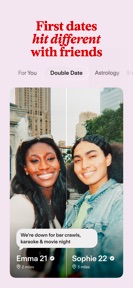
Double Date feature provides a unique social mechanism for inviting non-users to the platform
- Occasional success stories of users finding long-term partners keep some users engaged despite broader platform frustrations
- Aggressive paywalls and subscription models prevent users from accessing basic features like messaging or viewing likes
Distributed across 13 markets, strongest in Europe.
Based on 1 of 2 apps with localized market data, more coverage rolling in as scans complete · last scanned .
Americas (3)
- Brazil1 / 1
- Mexico1 / 1
- United States1 / 1
Europe (7)
- France1 / 1
- Germany1 / 1
- Italy1 / 1
- Netherlands1 / 1
- Portugal1 / 1
›+2 more europe markets
- Spain1 / 1
- Sweden1 / 1
Asia-Pacific (3)
- Australia1 / 1
- Japan1 / 1
- South Korea1 / 1
Core markets (1/1 apps)
User Sentiment
How do users feel about their apps?
0
Positive apps
0
Neutral / mixed
1
Negative apps
15/100
Avg sentiment score
Rivals
Who does Tinder compete with?
The rivals identified
Nemeses(1)

OkCupid competes for the same singles market by shifting the discovery mechanism from swipe-based visual matching to value-based personality questions, providing a direct alternative for users seeking serious relationships.
Contenders(10)


Wink Dating competes for the same casual dating audience by offering an AI-assisted matching experience that prioritizes personality traits over the standard swipe-based discovery model used by Tinder.


Both platforms target the same casual dating audience and utilize swipe-based discovery, creating direct competition for user attention and subscription revenue.


Both apps compete for the same demographic of singles seeking connections, with Bumble's safety-focused brand identity directly challenging Tinder's swipe-based discovery model.


Feeld competes by targeting the same casual dating demographic but focuses on identity-first, non-monogamous connection, pulling high-intent users away from Tinder's broader discovery model.


Hily competes for the same casual dating audience by using personality-based matching tools to differentiate from the swipe-first discovery model used by Tinder.


Hinge competes for the same high-intent dating demographic by replacing Tinder's swipe-based discovery with prompt-based profiles that prioritize user investment.


Instinct competes for the same casual dating audience as Tinder, specifically targeting users who prioritize intent-based matching through its advanced search filters.


Nymph targets the same casual dating audience as Tinder but focuses on privacy and identity verification to attract users frustrated by Tinder's bot prevalence.


PURE competes for the same casual dating audience by offering privacy-focused, ephemeral communication tools that contrast with the traditional profile-based discovery model used by Tinder.


Both apps compete for the same casual dating audience by offering discovery mechanisms and freemium monetization models that gate core communication features.
Same space(7)


Frenso functions as a social discovery platform for local and global connections, overlapping with the broad user base.


Fruitz uses intent-based matching to address the same dating market but with a specific symbolic filtering system.


Grindr provides a real-time, location-based grid for the GBTQ community that parallels the proximity-based matching found in the source app.


Ever focuses on value-based matching to attract users who find the swipe-based model too superficial.


Local Dating offers a basic location-based discovery interface that competes for the same casual dating audience.


MeetMe serves as a high-frequency social discovery hub that competes for the same user attention as the swipe-based model.


Yubo targets Gen Z users with a swipe-based interface that mirrors the core discovery loop while prioritizing safety.
The Analyst's Read
The bottom line on Tinder
Bottom line
Tinder remains the category leader in mobile dating, though its long-term success is increasingly tied to balancing aggressive monetization with user sentiment. The platform's massive scale provides a structural advantage that continues to define the social discovery landscape.
Frequently asked questions
How many apps does Tinder publish?
What kind of apps does Tinder make?
What is Tinder's top app?
In how many countries are Tinder's apps available?
What fed this analysis
- Apps analyzed:
- 1
- With full intel:
- 1
- With overview:
- 1
- Website scraped:
- yes
- Social presence:
- yes