

Badoo Software
For global individuals seeking social discovery and dating, prioritizing safety and verified profiles for various relationship goals.
 Badoo Dating: Meet New People


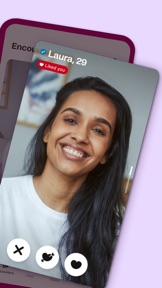


Snapshot
Who is Badoo Software?
Fostering authentic global connections through a safety-first dating environment powered by AI-driven security and verification tools.
Target audience


Portfolio
Free 1Last updated

Badoo Dating: Meet New People
v5.458.0
7mo ago
Publisher DNA
What defines Badoo Software?
Publisher DNA
Primary focus
Global dating and social discovery
Scale
indie
Target audience
Global individuals seeking social discovery and dating, prioritizing safety and verified profiles for various relationship goals.
Origin
A core brand under Bumble Inc. with a mission to bring people closer to love.
Portfolio momentum
Released 11 updates across 2 active apps in the last 6 months, maintaining a high-intensity development cycle.
Portfolio
What does Badoo Software ship?
Apps
2 apps analysed
AI-based Private Detector ensures safety compliance
- Social connectivity features allow users to meet new people and explore diverse cultural backgrounds
- Users report: High volume of fake profiles and non-local users disrupts the authentic matching experience

- The core connection and discovery features provide a fast and detailed way to meet new people
- Users report that premium subscriptions fail to unlock advertised features, leading to accusations of deceptive billing practices
Distributed across 12 markets, strongest in Europe.
Based on 1 of 2 apps with localized market data, more coverage rolling in as scans complete · last scanned .
Americas (3)
- Brazil1 / 1
- Mexico1 / 1
- United States1 / 1
Europe (7)
- France1 / 1
- Germany1 / 1
- Italy1 / 1
- Netherlands1 / 1
- Portugal1 / 1
›+2 more europe markets
- Spain1 / 1
- Sweden1 / 1
Asia-Pacific (2)
- Japan1 / 1
- South Korea1 / 1
Core markets (1/1 apps)
User Sentiment
How do users feel about their apps?
1
Positive apps
0
Neutral / mixed
1
Negative apps
55/100
Avg sentiment score
Unlock the app dragging this portfolio down.
Access the full report for freeRivals
Who does Badoo Software compete with?
The rivals identified
Nemeses(2)


Users report: Both apps compete for the same dating-focused user base, with BLK capturing the Black singles demographic through cultural identity markers while Badoo targets a broader audience via location-based discovery.


Both apps target the casual dating market with freemium models, competing for users seeking social and romantic connections through personality-based matching and profile discovery.
Contenders(18)


Both apps compete for the same dating market audience, with Badoo Premium focusing on proximity-based discovery and Match targeting long-term relationship seekers.


Both platforms target casual dating audiences through freemium models that rely on search-based discovery and global network effects to facilitate connections.


Wink Dating competes for the same casual dating audience by using AI-driven profile tools to reduce the friction of manual profile creation. This directly challenges Badoo's reliance on standard user-input profiles.


Both apps target the casual dating and social discovery market, competing for the same user base through freemium models and similar feature sets.


Bumpy and Badoo compete for the same social and dating audience by offering location-based discovery and profile-matching tools. Both apps target users seeking connections, though they differ in their focus on local versus international discovery.


Both apps compete for the same location-based dating market, with Badoo Premium serving a general audience while Chispa targets a specific cultural demographic.


Users report: Both apps compete for the same casual dating audience, with Duet directly targeting Badoo's primary weakness by marketing its verification system as a solution to the fake profile issues reported by Badoo users.


Feeld competes for the same casual dating demographic by offering specialized identity-first profile architecture that addresses specific relationship needs Badoo ignores.


Flercha competes for the same casual dating demographic through a swipe-based interface and location-based discovery, directly overlapping with the core functionality of Badoo Premium.


Hinge competes for the same romantic-intent audience as Badoo by replacing open-ended discovery with a structured, prompt-based profile system that prioritizes long-term relationship matching.


Both apps target users seeking casual connections, with HUD™ capturing the specific segment looking for transparent, pressure-free interactions that Badoo struggles to facilitate due to its broader, less-focused audience.


Both apps compete for the same user base seeking romantic connections, though they diverge on interaction mechanics: Badoo Premium uses location-based swiping while Dating.com emphasizes direct messaging.


Meet5 competes by shifting the focus from individual romantic matching to group-based activity discovery, directly targeting the same social-discovery audience as Badoo. This model provides an alternative to the one-on-one chat friction that defines the Badoo experience.


Both platforms target the social and dating market, competing for users seeking relationship discovery through mobile interfaces. They overlap in their use of vetting and verification mechanisms to manage community quality.


PinaLove competes for Badoo Premium's global user base by offering a niche focus on the Philippines and open messaging that bypasses the match-gating required by Badoo.


Both applications target the same casual dating audience and utilize swipe-based discovery mechanics, creating direct competition for user attention and subscription revenue.


Both apps compete for the same casual dating audience by providing location-based discovery and swipe-to-match interfaces. They overlap directly in their core functionality of connecting users within local geographic regions.


Both apps target singles seeking local connections through freemium models that gate communication features, creating direct competition for the same user base.
Same space(27)


MeetMe shares a focus on local connections but differentiates through a creator-led live-streaming economy that drives high-frequency engagement.


Yubo competes for the same Gen Z social discovery audience by using mandatory age verification to create a safer environment than the open-access model of Badoo.


3Fun targets the ethical non-monogamy niche, providing specialized account linking that Badoo does not support.


Paired serves the relationship-maintenance segment of the audience by using daily prompts to habituate long-term couples.


Boo differentiates by using personality psychology to match users, addressing the chemistry issues reported by Badoo users.


Solvemate shifts the discovery focus from visual profiles to personality-based quizzes, attempting to solve the superficiality issues found in general dating apps.


Sugarmeet offers a localized dating experience that uses a time-limited visual interaction mechanic to simulate real-world encounters.


WooPlus serves a specific body-positive niche, offering an inclusive alternative to Badoo's generalist dating approach.


Evermatch targets users seeking serious relationships by using complex, personalized profiles to filter candidates.


Bumble BFF targets the platonic friendship market, using identity verification to build trust in a way that Badoo's dating-focused model does not.


Bustr targets the plus-size dating niche, offering an inclusive environment that Badoo's generalist platform lacks.


Grindr maintains a dominant position in GBTQ social discovery through a real-time grid that Badoo does not replicate.


Tantan competes in the Asian market by using interest-based Tribe communities to drive network effects that Badoo lacks.


Azar competes for global social discovery by emphasizing user control over matching filters, which Badoo users find lacking.


Yooppe provides a generic dating chat interface that competes for the same local discovery audience as Badoo.


Luxy targets the high-ARPU segment of the dating market, using income verification to gate access to a more exclusive user pool.


SCRUFF serves the LGBTQ+ community with a privacy-first model that avoids the ad-heavy experience reported by Badoo users.


Aria targets a specific demographic niche within the dating market, focusing on Black singles to provide a more curated community.


Ashley Madison focuses on the discreet dating market, providing privacy-centric tools that Badoo lacks for non-monogamous users.


SDC Adult Dating provides a community-focused platform for couples, offering event planning tools that Badoo does not include.


Local Dating provides a simplified, high-speed registration flow for local connections, aiming to reduce the friction found in larger platforms.


Taimi serves a specific LGBTQ+ segment that overlaps with Badoo's broader user base but offers identity-focused social networking features.


Christian Mingle serves a faith-based niche, providing a specific value proposition for users that Badoo's generalist model ignores.


0cm emphasizes spontaneous, content-driven social interaction through disappearing media, offering a different engagement style than profile-centric models.


Wizz App competes for the teen social discovery market by using mandatory ID verification to create a safety-gated environment.


Waiter competes by using AI-driven matchmaking to limit daily options, aiming to reduce the fatigue associated with high-volume swiping.


KS serves a specific kink-oriented niche within the dating space, though it currently faces significant retention issues due to technical neglect.
Frequently asked questions
How many apps does Badoo Software publish?
What kind of apps does Badoo Software make?
What is Badoo Software's top app?
In how many countries are Badoo Software's apps available?
What fed this analysis
- Apps analyzed:
- 2
- With full intel:
- 2
- With overview:
- 2
- Website scraped:
- yes
- Social presence:
- yes