


LATAM Airlines Group S.A.
 LATAM: Flights, Hotels, Cars


Snapshot


Publisher DNA
What defines LATAM Airlines Group S.A.?
AI intelligence is not yet available for LATAM Airlines Group S.A.. The portfolio data below is up to date.
Portfolio
What does LATAM Airlines Group S.A. ship?
Apps
3 apps analysed

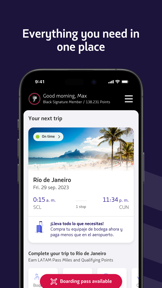
Book flights, hotels, travel packages, and cars with LATAM Airlines


Integrated eSIM marketplace expands ancillary revenue per booking
- Booking and managing travel itineraries feels straightforward for users who successfully navigate the initial purchase flow
- Payment processing failures during the final checkout stage prevent users from completing flight bookings successfully

Book flights, hotels, travel packages, and cars with LATAM Airlines


Analysis in progress

Analysis in progress
Distributed across 5 markets, strongest in Americas.
Based on 2 of 3 apps with localized market data, more coverage rolling in as scans complete · last scanned .
Americas (3)
- Brazil2 / 2
- Mexico2 / 2
- United States2 / 2
Europe (2)
- Spain2 / 2
- Portugal1 / 2
Core markets (2/2 apps)
User Sentiment
How do users feel about their apps?
0
Positive apps
0
Neutral / mixed
1
Negative apps
25/100
Avg sentiment score
Rivals
Who does LATAM Airlines Group S.A. compete with?
The rivals identified
Nemeses(1)

Both apps serve as primary travel management hubs for loyalty program members, competing for the same frequent-flyer demographic through integrated booking and itinerary management.
Contenders(10)


Both applications serve as primary booking and trip-management portals for their respective airline networks, competing for the same frequent-traveler segment that requires mobile-first check-in and gate notifications.


Both applications serve the same regional airline passenger demographic in South America, competing directly on flight booking, reservation management, and digital boarding pass utility.


Both applications serve airline passengers requiring booking and trip management, with both relying on loyalty programs and ancillary revenue to drive user retention.


Both applications serve as primary booking and trip management hubs for their respective airline networks, targeting frequent travelers who require mobile-first itinerary control and loyalty account access.


Both apps function as direct-sales channels for their respective airline networks, competing for the same frequent-flyer segment through loyalty-program integration and ancillary service management.


Both applications target the same regional airline passenger base in South America, competing for direct booking and trip management utility.


Both apps function as primary booking and management hubs for their respective airline networks, competing for the same frequent traveler demographic that requires end-to-end trip logistics.


Both apps serve frequent flyers within major airline networks, competing for the same user base by bundling flight management, loyalty tracking, and ancillary travel services.


Vueling competes by offering a direct-sales airline booking and trip-management interface that targets the same mobile-first traveler demographic as the LATAM application.


Both applications function as direct-sales booking funnels for airline passengers, competing for the same frequent-traveler segment by integrating ancillary services and loyalty-linked pricing to capture full transaction margins.
Same space(20)


Airalo provides the same ancillary connectivity services as LATAM but focuses exclusively on global eSIM management.


Booking.com competes for the same end-to-end trip management audience by offering a massive, searchable global inventory.


eDreams competes for the same budget-conscious traveler by offering a subscription-based model for travel discounts.


Expedia competes for the same frequent traveler segment by offering a unified loyalty program that spans multiple travel brands.


CheapOair targets travelers who require human-assisted support for complex international itineraries.


Hilton Honors competes for the same business-traveler segment by leveraging loyalty points to drive direct bookings.


Hopper competes for the same booking audience by using data-driven price alerts to influence purchase timing.


Hotels.com acts as a specialized lodging alternative for travelers who prefer a dedicated interface for accommodation bookings.


KAYAK acts as a meta-search alternative for travelers comparing flight and hotel inventory across multiple providers.


Marriott Bonvoy captures the same business-traveler base through a proprietary loyalty program and direct-booking incentives.


Omio serves as a multi-modal booking alternative for travelers needing train, bus, and ferry tickets.


Priceline serves as a direct-booking aggregator for travelers seeking last-minute deals on flights and hotels.


Skyscanner serves as a discovery engine for users who prioritize flexible destination planning over specific airline loyalty.


Skyscanner serves as a top-of-funnel discovery tool for budget-conscious users who also use airline apps for booking.


Southwest Airlines competes for the same loyalty-driven traveler by using its Rapid Rewards program to lock in bookings.


Traveloka targets the same price-sensitive demographic by bundling travel services with integrated credit products.


Trip.com provides a global alternative for travelers needing multi-modal booking support for flights, hotels, and rail.


Tripadvisor functions as the research layer for users who later convert to booking apps like LATAM.


TUI targets leisure travelers by integrating holiday and cruise management into a single direct-sales platform.


Turkish Airlines targets the same frequent flyer demographic through its Miles&Smiles loyalty program integration.
