


Booking.com
For global travelers seeking convenience and discounts, alongside property owners managing listings and guest communications.
 Booking.com: Hotels & Travel










Snapshot
Who is Booking.com?
Connecting global travelers to accommodations and experiences while providing property partners with mobile management tools.
Target audience


Portfolio
Free 5Last updated

Booking.com: Hotels & Travel
vVARY
6mo ago
Publisher DNA
What defines Booking.com?
Publisher DNA
Primary focus
Travel marketplace and property management tools
Scale
indie
Target audience
Global travelers seeking convenience and discounts, alongside property owners managing listings and guest communications.
Signature Patterns
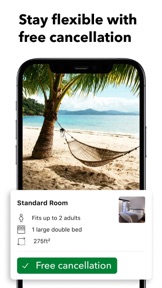
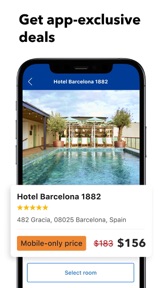
- •Focus on a 'Mobile-Only' value proposition with exclusive tiered discounts via the Genius program.
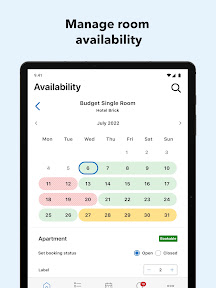
- •Dual-track development serving both consumer travelers and B2B property partners.
- •Marketplace model offering free access to users with no booking or credit card fees.
- •High-frequency update cadence across the entire portfolio to maintain platform reliability.
Portfolio momentum
Released 11 updates across 3 apps in the last 6 months, with the most recent update occurring 12 days ago.
Portfolio
What does Booking.com ship?
Apps
5 apps analysed

- Personalized agenda management anchors attendee daily habits during event windows
Mobile-only discounts drive direct acquisition
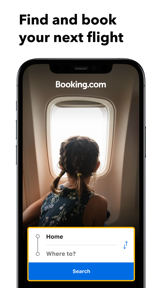
- The booking interface provides a quick and efficient way to secure travel accommodations globally
- Automated customer service systems fail to resolve urgent booking issues and prevent human contact




Analysis in progress

Distributed across 20 markets, strongest in Europe.
Based on 2 of 5 apps with localized market data, more coverage rolling in as scans complete · last scanned .
Americas (4)
- United States2 / 2
- Brazil1 / 2
- Canada1 / 2
- Mexico1 / 2
Europe (9)
- France1 / 2
- Germany1 / 2
- Italy1 / 2
- Netherlands1 / 2
- Portugal1 / 2
›+4 more europe markets
- Spain1 / 2
- Sweden1 / 2
- Turkey1 / 2
- United Kingdom1 / 2
Asia-Pacific (7)
- Australia1 / 2
- India1 / 2
- Indonesia1 / 2
- Japan1 / 2
- Singapore1 / 2
›+2 more asia-pacific markets
- South Korea1 / 2
- Vietnam1 / 2
Core markets (2/2 apps)
User Sentiment
How do users feel about their apps?
0
Positive apps
1
Neutral / mixed
0
Negative apps
45/100
Avg sentiment score
Rivals
Who does Booking.com compete with?
The rivals identified
Nemeses(1)

Both platforms compete for the same frequent traveler segment by offering loyalty-based hotel discounts and centralized booking interfaces.
Contenders(10)


Both platforms target budget-conscious global travelers with massive property inventories and integrated flight search engines, creating direct competition for transaction volume.


Both platforms compete for the same vacation and short-term lodging market, with Airbnb focusing on unique home rentals while Booking.com offers a broader, hotel-heavy inventory.


Both platforms compete for the same traveler audience seeking accommodation, though they diverge between Booking.com's transactional inventory and Couchsurfing's social-exchange model.


Cheapflights provides a price-comparison engine for flights and hotels, acting as a discovery tool for travelers before they finalize bookings on platforms like Booking.com.


Both platforms target value-conscious travelers with bundled travel logistics, competing directly for the same booking funnel through mobile-first interfaces.


Both platforms compete for the same travel-planning audience by offering centralized search engines for flights and accommodations. They overlap directly in the initial discovery and booking phase of global travel itineraries.


Travelzoo competes by targeting value-conscious travelers with a curated deal-discovery model, directly challenging the commodity-heavy inventory approach of Booking.com.


Both platforms compete for international travelers by offering all-in-one booking interfaces for flights, hotels, and transport. They share a reliance on automated support systems to manage large-scale global inventory.


Both platforms target travelers managing end-to-end logistics, with Tripadvisor acting as a research-heavy alternative to the transaction-first inventory model of Booking.com.


Both platforms target budget-conscious travelers seeking accommodation deals, with overlapping functionality in price comparison and property discovery across global markets.
Same space(18)


Budget provides a focused rental utility that serves the same travel audience as Booking.com but with a specific emphasis on loyalty-based vehicle management.


Rentalcars.com focuses exclusively on global car hire, providing a specialized booking service that competes with the rental component of Booking.com.


Enterprise Rent-A-Car provides a physical-first rental utility that complements the digital-first booking flow of Booking.com for travelers requiring vehicle solutions.


Eurostar manages high-speed rail travel, providing a direct-sales channel that competes with the multi-modal booking convenience offered by Booking.com.


Vrbo serves the same vacation rental segment as Booking.com but focuses on whole-home inventory for families, creating a distinct niche within the broader travel market.


Carla aggregates rental car options from 900 companies, providing a specialized marketplace that serves the same rental needs as Booking.com's integrated transport offerings.


Kiwi.com offers complex, multi-carrier flight itineraries that cater to budget-conscious travelers who find standard aggregators like Booking.com too restrictive.


KLM functions as a vertical-specific airline management tool, offering a direct booking experience for travelers who may use Booking.com for other trip components.


Omio aggregates multi-modal transit tickets, offering a specialized comparison tool for travelers who might use Booking.com for lodging but need separate transport logistics.


Air France provides a direct-to-consumer channel for flight management, serving as a vertical-specific alternative to the multi-category booking flow of Booking.com.


Southwest Airlines provides a direct booking channel for low-cost airfare, serving as a primary travel utility for loyalists who might otherwise use Booking.com for flight searches.


Hertz competes for the same business and leisure travelers as Booking.com, focusing on vehicle rental loyalty rather than broad accommodation aggregation.


Trainline aggregates European rail and bus tickets, serving as a specialized transit booking tool for travelers who use Booking.com for their accommodation needs.


TripIt acts as a post-booking management layer that aggregates itineraries, serving as a specialized tool for travelers who use Booking.com for initial reservations.


Uber captures high-frequency transit intent, creating a multi-modal daily habit that competes for the same traveler's attention as Booking.com's end-to-end trip planning.


Wanderlog provides a map-centric planning interface that helps travelers organize the reservations they make on platforms like Booking.com.


Workaway offers a niche travel experience focused on cultural exchange and volunteering, appealing to a different traveler segment than the standard hotel-booking user of Booking.com.


Hostelworld focuses on the budget-conscious backpacker demographic, providing a specialized social and accommodation platform that complements Booking.com's general inventory.
The Analyst's Read
The bottom line on Booking.com
Bottom line
Booking.com is a dominant travel incumbent that successfully leverages its B2B software to lock in supply while using tiered loyalty programs to retain a massive global consumer base. Their high weighted rating across millions of reviews signals a highly optimized user experience that remains the benchmark for the travel category.
Frequently asked questions
How many apps does Booking.com publish?
What kind of apps does Booking.com make?
What is Booking.com's top app?
In how many countries are Booking.com's apps available?
What fed this analysis
- Apps analyzed:
- 3
- With full intel:
- 1
- With overview:
- 3
- Website scraped:
- yes
- Social presence:
- no
