


Simply
For aspiring musicians and artists of all ages seeking structured, self-paced instruction and hobbyist skill development at home.
 Simply Piano: Learn Piano Fast






Snapshot
Who is Simply?
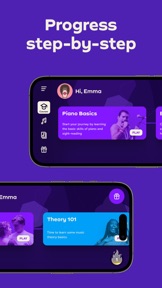
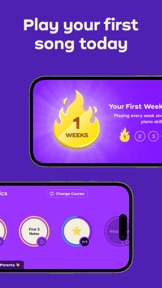
Providing gamified, self-paced creative education through real-time feedback technology for aspiring musicians and artists.
Target audience


Portfolio
Free 11Last updated

Simply Piano: Learn Piano Fast
v7.31.7
4mo ago
Publisher DNA
What defines Simply?
Publisher DNA
Primary focus
Gamified creative education and music learning
Scale
indie
Target audience
Aspiring musicians and artists of all ages seeking structured, self-paced instruction and hobbyist skill development at home.
Signature Patterns
- •Integration of real-time audio and voice feedback technology as a core learning mechanic
- •Gamified, step-by-step curriculum structure designed for absolute beginners
- •Freemium monetization model with a heavy focus on premium subscription conversion
- •Unified branding and cross-app subscription ecosystem to drive user lifetime value
- •High-frequency update cycle to maintain content libraries and technical accuracy
Portfolio momentum
The publisher maintains an intense development cadence with 44 releases across 5 active apps in the last 6 months, with the most recent major update occurring 13 days ago.
Portfolio
What does Simply ship?
Apps
11 apps analysed

Premium Tuner for Guitar, Ukulele, and Bass - All Features Unlocked


Editors' Choice badge sustains organic install velocity
- Accurate and responsive tuning functionality provides reliable results for guitar and ukulele players
- Inaccurate pitch detection leads to over-tightening and potential string breakage during tuning sessions

Premium Tuner for Guitar, Ukulele, and Bass - All Features Unlocked


Visual guidance lowers the barrier to entry for beginner musicians compared to hardware tuners.
- The straightforward and ad-free interface provides a reliable tuning experience for guitarists of all skill levels
- Occasional technical instability manifests as infinite loading screens that prevent users from accessing the tuner

Real-time audio recognition provides a technical advantage
- Licensed Hal Leonard method books create a content barrier

21-language library functions as a B2B distribution barrier
- Guided drawing tutorials provide a clear skill ramp that helps beginners improve their artistic technique
- Aggressive paywalls appearing after the first tutorial contradict the free-to-play marketing claims in advertisements

Weekly content cadence maintains session frequency
- Step-by-step drawing tutorials help beginners and experienced artists improve their technical shading and sketching skills
- Aggressive paywalls after the first lesson frustrate users who expected a free drawing experience
Distributed across 19 markets, strongest in Europe.
Based on 10 of 11 apps with localized market data, more coverage rolling in as scans complete · last scanned .
Americas (4)
- United States10 / 10
- Mexico5 / 10
- Brazil4 / 10
- Canada3 / 10
Europe (8)
- France5 / 10
- Germany5 / 10
- Italy5 / 10
- Portugal5 / 10
- Spain5 / 10
›+3 more europe markets
- Netherlands3 / 10
- Turkey3 / 10
- United Kingdom3 / 10
Asia-Pacific (7)
- Japan4 / 10
- South Korea4 / 10
- India3 / 10
- Indonesia3 / 10
- Singapore3 / 10
›+2 more asia-pacific markets
- Vietnam3 / 10
- Australia2 / 10
Core markets (10/10 apps)
User Sentiment
How do users feel about their apps?
4
Positive apps
2
Neutral / mixed
4
Negative apps
51/100
Avg sentiment score
Unlock the app dragging this portfolio down.
Access the full report for freeRivals
Who does Simply compete with?
The rivals identified
Nemeses(5)


Both apps target the same beginner-to-intermediate guitar learning audience and compete for the same subscription revenue through interactive practice tools and song libraries.


A high-velocity competitor (17 releases in 6 months) that focuses exclusively on piano with a premium, video-centric approach.


Both apps target beginners with structured drawing lessons, competing for the same hobbyist segment through freemium models that gate content behind restrictive paywalls.


Both apps compete for the same guitar-playing audience by offering subscription-based practice tools, though they differ in their focus on interactive learning versus static reference material.


Both apps compete for the same beginner music learner demographic, vying for daily practice time and subscription spend within the mobile music education category.
Contenders(35)


Provides a similar structured learning experience but differentiates through hardware-integrated features like amplifier simulation.


While guitar-centric, it competes for the same 'adult hobbyist' demographic and subscription budget in the music education space.


Targets the same self-paced learning demographic but focuses on music pedagogy rather than visual arts.


Both applications target the beginner art market with guided, step-by-step drawing lessons, creating direct competition for the same casual user base.


Both apps target the same beginner-to-intermediate music learner demographic by utilizing real-time audio recognition to provide performance feedback on their respective instruments.


Both applications target beginner artists with structured, step-by-step drawing curricula, competing for the same hobbyist user base through freemium monetization models.


Targets the same beginner demographic but adds a social layer through real-time multiplayer drawing features.


Both applications target beginner artists with structured, step-by-step drawing instruction, creating direct competition for users seeking foundational art skills.


Functions as a social-first alternative that prioritizes community interaction over the structured curriculum of the source app.


Both apps target the beginner art instruction market with freemium models, directly competing for users seeking structured drawing lessons.


Both applications target the beginner art market with step-by-step drawing tutorials and share an identical 4.6 store rating, creating direct competition for the same hobbyist user base.


Both apps target the guitar learning market, competing for the same beginner-to-intermediate user base through freemium models.


Both apps target the beginner art market by providing structured, step-by-step drawing instruction through free-to-play models. They compete directly for users seeking self-paced skill development at home.


Both apps target the beginner art market with daily, short-form lessons, creating direct competition for users seeking structured, self-paced creative instruction.


Both apps target the beginner drawing market with step-by-step instruction, competing for the same hobbyist segment seeking structured skill development.


Both apps target the same beginner-to-intermediate music education segment using real-time audio feedback to validate performance. They compete for the same leisure time and wallet share among users seeking structured, instrument-based skill acquisition.


Both apps target vocalists seeking pitch improvement, but PitchCheck offers a free, data-focused alternative to the subscription-gated curriculum found in Simply Sing.


Both apps target beginner to intermediate guitarists seeking home-based practice, with Simply Guitar focusing on structured feedback and Chordify on song-based utility. They compete for the same daily practice time by offering different methods to master the instrument.


Both apps target vocalists using real-time microphone pitch detection to provide feedback, creating a direct overlap in the technical utility provided to users.


Both applications target vocal training through real-time pitch detection, creating direct competition for users seeking guided singing practice. PitchHighway challenges the conversion model of Simply Sing by offering a free-to-use curriculum.


Both apps target the beginner piano learning segment through interactive keyboard modes and curated song libraries.


Both apps target hobbyist guitarists seeking portable practice tools, creating direct competition for the same beginner-to-intermediate user base.


Both apps compete for the same guitar player's subscription budget, with Simply Guitar providing interactive feedback and Songsterr offering a massive library of transcriptions.


A high-velocity utility-first competitor that captures users looking for a virtual instrument experience rather than a structured course.


Both applications target the same beginner audience seeking structured drawing instruction, creating direct competition for user attention within the Education category.


A long-standing, minimalist alternative that competes directly on the core utility of precise instrument tuning.


Both apps target piano learners with real-time audio feedback, creating direct competition for users seeking interactive practice tools.


Both apps target the beginner-to-intermediate music learning market with freemium models and structured video curricula. They compete directly for users seeking home-based, self-paced instrument instruction.


Both apps target the beginner art market, but they diverge in their core mechanism: Simply Draw provides a structured, video-led curriculum, while How to Draw, Step by step focuses on utility-based camera projection and AI-assisted image conversion.


Both apps target piano learners, but Piano Marvel captures the academic and institutional segment through MIDI-based assessment, while Simply Piano targets casual hobbyists via gamified audio feedback.


Both apps target guitar learners with structured, curriculum-based pathways, competing for the same beginner-to-intermediate user base.


Both apps target beginner to intermediate piano students using real-time feedback mechanisms to facilitate gamified learning, directly competing for the same subscription-based educational market.


Both apps compete for the same beginner drawing audience, but they diverge on the core medium: Simply Draw uses an interactive digital interface, while DrawRabbit mandates traditional paper and pencil.


Both apps compete for the same guitar learning audience by utilizing subscription models to gate access to structured educational content.


Both apps target beginners seeking structured art instruction, creating a direct conflict for users evaluating free versus paid learning paths.
Same space(25)


Directly competes for the same beginner art audience by offering AI-based progress evaluation and structured learning paths.


Serves as a free-to-use utility for tracing, capturing users who prefer direct tools over subscription-gated curriculum.


Uses a photo-to-sketch conversion mechanism to provide personalized tutorials, similar to the source app's video-led approach.


Acts as a hardware-focused sketching tool for users who have already learned the basics of drawing.


Operates as a legacy inspiration repository that competes for the same beginner audience's attention during creative blocks.


Perfect Ear complements piano practice by focusing on the auditory and rhythmic foundation that Simply Piano lacks in its visual-heavy curriculum.


Functions as a companion portal for students enrolled in specific art courses, targeting the same educational intent.


Targets a specific sub-niche of the music category, providing a specialized tuning experience for ukulele players.


Coexists as a creative tool for users who have graduated from basic tutorials to active digital illustration.


Targets the same beginner audience with a focus on evergreen animal content, providing a low-friction entry point.


GuitarTab provides a massive content library for users who have moved past the initial learning phase and need performance materials.


This app offers a similar performance-based environment but shifts the focus to user-controlled audio manipulation of existing music tracks.


Addresses the same beginner market by focusing on daily habit formation rather than long-form video courses.


This app functions as a specialized utility for the same user base, focusing on high-precision pitch detection for practice.


Provides a similar step-by-step tutorial experience but focuses on offline accessibility for students.


This app provides a basic utility for the same guitar-playing audience, focusing on the fundamental requirement of string maintenance.


Clefer acts as a direct alternative for piano practice by offering similar real-time audio feedback without requiring external cables.


Pro Guitar Tuner targets the same musician demographic by offering a specialized tool for instrument maintenance and pitch accuracy.


A massive-scale legacy app that functions more as a MIDI controller and social simulator than a structured educational tool.


This app targets the same home-entertainment audience but anchors its utility to physical Bluetooth hardware rather than purely digital vocal coaching.


Waay provides the theoretical context for the songs learned in Simply Piano, allowing users to apply music theory to their instrument.


Zebra serves as a supplementary tool for mastering note recognition and theory, which helps beginners overcome the learning curve of reading sheet music.


Targets the 'performer' stage of the user journey by providing high-quality interactive scores with professional backing tracks.


Rocksmith Tuner provides a specialized utility for the same user base, acting as a free, high-precision alternative to the tuning features that users report are unreliable in Simply Guitar.


SketchPath targets the same beginner segment but differentiates by removing social features to create a private learning environment.
New entrants(4)


Uses AR technology to assist beginners with tracing, directly competing with the source app's guided tutorial approach.


Shares the same pedagogical structure of video-led lessons but applies it to sign language rather than drawing.


A recent 2024 mobile entrant with a disruptive, dark-mode aesthetic focused on electronic music and pad controllers.


Represents the emerging trend of AI-assisted music creation, signaling a shift toward generative tools in the music category.
The Analyst's Read
The bottom line on Simply
Bottom line
Simply Ltd is a highly specialized publisher that has successfully productized technical feedback loops into a scalable education platform. Their weighted 4.69★ rating across a 100% active portfolio signals exceptional product-market fit and technical execution in the creative learning niche.
Frequently asked questions
How many apps does Simply publish?
What kind of apps does Simply make?
What is Simply's top app?
In how many countries are Simply's apps available?
What fed this analysis
- Apps analyzed:
- 5
- With full intel:
- 1
- With overview:
- 5
- Website scraped:
- yes
- Social presence:
- yes