

amo
For gen Z and young adults seeking hyper-social, location-based interaction and non-traditional, creative communication tools.
 Bump - real life is happening


Snapshot
Who is amo?
Facilitating real-time social connection for Gen Z through location-sharing and collaborative digital canvases. They aim to move social interaction beyond traditional, static messaging feeds.
Target audience


Portfolio
Free 2Last updated

Bump - real life is happening
v2.118.1
1d ago
Publisher DNA
What defines amo?
Publisher DNA
Primary focus
Social networking apps focused on Gen Z connectivity
Scale
indie
Target audience
Gen Z and young adults seeking hyper-social, location-based interaction and non-traditional, creative communication tools.
Signature Patterns
- •Focus on hyper-social, real-time connectivity features
- •Integration of gamified elements like scratch maps
- •Completely free-to-use models without current subscription or IAP tiers
- •Targeting younger demographics with non-traditional UI/UX
Portfolio momentum
Released 12 updates across 2 apps in the last 6 months, indicating a high-frequency development cycle.
Portfolio
What does amo ship?
Apps
2 apps analysed
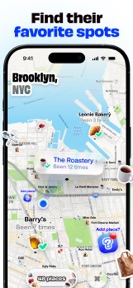
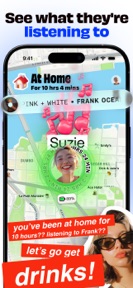
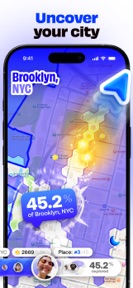
Location sharing, chat, places, scratch map. From the team behind Zenly.

School directory integration lowers organic acquisition costs
- Social location sharing and map exploration features provide a fun way to stay connected with friends
- Aggressive and intrusive advertising patterns interrupt the user experience and frustrate the core player base

Strong brand identity focused on creative expression
- Creative Concept
- Onboarding & Access Barriers
Distributed across 20 markets, strongest in Europe.
Based on 1 of 2 apps with localized market data, more coverage rolling in as scans complete · last scanned .
Americas (4)
- Brazil1 / 1
- Canada1 / 1
- Mexico1 / 1
- United States1 / 1
Europe (9)
- France1 / 1
- Germany1 / 1
- Italy1 / 1
- Netherlands1 / 1
- Portugal1 / 1
›+4 more europe markets
- Spain1 / 1
- Sweden1 / 1
- Turkey1 / 1
- United Kingdom1 / 1
Asia-Pacific (7)
- Australia1 / 1
- India1 / 1
- Indonesia1 / 1
- Japan1 / 1
- Singapore1 / 1
›+2 more asia-pacific markets
- South Korea1 / 1
- Vietnam1 / 1
Core markets (1/1 apps)
User Sentiment
How do users feel about their apps?
0
Positive apps
0
Neutral / mixed
2
Negative apps
35/100
Avg sentiment score
Unlock the app dragging this portfolio down.
Access the full report for freeRivals
Who does amo compete with?
The rivals identified
Nemeses(1)

Both apps compete for real-time location sharing, though they target distinct demographics: students versus families. Life360's scale and safety-critical features create a high-barrier alternative for users who prioritize utility over the social gamification found in Bump.
Contenders(10)


Both apps compete for real-time location sharing, with Bump targeting social discovery among students and iMapp targeting safety-oriented monitoring for families.


Both apps compete for the same real-time location-sharing audience, though Bump focuses on social discovery while Findo targets utility-based monitoring. They overlap in their core functionality of tracking user movement and location.


Both apps compete for the same social location-sharing demographic by using real-time maps to coordinate friend group activities.


Both apps compete for real-time location sharing, with Bump targeting social discovery through gamified maps and Find My Hub targeting utility-based safety.


Both apps compete for real-time location tracking, with Find My Friends targeting family safety while Bump targets student social discovery. They overlap in the core utility of mapping user movement.


Both apps compete for users seeking real-time location tracking, targeting different segments through either social gamification or family safety utility.


Both apps compete for real-time location tracking, though they diverge in target audience: Bump focuses on social discovery for students, while iSharing targets family safety and caregiver monitoring.


Both apps compete for location-sharing utility within social groups, with Find Location targeting family safety while Bump focuses on student social discovery.


Both apps compete for real-time location tracking, with Bump targeting social discovery via gamification while Share Location targets utility-based safety monitoring.


Both apps compete for real-time location sharing among social groups, with the rival offering utility-focused geofencing that Bump lacks. This creates a direct conflict for users prioritizing location-based safety over social gamification.
Same space(20)


BeReal competes for the same daily habit loop as Bump, using a randomized notification trigger to drive engagement instead of location tracking.


Boo offers a personality-first social discovery model that contrasts with Bump's location-centric approach by prioritizing psychological compatibility.


Bumpy targets international dating with a translation-first approach, serving as a high-intent alternative to Bump's student-focused social discovery.


Peeps uses a swipe-based discovery mechanic to connect users globally, serving as a broader social networking alternative to Bump's local map.


Clapper competes for the same social attention as Bump, using creator-led monetization and permissive moderation to build community trust.


Discord provides a persistent third-place for communities, acting as a high-friction but deeply sticky alternative to Bump's real-time map.


Bumble BFF targets the same friendship-seeking demographic as Bump, using identity verification to build trust in platonic connections.


Grindr utilizes a real-time location grid similar to Bump, but targets a specific demographic with high-intent social discovery needs.


HIYAK focuses on video-centric social discovery, providing a more direct interaction model than Bump's passive location-sharing.


Azar facilitates global social discovery through interest-based matching, providing a broader scope than Bump's localized school-based network.


LINE serves as a primary messaging utility that competes for the same daily screen time as Bump, though it focuses on sticker-based expression.


BeFriend provides local social discovery tools that overlap with Bump's location-based features, focusing on friendship rather than map-scratching.


Poopie uses social activity tracking to create a niche community, contrasting with Bump's location-based social discovery.


GroupMe provides a persistent messaging utility for groups, acting as a functional alternative to Bump's real-time social coordination.


Superlocal is a direct competitor to Bump's map-based engagement, using AI-powered discovery and gamified exploration to track user movement.


MeetMe combines location-based chat with live-streaming, competing for the same local social discovery space as Bump.


Yubo targets the same Gen Z demographic as Bump, using swipe-based discovery to facilitate rapid social connections.


Wizz App uses mandatory ID verification to gate social discovery, creating a safer but more restrictive environment than Bump's school-directory model.


WeChat functions as a comprehensive lifestyle platform that dwarfs Bump's niche social map utility through integrated financial and service flows.


Kiss focuses on interest-based social networking, providing a structured community alternative to Bump's real-time map.
New entrants(2)


Aura focuses on real-world meetups via a social map, directly overlapping with Bump's core mission of real-life social connection.


Pinzapp is a map-first social app that mirrors Bump's core location-based discovery mechanic.
The Analyst's Read
The bottom line on amo
Bottom line
Amo is a high-velocity studio focused on niche social networking, currently anchored by the strong performance of their location-sharing flagship. Their success depends on scaling their creative messaging experiments while maintaining the technical reliability required for daily-use social tools.
Frequently asked questions
How many apps does amo publish?
What kind of apps does amo make?
What is amo's top app?
In how many countries are amo's apps available?
What fed this analysis
- Apps analyzed:
- 2
- With full intel:
- 2
- With overview:
- 2
- Website scraped:
- yes
- Social presence:
- no
