


Chipotle Mexican Grill
For frequent diners and loyalty members seeking convenience, time-saving pickup options, and rewards for regular meal orders.
 Chipotle


Snapshot
Who is Chipotle Mexican Grill?
Providing a seamless digital ordering and loyalty experience for customers seeking fresh, customizable Mexican cuisine for pickup or delivery.
Target audience


Portfolio
Free 4Last updated

Chipotle
v11.16.0
6mo ago
Publisher DNA
What defines Chipotle Mexican Grill?
Publisher DNA
Primary focus
Digital restaurant services and loyalty
Scale
indie
Target audience
Frequent diners and loyalty members seeking convenience, time-saving pickup options, and rewards for regular meal orders.
Signature Patterns
- •Heavy focus on mobile-first pickup and delivery logistics
- •Deep integration of loyalty rewards and point-based gamification
- •High-frequency update cadence to support transactional stability
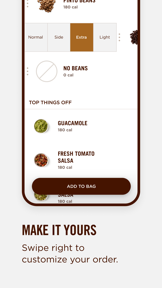
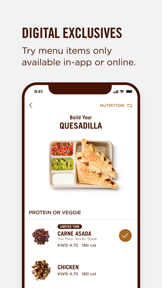
- •Customization-centric ordering interfaces for menu items
Portfolio momentum
Maintains an intense development cycle with 11 updates across 2 apps in the last 6 months, ensuring high uptime for transactional services.
Portfolio
What does Chipotle Mexican Grill ship?
Apps
4 apps analysed
Sustainability transparency via Real Foodprint
- Intuitive Ordering Flow
- Reward Redemption Failures

Analysis in progress

Analysis in progress


Single-market publisher, every app ships only to United States.
Based on 1 of 4 apps with localized market data, more coverage rolling in as scans complete · last scanned .
Americas (1)
- United States1 / 1
Core markets (1/1 apps)
User Sentiment
How do users feel about their apps?
0
Positive apps
0
Neutral / mixed
1
Negative apps
35/100
Avg sentiment score
Rivals
Who does Chipotle Mexican Grill compete with?
The rivals identified
Nemeses(2)


Both apps compete for the same lunch-hour segment by offering mobile-first ordering for pickup and delivery, forcing users to choose between Chipotle's operational drive-thru model and Jimmy John's logistics-first delivery speed.


Talabat competes for the same regional food-ordering audience by providing a multi-category delivery service that captures daily meal and grocery needs, whereas Chipotle Middle East is limited to single-brand pickup.
Contenders(11)


Both apps compete for the same fast-casual dining audience by prioritizing digital loyalty and mobile-first ordering flows to capture high-frequency food spend.


Both apps compete for the same time-sensitive, on-the-go consumer segment, with Chipotle capturing meal-specific transactions while 7-Eleven captures broader convenience and fuel-related retail spend.


Both apps compete for the same high-frequency dining audience by using mobile-only drive-thru lanes and loyalty programs to drive repeat transactions.


Both apps compete for the same dining occasions, as Grubhub serves as a third-party delivery aggregator for the same customer base that uses Chipotle for direct pickup and delivery.


Both apps function as direct-to-consumer mobile ordering channels for quick-service restaurant chains, competing for the same customer base seeking to bypass in-store wait times.


Both apps compete for the same fast-casual lunch and dinner segment, utilizing mobile-first rewards and pickup workflows to capture high-frequency dining habits.


Both apps compete for the same fast-casual Mexican dining audience by providing mobile ordering, loyalty programs, and digital transaction management.


Both apps compete for the time-starved household budget by offering convenience-focused fulfillment, with Chipotle providing digital pickup and Shipt providing grocery delivery to the same consumer segment.


Both apps target the same fast-casual dining segment, competing for mobile order-ahead volume and loyalty program participation within the Food & Drink category.


Uber Eats competes for the same meal-delivery occasions as Chipotle, using a multi-category marketplace model to capture household demand that Chipotle addresses through its direct-to-consumer app.


Both apps function as primary digital storefronts for high-volume casual dining, competing for the same customer base seeking convenient pickup and delivery options.
Same space(34)


Deliveroo competes for the urban delivery audience, using grocery integration to build high-frequency habits similar to Chipotle's digital-first strategy.


Pizza Hut serves the same fast-casual convenience segment as Chipotle but relies on a legacy delivery infrastructure that is currently failing due to authentication and payment bottlenecks.


Operates a multi-category logistics platform that competes for urban users by bundling orders from multiple venues.


Arby's uses a rewards-integrated ordering flow to bridge physical and digital transactions, similar to Chipotle's operational focus.


Provides a direct-to-consumer ordering interface for fast-food pickup that competes for the same convenience-seeking customer segment.


Offers a specialized delivery interface for poke bowls that competes for the same restaurant food delivery audience.


Provides a logistics-focused alternative for on-demand restaurant meals that mirrors the pickup and delivery utility of the source app.


Provides a direct-to-consumer ordering channel that competes for fast-food spend through exclusive deals and rewards.


Offers a transparent, trackable ordering experience that competes for casual dining spend through gamified loyalty rewards.


DoorDash acts as a high-frequency delivery alternative to Chipotle's native app, leveraging a massive partner network to capture urban demand.


El Pollo Loco uses a points-based loyalty loop to drive repeat traffic, sharing the same retention goals as Chipotle.


Factor_ provides a subscription-based alternative to Chipotle's transactional model, targeting health-conscious users who want to avoid cooking.


Firehouse Subs provides a loyalty-focused mobile ordering platform that mirrors the core utility of Chipotle's app.


Five Guys offers a transactional ordering utility for its menu, though it lacks the loyalty-driven retention loops that Chipotle currently struggles to maintain.


Offers a food delivery and takeaway service that competes for urban users seeking convenient access to local restaurant meals.


Gopuff uses a proprietary warehouse network to provide rapid delivery, competing for the same convenience-seeking audience as Chipotle.


Provides a direct-to-consumer ordering platform that competes for fast-food spend through loyalty-based rewards and deals.


Just Eat serves the suburban market with a massive partner network, providing a broader local utility than Chipotle's brand-specific app.


Operates a transaction-based delivery model that competes for urban consumers by offering promotional discounts on restaurant meals.

known for
Competes for fast-food spend through a multi-channel fulfillment model that targets existing customers with loyalty rewards.


Targets the same fast-food audience by using a loyalty-card system to drive repeat orders for delivery and pickup.


Panda Express serves the same fast-casual audience as Chipotle, focusing on high-ticket catering management to drive revenue.


Panera Bread competes for the lunch-hour segment, using a subscription model to drive daily traffic that Chipotle currently lacks.


Papa Johns shares the loyalty-driven retention model of Chipotle but introduces AI-assisted ordering to accelerate the transaction funnel.


Competes for daily food and drink spend through a membership-led loyalty model that targets commuters and professionals.


Raising Cane's digitizes the physical queue to reduce wait times, mirroring the convenience goals of Chipotle's Chipotlane.


Shake Shack targets the premium fast-casual segment, using gamified challenges to retain customers who value food quality over mass-market speed.


Serves as a direct-to-consumer sales channel that competes for fast-food spend through specialized drive-in stall integration.


Starbucks competes for the same morning-commute demographic as Chipotle, using a mandatory gift-card reload system to lock users into its retail footprint.


Targets convenience-focused diners through a specialized delivery interface that competes for the same restaurant food spend.


Captures campus-based food spend by integrating institutional payment systems into a mobile ordering workflow.


Transact Mobile Ordering serves a campus-specific audience, using gamified loyalty to drive engagement in a closed environment.


Wendy's targets the same quick-service customer as Chipotle, utilizing app-exclusive offers to drive daily active usage despite technical instability.


Captures regional food spending through an integrated discovery and delivery utility that competes for the same urban user base.
New entrants(2)


7 Brew Coffee leverages physical drive-thru traffic to drive digital adoption, mirroring the operational integration of Chipotle's Chipotlane.


Provides a direct-to-consumer ordering platform for fast food that competes for the same pickup and delivery audience.
The Analyst's Read
The bottom line on Chipotle Mexican Grill
Bottom line
Chipotle is a benchmark for QSR digital transformation, successfully leveraging its app as a core operational component rather than a secondary channel. Their high weighted rating across massive volume suggests a robust product-market fit that effectively bridges digital convenience with physical fulfillment.
Frequently asked questions
How many apps does Chipotle Mexican Grill publish?
What kind of apps does Chipotle Mexican Grill make?
What is Chipotle Mexican Grill's top app?
In how many countries are Chipotle Mexican Grill's apps available?
What fed this analysis
- Apps analyzed:
- 2
- With full intel:
- 1
- With overview:
- 2
- Website scraped:
- yes
- Social presence:
- yes