
Fitbod
For individuals seeking personalized, data-driven strength training programs that adjust based on their specific equipment and progress.
 Fitbod: Gym & Fitness Planner
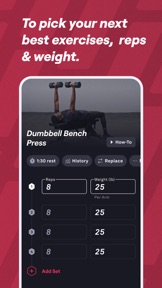


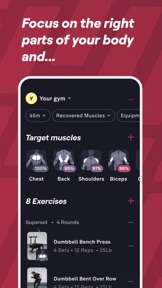


Snapshot
Who is Fitbod?
Providing AI-driven strength training plans that adapt to individual goals and available equipment for gym and home workouts.
Target audience


Portfolio
Free 1Last updated

Fitbod: Gym & Fitness Planner
v8.13.0
6mo ago
Publisher DNA
What defines Fitbod?
Publisher DNA
Primary focus
AI-driven strength training and fitness planning
Scale
indie
Target audience
Individuals seeking personalized, data-driven strength training programs that adjust based on their specific equipment and progress.
Signature Patterns
- •Heavy reliance on AI and machine learning to generate personalized workout routines.
- •Freemium monetization model with a focus on subscription-based fitness planning.
- •High-frequency update cadence to maintain feature parity and user engagement.
- •Deep integration with hardware and equipment tracking to differentiate from bodyweight-only competitors.
Portfolio momentum
Released 12 updates for their single active title in the last 6 months, with the most recent update occurring 10 days ago.
Portfolio
What does Fitbod ship?
Apps
1 app analysed
Tightly focused on 5 markets (Brazil, Mexico, Portugal, Spain, United States).
Based on 1 of 1 app with localized market data · last scanned .
Americas (3)
- Brazil1 / 1
- Mexico1 / 1
- United States1 / 1
Europe (2)
- Portugal1 / 1
- Spain1 / 1
Core markets (1/1 apps)
Rivals
Who does Fitbod compete with?
The rivals identified
Nemeses(1)


Both apps compete for the same health-conscious user base, with Fitbod focusing on strength training and Fitbit on general health data aggregation and wearable-based coaching.
Contenders(10)


Both apps target strength training users with AI-generated, adaptive workout plans that adjust based on user performance and equipment availability.


Both apps target weight lifters and gym-goers, competing for the same user base through strength training and progress tracking features.


Both apps target strength training enthusiasts with freemium models, competing for the same user base seeking structured gym or home workout management.


Both apps target strength training users, but they diverge on the mechanism of workout generation: Fitbod uses AI for adaptive routines, while Ladder uses human-led programming.


Both apps target individuals seeking personalized fitness routines, with Fitbod focusing on AI-driven strength training and Home Workout focusing on bodyweight-only exercises for beginners.


Both apps target strength training enthusiasts, competing for the same gym-goer demographic through freemium models that prioritize routine logging and progress tracking.


Both platforms target fitness-conscious users, but they diverge on core delivery: Fitbod provides personalized strength training plans, while Peloton focuses on instructor-led studio classes.


Both apps target strength training enthusiasts, but Strong focuses on manual logging while Fitbod automates programming via AI.


Both apps target fitness enthusiasts with AI-driven training programs, creating direct competition for users seeking personalized strength and endurance routines.


Both apps compete for the same audience of individuals seeking AI-guided strength training and structured workout routines for home or gym environments.
Same space(20)


Stronger serves the same strength-training audience as Fitbod but emphasizes community-based lifting groups.


ChillFit targets the low-intensity, home-based segment of the fitness market that Fitbod also supports.


FitnessAI competes directly with Fitbod's core algorithm by providing personalized weightlifting routines based on user goals.


Foodvisor serves as a nutrition-focused alternative for users who want to pair their Fitbod workouts with automated meal tracking.


Gravl serves as a direct strength-training competitor by offering automated progressive overload based on logged history.


Liftoff targets the same gym-going audience as Fitbod but prioritizes social retention through competitive ranking systems.


GymStreak provides an AI-powered alternative to Fitbod that combines workout tracking with meal macro counting.


iFIT Personal Trainer targets the premium segment of Fitbod's audience by offering cinematic, trainer-led content.


Fitness Coach provides a similar goal-oriented training structure to Fitbod, focusing on time-efficient sessions.


Muscle & Motion complements Fitbod by providing the anatomical and biomechanical education behind the exercises.


MyFitnessPal acts as a broad-market health hub that overlaps with Fitbod's exercise logging while providing a massive nutritional database.


Planfit provides a similar AI-guided training experience to Fitbod, focusing on equipment-specific workout plans.


SHRED competes with Fitbod by offering an AI-driven engine that reconfigures workouts based on equipment availability.


RepCount provides a minimalist alternative to Fitbod for users who prefer manual logging over AI-generated plans.


Workout Trainer AI offers a broader range of sports and activities compared to Fitbod's strength-focused planning.


MacroFactor complements Fitbod by shifting the focus from workout execution to the metabolic data required for performance gains.


Stronglifts 5x5 offers a simplified, barbell-focused alternative to Fitbod's broader AI-driven workout generation.


Symmetry uses AI body scanning to differentiate its strength training plans from Fitbod's equipment-based approach.


Yazio provides a comprehensive health tracking experience that integrates activity data, serving as a secondary tool for Fitbod users.


Zing AI focuses on real-time form monitoring and daily wellness check-ins to differentiate from Fitbod's planning-first approach.
The Analyst's Read
The bottom line on Fitbod
Bottom line
Fitbod Inc. is a highly specialized publisher that has successfully defended a niche in the competitive fitness category through algorithmic personalization. Their single-app focus and intense development velocity suggest a commitment to product depth over portfolio breadth.
Frequently asked questions
How many apps does Fitbod publish?
What kind of apps does Fitbod make?
What is Fitbod's top app?
In how many countries are Fitbod's apps available?
What fed this analysis
- Apps analyzed:
- 1
- With full intel:
- 0
- With overview:
- 1
- Website scraped:
- yes
- Social presence:
- yes